
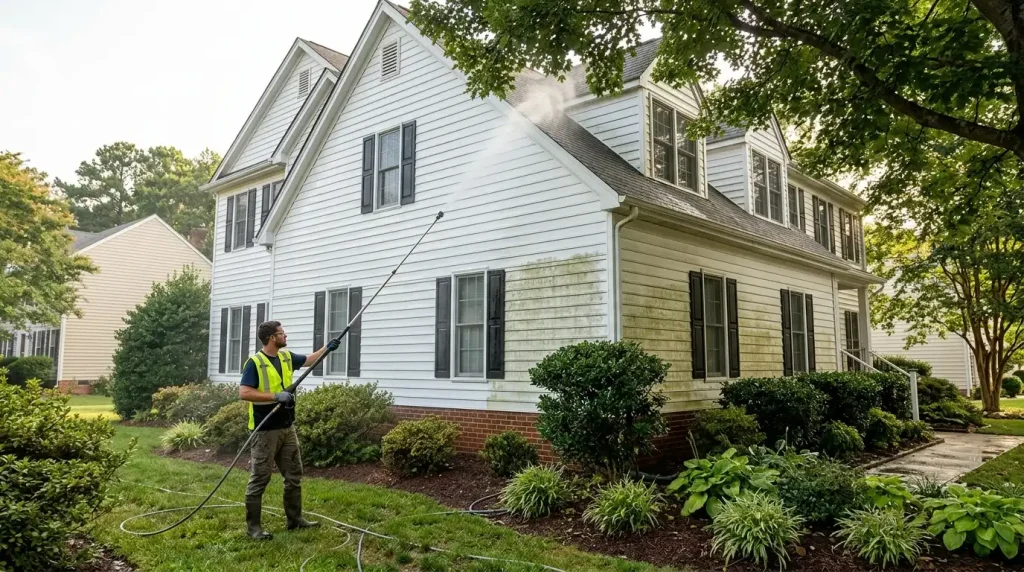
If one side of your house looks green while the other walls still look relatively clean, the north side is often the first place to check.
In the Northern Hemisphere, north facing walls generally receive less direct sunlight than south facing walls. Less direct sun means rain, dew, condensation, and humidity can remain on the siding longer before the surface dries.
That combination of shade and lingering moisture creates favorable conditions for green algae and other biological buildup.
Trees, shrubs, neighboring homes, fences, roof overhangs, leaking gutters, and sprinklers can make the problem even worse.
This is why two walls on the same house can look completely different even though they were installed and painted at the same time.
The solution is not necessarily stronger pressure. Safe house washing starts by identifying what is growing on the siding, understanding why that wall stays damp, and choosing a cleaning method that matches the siding material.
Quick Answer
The north side of a house often turns green faster because it receives less direct sunlight and therefore dries more slowly after rain, dew, and humid weather.
Moisture remains on the surface longer, allowing algae and other organic buildup to establish more easily.
Shade from trees, dense landscaping, neighboring buildings, poor airflow, sprinkler overspray, and gutter problems can make the north wall even more vulnerable.
The green color is commonly surface algae rather than a sign that the siding itself has failed.
However, persistent moisture should still be investigated because the conditions causing green growth may point to drainage, irrigation, or water management problems around the home.
Why the North Side Gets Less Direct Sunlight
The main reason is the path of the sun.
In much of the Northern Hemisphere, including Virginia, the sun travels across the southern part of the sky for much of the year.
South facing exterior surfaces therefore tend to receive more direct solar exposure.
North facing walls receive less direct sunlight, particularly during cooler parts of the year.
Sunlight does more than make a wall brighter.
It warms the surface and helps evaporate moisture.
A south facing wall may dry relatively quickly after rain or morning dew, while a shaded north facing wall can remain damp much longer.
That extra drying time can make a major difference in how quickly green growth appears.
Does Algae Only Grow on the North Side of a House
No.
The north side is often more vulnerable, but algae can grow on any side of a house if conditions are damp enough.
A west facing wall shaded by mature trees may develop heavier growth than an open north wall.
An east facing wall may stay damp if a neighboring home blocks sunlight.
A south facing wall can develop algae if shrubs are pressed against the siding or a sprinkler sprays it every morning.
Direction matters, but moisture, shade, and airflow matter just as much.
Think of north facing exposure as a risk factor rather than a rule.
What Is the Green Stuff on House Siding
Green discoloration is commonly algae, but not every green or dark stain is the same.
Understanding what is on the surface helps determine the right cleaning method.
Green Algae
Algae usually appears as a green film or patchy green discoloration.
It is commonly found on shaded siding, gutters, trim, fences, masonry, and other exterior surfaces that stay damp.
It may begin as a light tint and gradually spread across a much larger area.
Mildew
Mildew may appear gray, black, or dark green.
It is commonly associated with damp surfaces and organic dirt that has accumulated on siding.
Mold
Visible exterior mold can sometimes resemble mildew or dark biological staining.
It should not automatically be assumed that exterior staining means there is mold growing inside the wall.
Exterior surface growth and indoor moisture problems are separate issues that require different types of investigation.
Moss
Moss is thicker and more textured than algae.
It is more likely to appear on very damp masonry, roofs, retaining walls, or heavily shaded surfaces than on smooth vinyl siding.
Dirt and Pollen
Dirt and pollen can combine with moisture and biological growth to make siding appear darker or greener.
A wall may therefore contain more than one type of contamination at the same time.
Why Shade Encourages Green Growth
Shade affects how quickly a wall dries.
After rain, the shaded side of a home may remain wet while the sunny side dries.
Morning dew can also remain on a shaded wall longer.
This extended moisture period provides more opportunity for algae and other surface organisms to grow.
Shade can come from more than the direction of the wall.
Trees, fences, porches, neighboring houses, roof overhangs, decks, and landscaping can all create shaded microclimates around a home.
This explains why green staining sometimes appears in isolated sections instead of covering an entire wall evenly.
Why Humidity Makes the Problem Worse
Rain is not the only moisture source.
Humid air can slow evaporation and keep exterior surfaces damp longer.
Warm humid conditions can therefore extend the amount of time siding remains moist after rain or overnight condensation.
This is especially relevant in areas such as Richmond Virginia where warm humid summer conditions are common.
A wall that already receives limited sunlight may take longer to dry during humid weather than the same wall would during a dry period.
Why Trees Can Make Siding Turn Green Faster
Trees can contribute to green siding in several ways.
Their branches create shade and reduce the amount of direct sunlight reaching the house.
Dense vegetation can also restrict airflow.
Leaves, pollen, dust, sap, and other organic debris can collect on the siding.
When these materials remain on a damp wall, they provide a dirty surface where biological growth can become more noticeable.
A house surrounded by mature trees may therefore develop green siding faster than a similar house in an open sunny lot.
How Shrubs and Landscaping Affect Green Siding
Foundation plants can make a major difference.
Dense shrubs positioned directly against a wall limit airflow between the plants and siding.
They may also keep the lower portion of the siding shaded for most of the day.
Leaves can physically touch the wall and hold moisture against the surface.
Mulch and damp soil near the foundation can add humidity around the lower siding.
Landscaping does not need to be removed entirely.
Maintaining enough clearance for airflow and routine inspection can help the wall dry faster.
Can Sprinklers Make House Siding Turn Green
Yes.
Sprinkler overspray is an often overlooked cause of recurring green siding.
If an irrigation head sprays the same wall every morning, that surface may remain damp even when there has been no rain.
This can create a very localized pattern.
You may notice the bottom few feet of siding turn green while the upper wall remains clean.
Look at where sprinkler heads are aimed and check whether water is repeatedly reaching the house.
Adjusting irrigation can sometimes significantly slow future growth.
Can Gutters Cause Green Algae on Siding
Yes.
Overflowing gutters, clogged downspouts, leaking joints, and poor drainage can keep sections of siding wetter than they should be.
A dark or green vertical streak beneath a gutter joint deserves closer inspection.
The cleaning itself may remove the discoloration, but the problem can return quickly if the water source is not corrected.
Check gutters for debris and verify that downspouts move water away from the home.
Also inspect roof edges, fascia, and areas around exterior trim if one section of siding remains unusually wet.
Why Green Growth Appears Around Downspouts and Corners
Corners of a house often receive less airflow than open wall sections.
Downspouts can also create shaded channels where water and debris accumulate.
If a gutter connection leaks, water may repeatedly run across the same area.
These conditions can produce green streaks that appear much more concentrated than growth on the surrounding siding.
Cleaning should therefore be combined with an inspection of the water source.
Why the Bottom of Siding Turns Green First
The lower part of a wall often gets dirtier faster because it receives splashback from the ground.
Rain can hit soil, mulch, concrete, or landscaping and carry dirt back onto the siding.
Sprinklers can create the same effect.
Vegetation also tends to be denser near the bottom of the house, reducing airflow.
All of these factors can make the lower few feet of siding one of the first places where green buildup becomes visible.
Does Green Siding Mean the Siding Is Damaged
Usually not.
Green algae is commonly a surface cleaning problem rather than proof that the siding material is failing.
Vinyl siding, fiber cement, painted surfaces, and other exterior materials can all collect biological growth without being structurally damaged.
However, you should not ignore unusual moisture patterns.
If one area remains constantly wet because of a leaking gutter, failed flashing, damaged siding, or another water problem, the underlying cause should be repaired.
The green color may be the visible symptom that draws your attention to that area.
Does Green Siding Mean There Is Mold Inside the House
No.
Green or dark growth on the exterior surface does not automatically mean there is mold inside the wall or home.
Exterior algae and mildew can develop simply because the outside surface stays damp and dirty.
Indoor mold usually involves a separate moisture source inside the building or wall assembly.
If you also have indoor musty odors, visible interior water damage, recurring leaks, or moisture around windows and walls, those problems deserve separate investigation.
Do not diagnose an indoor mold problem based only on green exterior siding.
Why Pressure Washing Is Not Always the Best Solution
A dirty wall can make a pressure washer seem like the obvious answer.
However, many siding materials should not be cleaned with aggressive pressure.
High pressure can force water behind siding panels, affect finishes, damage caulking, or create streaks.
CertainTeed does not recommend power washing its vinyl and polymer siding because of the potential for moisture intrusion, damage, and discoloration.
James Hardie recommends cleaning its siding with a garden hose and soft or medium nonmetal brush rather than a high pressure power washer.
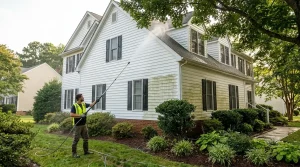
This is why professional house washing often relies on cleaning solution and controlled low pressure rather than using water force alone.
What Is Soft Washing
Soft washing is a low pressure exterior cleaning approach that relies on an appropriate cleaning solution to loosen and treat biological buildup.
The cleaning solution is applied to the siding and given enough time to work.
The surface is then rinsed using low pressure appropriate for the material.
The main advantage is that the cleaning chemistry does the difficult work instead of depending on strong water pressure.
This is especially useful for siding, painted surfaces, soffits, fascia, and other parts of a home where excessive pressure can cause damage.
Soft Washing Versus Pressure Washing a House
The terms house washing and pressure washing are sometimes used interchangeably, but the safest cleaning method depends on the surface.
Hard materials such as certain concrete areas may tolerate controlled pressure.
House siding generally requires a gentler approach.
Vinyl siding, fiber cement, painted siding, stucco, wood, and decorative exterior finishes each have different limitations.
A good house washing process adjusts the cleaner, application method, pressure, and rinse based on the actual surface being cleaned.
How to Clean Green Algae From Vinyl Siding
Vinyl siding is relatively easy to maintain, but cleaning technique matters.
Begin by inspecting for loose panels, damaged seams, openings around windows, electrical fixtures, and other areas where water intrusion could occur.
For routine dirt, mild soap and water with a soft brush may be sufficient.
For algae or mildew that does not respond to ordinary cleaning, use a product approved for the siding.
Rinse thoroughly with clean water.
Avoid spraying water upward behind siding overlaps.
CertainTeed specifically advises against power washing its vinyl and polymer siding.
If you know the siding manufacturer, follow that manufacturers current cleaning instructions before choosing a method.
How to Clean Green Growth From Fiber Cement Siding
Fiber cement siding also requires a careful approach.
James Hardie recommends using a garden hose along with a soft cloth or soft to medium nonmetal brush for routine cleaning.
For mildew, the company recommends an appropriate mildew cleaner used according to product instructions.
High pressure power washing is not recommended.
Harsh chemicals can also affect the siding finish.
When cleaning fiber cement, the goal is to protect the factory finish or paint while removing the surface contamination.
How to Clean Green Algae From Painted Siding
Painted siding needs additional caution because aggressive cleaning can strip or dull the coating.
Test any cleaner in an inconspicuous location first.
Use low pressure and a soft brush where appropriate.
If the paint is already peeling, cracking, chalking, or failing, cleaning may expose those existing defects more clearly.
Do not assume every appearance problem is dirt.
Sometimes the surface also needs repair and repainting.
How to Clean Green Growth From Stucco
Stucco has a textured surface that can trap dirt and organic material.
It can also be damaged by excessive pressure, particularly if the finish is old or cracked.
Use a siding appropriate cleaner and low pressure rinse.
Inspect cracks before washing because forcing water into existing openings can create additional problems.
Older stucco may require professional evaluation before aggressive cleaning is attempted.
What About Green Growth on Brick
Brick can support algae and other organic growth, especially on shaded areas that stay damp.
The cleaning process is different from vinyl siding because brick and mortar have different surface characteristics.
Do not assume that because brick is hard, unlimited pressure is safe.
Old or deteriorating mortar joints can be damaged by excessive water pressure.
Cleaning should account for the condition of both the brick and mortar.
Should You Use Bleach on Green Siding
This depends on the siding material and manufacturer recommendations.
Some siding manufacturers provide cleaning instructions that include diluted sodium hypochlorite for specific mildew problems.
Other materials may require a dedicated mildew cleaner and specifically warn against harsh chemicals.
Never assume that one house wash mixture is appropriate for every exterior.
Never mix chlorine bleach with ammonia.
Never mix bleach with acids or unknown cleaning chemicals.
Follow product labels and siding manufacturer instructions.
Protect nearby plants and surfaces when using any exterior cleaning chemical.
How Professional House Washing Removes Green Growth
A professional house washing process should begin with inspection.
The cleaner should identify the siding material, contamination, damaged areas, landscaping, windows, electrical fixtures, and other sensitive surfaces.
An appropriate cleaning solution is then applied at controlled pressure.
The solution is given time to loosen the biological growth and dirt.
The siding is rinsed carefully without forcing water into openings or behind panels.
Stubborn areas may require additional treatment rather than stronger pressure.
The final step is inspecting the cleaned surface and surrounding property.
Why Green Algae Comes Back After Cleaning
Cleaning removes existing contamination.
It does not change the direction your home faces or eliminate the environmental conditions around the wall.
If the north side remains shaded and damp, it will usually become dirty again before sunnier walls.
Rapid regrowth may also indicate another problem.
Check for sprinkler overspray, overflowing gutters, dense shrubs, poor airflow, roof runoff, leaking downspouts, and areas that remain wet unusually long.
The faster the growth returns, the more important it is to investigate moisture conditions around that wall.
How to Keep the North Side of Your House Cleaner Longer
You cannot change the direction your house faces, but you can often reduce some of the conditions that promote green buildup.
Trim Dense Vegetation
Keep shrubs and branches from pressing directly against the siding.
Better airflow can help exterior surfaces dry faster.
Redirect Sprinklers
Adjust irrigation so water does not repeatedly hit the house.
This can make a major difference in areas where the lower siding turns green quickly.
Maintain Gutters
Keep gutters and downspouts clear so water does not overflow down the wall.
Repair leaking gutter joints when necessary.
Improve Drainage
Make sure water moves away from the foundation and does not remain pooled along the side of the house.
Remove Organic Debris
Leaves, vines, and other debris can trap moisture against exterior surfaces.
Keep the wall and the area immediately around it clear.
Inspect the Shaded Side Regularly
Do not wait until the entire wall is dark green.
Early buildup is generally easier to clean.
Wash the House When Needed
Cleaning frequency depends on the house.
A sunny open property may remain clean longer than a heavily wooded home with extensive north facing siding.
Use actual surface conditions rather than an arbitrary calendar rule.
How Often Should the North Side of a House Be Cleaned
There is no universal schedule.
Some siding manufacturers provide general maintenance intervals.
CertainTeed recommends regular cleaning and discusses annual cleaning for maintaining vinyl siding appearance.
James Hardie recommends cleaning siding approximately every 6 to 12 months depending on geographical location and exposure.
However, your home may need more or less frequent house washing depending on shade, tree cover, humidity, pollen, irrigation, and drainage.
Inspect the north side periodically because it is often the first wall to show visible buildup.
Why the East Side of a House Can Turn Green Too
The north wall is not the only vulnerable surface.
East facing walls receive morning sunlight but can spend much of the afternoon shaded.
If nearby trees or homes block morning sun, an east wall may remain damp for long periods.
In some properties, the east side can look almost as green as the north side.
The same rule applies.
The wall that dries most slowly usually develops biological buildup first.
Why One Section of a Wall Turns Green but the Rest Does Not
Localized green patches usually point to localized conditions.
A tree may shade one corner.
A gutter may leak above one section.
A sprinkler may hit the lower wall.
A large shrub may block airflow.
An air conditioning line or architectural feature may also alter moisture patterns around the wall.
Instead of treating the discoloration as a random stain, look at what is happening around that exact area.
Can Sunlight Kill Algae on Siding
Sunlight and faster drying can make conditions less favorable for persistent green buildup, but sunlight should not be treated as a cleaning method.
Once algae and dirt are established on the wall, physical cleaning or an appropriate exterior cleaning process is usually required.
Increasing sunlight through sensible trimming can help slow future regrowth.
Do not damage valuable landscaping simply to expose every wall to full sun.
The goal is better airflow and reasonable drying conditions.
Is Green Siding More Common on Older Houses
Not necessarily.
A newer home can develop green siding quickly if the wall is heavily shaded, regularly sprayed by irrigation, or surrounded by dense landscaping.
Older houses may have additional factors such as aging paint, older siding, worn sealants, or outdated drainage details that require more careful inspection.
The age of the building matters less than the actual surface condition and moisture exposure.
Is Green Siding More Noticeable on Light Colored Houses
Yes, green and dark biological staining can be visually obvious on white, beige, cream, and other light siding.
Dark siding can hide early buildup more easily.
This does not mean dark siding remains cleaner.
The contamination may simply be less visible until it becomes heavier.
Inspect the surface rather than relying only on color.
Common Mistakes When Cleaning Green House Siding
Using Maximum Pressure
Siding does not need the same pressure used for concrete cleaning.
Excessive force can damage the material or push water behind it.
Assuming Every Green Stain Is Mold
Green staining is often algae.
Different contaminants can require different cleaning methods.
Ignoring the Water Source
If a gutter leak or sprinkler keeps the wall wet, cleaning alone will not solve the recurring problem.
Using One Cleaner on Every Siding Material
Vinyl, fiber cement, painted siding, wood, and stucco have different cleaning requirements.
Letting Cleaning Solution Dry
Many exterior cleaners should be rinsed before they dry.
Follow the product instructions and work in manageable sections.
Spraying Upward Into Siding
Water directed upward can enter behind overlapping siding panels.
Use a cleaning and rinsing technique appropriate for the material.
Ignoring Plants
Exterior cleaning solutions can affect nearby grass, flowers, and shrubs.
Protect landscaping according to the cleaner instructions.
Mixing Chemicals
Never combine cleaning chemicals unless the manufacturer specifically says it is safe.
Bleach should never be mixed with ammonia or acids.
Why Richmond Homes Develop Green Siding
Richmond Virginia experiences warm humid conditions that can help exterior surfaces stay damp.
Many neighborhoods also have mature trees and established landscaping that shade siding throughout parts of the day.
Spring pollen and ordinary outdoor dirt can collect on the exterior and create an additional surface layer where biological buildup becomes more visible.
Homes in Richmond, Midlothian, Glen Allen, Short Pump, and surrounding areas can therefore develop noticeably heavier green growth on shaded elevations.
The north side is often affected first, but tree cover, neighboring buildings, gutters, and irrigation can make any wall a problem area.
House Washing in Richmond Virginia
Jacobsons Power Washing provides house washing and siding cleaning for homeowners throughout Richmond Virginia and surrounding communities.
The cleaning method is selected according to the siding material and condition rather than using the same level of pressure on every home.
Vinyl siding, fiber cement, painted surfaces, wood siding, and stucco all require different levels of care.
For biological buildup such as algae and mildew, a low pressure cleaning process allows the cleaning solution to loosen contamination before the surface is gently rinsed.
This approach is especially useful for north facing and heavily shaded walls where green growth tends to return more quickly.
Professional house washing can also help identify patterns that point to sprinkler overspray, gutter runoff, dense vegetation, or other moisture problems around the home.
Frequently Asked Questions
Why Does the North Side of My House Turn Green
The north side usually receives less direct sunlight, so rain, dew, and humidity dry more slowly. The longer surface moisture remains on siding, the easier it is for green algae and other biological buildup to develop.
What Is the Green Stuff on the Side of My House
It is often green algae, although mildew, mold, dirt, pollen, moss, or a combination of contaminants can also cause discoloration.
Why Is Only One Side of My House Green
One wall may receive less sunlight, have poorer airflow, sit behind trees or shrubs, receive sprinkler overspray, or stay wetter because of gutter and drainage conditions.
Is Green Algae on Siding Harmful
Green algae is commonly a surface maintenance issue rather than evidence that the siding has structurally failed. However, persistent moisture should be investigated because it may indicate a drainage, irrigation, or water management problem.
Does Green Siding Mean I Have Mold Inside My House
No. Exterior green staining does not automatically mean there is indoor mold. Interior mold requires its own moisture source and should be evaluated separately if there are indoor signs of water damage or dampness.
Can I Pressure Wash Green Algae Off My Siding
It depends on the siding. Some manufacturers specifically discourage high pressure washing. CertainTeed does not recommend power washing its vinyl and polymer siding, while James Hardie recommends low pressure cleaning rather than high pressure power washing.
Is Soft Washing Better for Green Siding
For many siding materials, a low pressure cleaning method is safer because cleaning solution does most of the work. The exact method and cleaner should still be appropriate for the specific siding.
Why Does Green Algae Keep Coming Back
The wall probably continues to stay damp. Shade, humidity, poor airflow, sprinklers, gutters, tree cover, and drainage can all contribute to recurring growth.
How Can I Stop the North Side of My House From Turning Green
You may not be able to prevent all growth, but you can slow it by trimming vegetation, improving airflow, redirecting sprinklers, maintaining gutters, correcting drainage problems, and cleaning buildup before it becomes heavy.
How Often Should House Siding Be Cleaned
Cleaning frequency depends on the siding manufacturer, climate, shade, landscaping, and moisture exposure. Inspect the house regularly and clean it according to the surface condition and manufacturer recommendations.
Why Does the Bottom of My Siding Turn Green
Lower siding receives more splashback from rain, soil, mulch, and sprinklers. Vegetation around the foundation can also keep the lower wall shaded and damp.
Can Gutters Cause Green Stains on Siding
Yes. Clogged, overflowing, or leaking gutters can repeatedly wet the siding and create conditions where green biological growth develops quickly.
Final Thoughts
Why does the north side of a house turn green faster
The main reason is slower drying.
In the Northern Hemisphere, north facing walls usually receive less direct sunlight. Rain, dew, and humidity therefore remain on those surfaces longer.
When moisture combines with shade, dirt, pollen, tree cover, and limited airflow, green algae can become established on the siding.
The direction of the wall is only part of the story.
Trees, shrubs, sprinklers, overflowing gutters, neighboring buildings, and poor drainage can cause any side of a house to develop the same problem.
Safe house washing should focus on treating the buildup without damaging the siding.
That means identifying the surface first, following the siding manufacturers cleaning instructions, using suitable cleaning chemistry, and avoiding unnecessary pressure.
After cleaning, inspect the conditions around the affected wall.
Improving airflow, trimming vegetation, redirecting sprinklers, maintaining gutters, and correcting drainage problems can help the wall stay clean longer.
For professional house washing in Richmond Virginia, Jacobsons Power Washing cleans siding using methods selected for the specific exterior material and condition.
Contact Jacobsons Power Washing to request a free quote for house washing and siding cleaning in Richmond Virginia and surrounding areas.