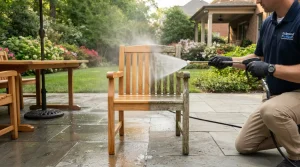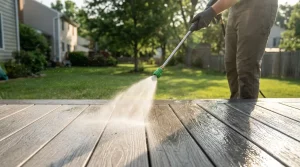

Yes, you can pressure wash certain types of outdoor furniture, but whether it is safe depends entirely on the material, its age, and the amount of water pressure used.
Using driveway-level pressure on a delicate patio set can strip paint, gouge soft wood, shred fabric, or permanently etch plastic. High-pressure washing is rarely necessary for patio chairs and tables; for most materials, the safest method relies on the right cleaning solution, a soft brush, and a low-pressure rinse.
This guide breaks down which outdoor furniture materials can handle pressure washing, safe pressure ranges, manufacturer-approved methods, and how to avoid costly surface damage.
Quick Answer
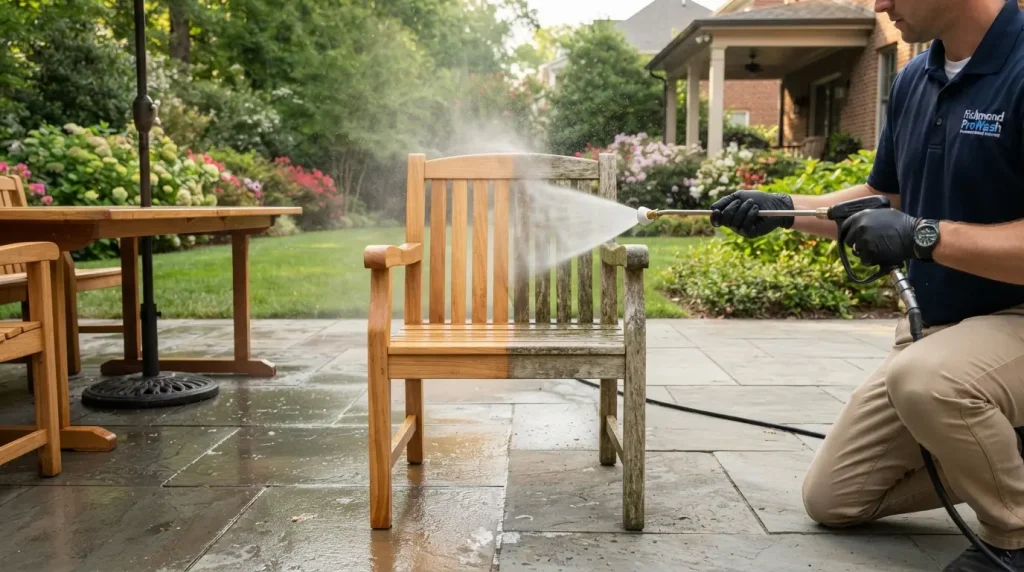
You can safely pressure wash durable outdoor furniture made from cast aluminum, dense wrought iron, unpainted concrete, and certain dense woods like teak—provided you use a low-pressure setting (under 1,200 to 1,500 PSI) with a wide 40° fan nozzle kept at least 12 to 18 inches away.
However, painted wood, softwoods (pine, cedar), resin wicker, natural wicker, glass tabletops, and outdoor fabrics should never be hit with high pressure. For these delicate surfaces, warm soapy water, a soft-bristle brush, and a standard garden hose are significantly safer and more effective.
Outdoor Furniture Pressure Washing Safe Limits by Material
| Material | Safe to Pressure Wash? | Max Safe PSI | Nozzle Tip | Safe Distance | Preferred Cleaning Method |
| Teak & Dense Hardwoods | With Caution | 800 – 1,200 PSI | 40° Fan Tip | 12 – 18 inches | Mild dish soap, soft brush, garden hose rinse |
| Softwood (Pine, Cedar) | No / Highly Risky | Under 800 PSI | 40° Fan Tip | 18+ inches | Wood-safe cleaner + soft-bristle brush |
| Cast Aluminum / Stainless | Yes | 1,200 – 1,500 PSI | 25° or 40° Fan | 12 inches | Car wash soap, sponge, gentle hose rinse |
| Wrought Iron | Yes (Sound Finish Only) | 1,200 – 1,500 PSI | 25° or 40° Fan | 12 inches | Detergent wash, dry immediately, inspect for rust |
| Plastic / Polyresin | Low Pressure Only | 1,000 – 1,200 PSI | 40° Fan Tip | 12 – 15 inches | All-purpose cleaner, microfiber cloth, garden hose |
| Natural Wicker / Rattan | Strictly NO | N/A | N/A | N/A | Damp cloth, vacuum brush, mild soap wipe-down |
| Resin / Synthetic Wicker | Low Pressure Only | Under 1,000 PSI | 40° Fan Tip | 18 inches | Garden hose rinse, soft-bristle brush, mild soap |
| Outdoor Fabrics / Cushions | Strictly NO | N/A | N/A | N/A | Fabric cleaner, soft brush, garden hose rinse |
| Tempered Glass Tops | Strictly NO | N/A | N/A | N/A | Glass cleaner or soapy water, microfiber cloth |
Guide by Furniture Material
1. Teak and Hardwood Patio Furniture
Teak, ipe, and eucalyptus are dense hardwoods rich in natural oils, making them naturally weather-resistant. While sound teak can tolerate low-pressure washing (under 1,200 PSI), excessive pressure strips the natural oils, erodes soft grain, and leaves a fuzzy, rough texture.
Always spray in the direction of the wood grain.
If the wood turns fuzzy or raised, stop immediately.
Routine maintenance is best done using warm soapy water or a dedicated teak cleaner agitated with a non-metallic scrub sponge.
2. Softwood and Pressure-Treated Furniture
Furniture built from pine, cedar, or fir has softer fibers easily gouged by a pressure washer.
High pressure will cause permanent gouging and splintering.
Stick to oxygen bleach cleaners or mild dish soap with a soft nylon brush and a standard garden hose.
3. Wrought Iron and Aluminum
Metal furniture holds up well to outdoor elements, but the finish determines its vulnerability:
Powder-coated aluminum can handle 1,200 to 1,500 PSI with a wide fan spray. Avoid abrasive cleaners or narrow zero-degree nozzles that can chip the powder coat.
Wrought iron tolerates controlled pressure, but if paint is already chipping, water pressure will strip the coating and expose bare metal to rapid rust. Always towel-dry metal furniture after washing to prevent moisture entrapment in welds.
4. Plastic, Polywood, and Resin Furniture
HDPE lumber (such as Polywood) and molded plastic patio chairs handle outdoor grime well, but high pressure can micro-etch plastic surfaces. Micro-etching creates microscopic pores that trap dirt and algae faster in the future.
Keep pressure below 1,200 PSI.
Use a wide 40° fan nozzle and maintain at least a foot of distance.
5. Natural Wicker vs. Synthetic Resin Wicker
Natural Wicker/Rattan: Never use a pressure washer or garden hose soak. Natural fibers swell, soften, unravel, and rot when saturated with pressurized water. Clean solely with a damp cloth or vacuum brush attachment.
Resin (All-Weather) Wicker: Synthetic resin can handle low-pressure rinsing (under 1,000 PSI), but direct, concentrated spray can break thin woven strands or loosen the weave around aluminum frames.
6. Outdoor Cushions, Slings, and Fabrics
Sunbrella and similar outdoor fabrics are water-resistant, not pressure-proof.
High pressure tears seams, destroys UV-resistant coatings, and saturates the inner foam core, causing persistent mildew.
Clean outdoor fabrics with mild laundry detergent or fabric cleaner, a soft brush, and a low-pressure garden hose rinse. Allow cushions to air-dry standing on end in direct sunlight.
Step-by-Step: How to Safely Clean Patio Furniture
Move Furniture to a Safe Area: Move chairs and tables onto a lawn or gravel area rather than a dirty driveway to prevent mud and grit splashback.
Remove Cushions and Glass: Strip off all fabric cushions, pillows, and decorative items. Carefully remove tempered glass tabletops and clean them by hand.
Dry-Brush Debris: Use a soft broom or handheld brush to sweep away spiderwebs, dry leaves, and loose pollen from crevices.
Apply a Surface-Safe Cleaning Solution: Spray a mild exterior detergent or warm soapy water over the furniture. Allow a 5- to 10-minute dwell time to break down tree sap, bird droppings, and algae. Never let the cleaner dry on the surface.
Agitate with a Soft Brush: Use a soft-bristle nylon brush to work the detergent into corners, armrest joints, and textured grain.
Rinse with a Wide Fan Tip: If using a pressure washer, fit it with a green (25°) or white (40°) fan tip. Start spraying from at least 18 inches away and move smoothly along the material’s grain or natural lines.
Dry Thoroughly: Wipe down metal frames to avoid water spots and rust. Allow wood furniture to dry in a shaded, well-ventilated area before applying sealers or oil.
Common Mistakes That Ruin Outdoor Furniture
Using a Red (0°) or Turbo Nozzle: Concentrated stream nozzles cut into wood, gouge plastic, and shred woven wicker in a fraction of a second.
Holding the Wand Too Close: Moving the tip within 6 inches exponentially multiplies water impact, even on low-pressure machines.
Washing Over Glass Tops: High-pressure vibration and temperature shifts can shatter tempered patio table glass.
Skipping the Cleaner: Relying solely on raw water pressure to blast away stubborn grime leads to surface gouging. Let safe cleaning chemistry do the heavy lifting.
Leaving Trapped Water in Metal Frames: Tubular metal chairs have drain holes; ensure furniture is tilted after washing so water drains completely from inside the tubing.
Patio Furniture Cleaning in Richmond, Virginia
Suburban Richmond backyards from Midlothian and Short Pump to Glen Allen deal with heavy spring pine pollen, high summer humidity, and thick tree canopies. Outdoor furniture left on decks and stone patios quickly develops green algae films, black mildew specks, and sticky organic sap.
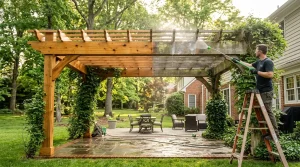
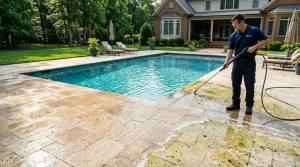
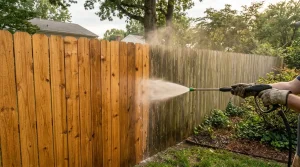
When having your deck, patio, or siding professionally cleaned, Jacobson’s Power Washing can safely wash durable outdoor furniture surfaces using professional-grade soft washing equipment. Matching the water volume, nozzle angle, and cleaning solution to each specific material ensures your outdoor living set is restored without damaging paint, wood fibers, or protective coatings.
Frequently Asked Questions
Can you pressure wash outdoor cushions?
No. High pressure damages fabric seams, degrades water-repellent coatings, and forces water deep into the foam core, causing chronic mildew and odor problems. Hand-scrub cushions using mild soap and rinse with a gentle garden hose.
Will pressure washing remove paint from metal patio furniture?
Yes, if the paint or powder coating is already aged, chipped, or bubbling from underlying rust. Keep pressure below 1,200 PSI with a wide 40° fan tip, or hand-wash to preserve the coating.
Can you use a pressure washer on Polywood chairs?
Yes, Polywood and composite HDPE furniture can be washed at low pressure (under 1,200 PSI) with a wide fan nozzle. Avoid placing the tip too close, which can create rough, uneven patches in the plastic finish.
How do I remove green algae from outdoor chairs without a pressure washer?
Mix warm water with a few drops of dish soap or an oxygen-bleach cleaner. Apply with a sponge or soft brush, let sit for 10 minutes, scrub gently along the grain, and rinse clean with a standard garden hose.
Final Thoughts
Pressure washing outdoor furniture can save significant time, but only when used with caution and respect for the material. When in doubt, start with the gentlest approach: a quality cleaning solution, a soft brush, and a garden hose. Reserve pressure washers for durable materials, keep the PSI low, use a wide fan spray, and always maintain a safe distance.
If you have delicate patio sets, aged wood, or extensive outdoor living areas in Richmond, Virginia, contact Jacobson’s Power Washing for a free quote on deck, patio, and outdoor surface cleaning.