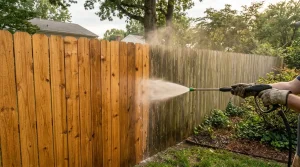

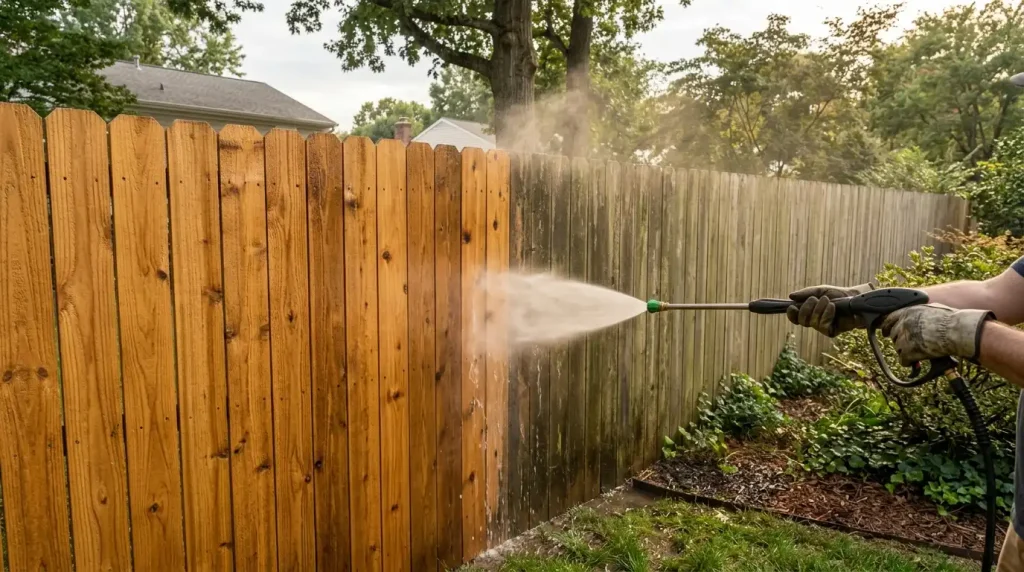
Green algae can make a wood fence look old, dirty, and poorly maintained. It is especially common on fence panels that stay shaded, receive little direct sunlight, or remain damp after rain and irrigation.
The good news is that green algae can usually be removed without damaging the fence. The key is using the right wood fence cleaning method instead of trying to blast the growth away with too much pressure.
For most fences, the safest process involves removing loose debris, applying a wood safe cleaner, allowing enough contact time, gently brushing stubborn areas, and rinsing thoroughly. A pressure washer can help in some cases, but the pressure must stay low enough to protect soft wood fibers.
This guide explains how to remove green algae from a wood fence safely, what cleaners work best, what PSI to use, and how to prevent the algae from returning.
Quick Answer
To remove green algae from a wood fence, first clear away leaves and loose debris from the fence surface and ground line. Wet nearby plants and landscaping, apply a cleaner made for exterior wood, allow the product to work according to the label, then gently scrub stubborn areas with a nylon or synthetic brush.
Rinse the fence thoroughly with a garden hose or a controlled low pressure rinse. If a pressure washer is used, most softwood fences should stay in a cautious range of about 500 to 1000 PSI, and you should generally avoid exceeding 1200 PSI on typical cedar, pine, or spruce fencing. Dense hardwoods in good condition may tolerate more, but wood fences should still be cleaned with a wide fan nozzle and a safe working distance.
The goal is to remove the algae without furrowing, splintering, or roughening the wood.
What Is the Green Growth on a Wood Fence
The green coating on a wood fence is often algae, but not every green surface is the same. Correctly identifying the growth helps you choose the safest cleaning method.
Green Algae
Green algae usually appears as a thin green film on damp or shaded wood. It often feels slick when wet and is common on the side of the fence that receives less sunlight.
Moss
Moss is thicker and more raised than algae. It tends to form soft clumps or patches and is more common in very damp areas.
Lichen
Lichen may look green, gray, white, or mixed in color. It usually clings more firmly to the fence surface and can be harder to remove than algae.
Mold and Mildew
Mold and mildew can appear in black, green, gray, or blotchy patches. They are more likely to form where moisture and organic debris remain for long periods.
Pressure Treatment Color
Some new pressure treated wood has a greenish tint because of the treatment process. This is not the same as algae. Treatment color usually looks more uniform, while algae develops unevenly in damp and shaded areas.
Why Green Algae Grows on Wood Fences
Green algae grows where moisture stays on the wood long enough to support biological buildup. Several common conditions make this more likely.
Shade
Shaded fence panels dry more slowly after rain, dew, or irrigation. This makes algae more likely to form.
Dense Landscaping
Shrubs, vines, and tree branches reduce airflow and block sunlight. They can also deposit leaves and organic material on the fence.
Sprinklers
Sprinkler systems that regularly spray a fence keep the boards wet. Even in dry weather, repeated irrigation can cause algae to grow quickly.
Poor Drainage
Water that collects near the fence line increases moisture around lower boards and posts. This keeps the wood damp longer than necessary.
Humidity and Rain
Warm humid weather creates better conditions for algae, especially on fences that already get limited sunlight.
Does Green Algae Mean a Fence Is Rotting
Not always. In most cases, green algae is surface growth and does not automatically mean the fence is structurally damaged.
However, algae does indicate that the surface is staying wet for long periods. Those same damp conditions can eventually contribute to wood deterioration if they continue for too long.
Before cleaning, inspect the fence for soft boards, loose fasteners, unstable posts, cracked rails, and areas of visible wood decay. Cleaning can improve the look of sound wood, but it cannot repair boards that have already started to fail.
What Is the Best Cleaner for Green Algae on a Wood Fence
The best cleaner depends on how much algae is present, whether the wood is painted or stained, and whether you plan to refinish the fence afterward. Start with the least aggressive product that can do the job.
Cleaner Comparison for Wood Fence Algae Removal
Oxygen Bleach Wood Cleaner
Oxygen bleach cleaners are often one of the best choices for general organic buildup and light to moderate green algae. Many contain sodium percarbonate and work well for wood fence cleaning without relying entirely on pressure.
These products are often a good option when you want a gentler cleaning method. They are commonly used before staining or sealing because they help clean the surface without being as harsh as chlorine bleach.
Rinsing can usually be done with a garden hose or low pressure rinse.
Mild House Wash or Bleach Based Cleaner
A bleach based exterior cleaner can help remove heavier algae and biological staining. However, it should be used carefully because it may affect nearby plants, painted surfaces, and the natural appearance of the wood.
If you use a bleach based cleaner, pre wet the landscaping first and rinse surrounding plants afterward. Follow the product label carefully and never make the solution stronger than recommended.
This type of cleaner is best followed by a gentle rinse rather than aggressive pressure.
Oxalic Acid Wood Brightener
Oxalic acid based wood brighteners are not usually the first step for algae removal, but they can be helpful after cleaning when the goal is to restore natural wood tone or improve the appearance of weathered wood. They may also help with certain tannin discoloration issues.
These products should be used carefully and according to label directions. They should not be mixed with bleach or other cleaners.
A gentle hose rinse is usually best after application.
Mild Soap and Warm Water
For fresh and localized surface growth on painted or lightly soiled wood, soap and warm water may be enough. This is often the safest starting point when you do not want to disturb paint or stain.
Soap and water will not always be strong enough for heavy algae, but they can work well for light buildup and spot cleaning.
How to Remove Green Algae From a Wood Fence
A careful step by step method gives better results than immediately reaching for a pressure washer. Cleaning chemistry and gentle agitation should do most of the work.
Step One Inspect the Fence
Walk the length of the fence and check the condition of the boards, rails, posts, and fasteners. Look for rotten wood, peeling paint, loose sections, and weak boards that may need repair before cleaning.
Step Two Identify the Fence Finish
Determine whether the wood is unfinished, stained, sealed, or painted. This matters because the safest cleaner for unfinished pine may not be the best choice for painted cedar or stained redwood.
Step Three Clear the Fence Line
Remove furniture, planters, toys, and decorations from the area. Clear away leaves, mulch, grass clippings, and other debris along the bottom of the fence so moisture is not trapped against the boards.
Step Four Protect Nearby Plants
Wet nearby grass, flowers, shrubs, and other landscaping with clean water before applying any cleaner. Some products may also require covering delicate plants, so always follow the cleaner instructions.
Step Five Remove Loose Growth
Use a synthetic or nylon brush to remove loose algae, dirt, and debris from the surface. Avoid wire brushes because they can damage the wood and leave behind metal particles.
Step Six Apply the Cleaner
Apply a wood safe exterior cleaner according to the label directions. A pump sprayer is often useful for larger areas because it allows even coverage without over saturating one section.
Step Seven Allow Proper Contact Time
Let the cleaner sit long enough to loosen the algae. Do not rinse it off immediately, but also do not let it dry on the wood unless the product directions specifically allow that.
Step Eight Gently Scrub Stubborn Areas
Use a nylon or synthetic brush to gently work over any remaining green patches. Brush with the grain and let the cleaner do most of the work.
Step Nine Rinse Thoroughly
Rinse from the top down using a garden hose or a controlled low pressure rinse. Remove all loosened algae and all cleaner residue from the fence surface.
Step Ten Let the Fence Dry
Allow the fence to dry fully before deciding whether it needs additional cleaning, a wood brightener, stain, or sealer. Drying time depends on humidity, temperature, airflow, and shade.
Can You Pressure Wash Green Algae Off a Wood Fence
Yes, many sound wood fences can be pressure washed, but pressure washing should be treated as a controlled cleaning aid, not as a substitute for the right cleaner. Too much pressure can gouge, fur, splinter, or roughen the wood surface.
That risk is highest on softwoods such as cedar, pine, and spruce. It is also higher on older weathered fencing and on wood with an existing paint or stain coating.
What PSI Should You Use to Pressure Wash a Wood Fence
There is no single PSI that works for every fence, but softwood fences should generally be cleaned in a much lower range than concrete or masonry. For most cedar, pine, and spruce fencing, a cautious working range is about 500 to 1000 PSI.
In many cases, you should avoid exceeding 1200 PSI on common residential softwood fences. Dense hardwoods in good condition may tolerate somewhat higher pressure, but wood cleaning should still stay conservative and controlled.
If the algae is not coming off, the first answer is usually a better cleaner or more dwell time, not more pressure.
What Nozzle Should You Use on a Wood Fence
Use a wide fan spray rather than a concentrated jet. A 25 degree or 40 degree fan nozzle is generally the safest choice for wood fence cleaning.
A 40 degree fan nozzle is often the more conservative option for delicate, older, or coated wood. Avoid zero degree nozzles and aggressive concentrated spray patterns because they can cut into the wood very quickly.
How Far Away Should You Hold the Pressure Washer From the Fence
Start farther from the surface and only move closer if necessary. A cautious starting distance is about 12 to 18 inches from the boards.
Always test a hidden section first. If the wood begins to look fuzzy, splintered, or rough, stop and reduce the pressure or increase the distance.
How to Pressure Wash a Wood Fence Without Damaging It
Use the lowest effective pressure and a wide fan nozzle. Keep the wand moving, follow the grain of the wood, and maintain a consistent distance from the boards.
Do not hold the spray in one place. Do not force water into damaged joints or loose boards. Test a small section first and allow it to dry so you can check whether the wood surface remains smooth.
Signs You Are Using Too Much Pressure
One of the clearest warning signs is fuzzy wood fibers. This means the surface is being damaged rather than simply cleaned.
Other warning signs include grooves, splintering, visible wand marks, stripped stain, peeling paint, rough patches, and uneven light colored cleaning lines. If you see any of these signs, stop immediately and reduce the pressure.
Is It Better to Pressure Wash or Scrub a Wood Fence
For many fences, cleaner and brushing should do most of the cleaning. A pressure washer can help rinse away loosened debris, but it should not be the only method used to remove algae.
This is especially true for weathered or softer wood. A chemical first and low pressure rinse approach is usually safer than trying to remove all the growth by force.
How to Clean a Painted Wood Fence With Green Algae
Painted fencing needs a gentler approach because the goal is to remove algae without stripping sound paint. Start with a mild cleaner that is compatible with painted exterior wood and test a hidden area first.
Use a soft or medium synthetic brush and rinse with a garden hose or very low pressure. If the paint is already flaking or peeling, washing alone may not solve the appearance problem and surface preparation for repainting may be necessary.
How to Clean a Stained Wood Fence
Check the condition of the stain before cleaning. Some older or failing stains may lift during washing, especially if too much pressure is used.
Use a cleaner that is compatible with stained exterior wood and test a small area first. If the stain is heavily weathered, cleaning may reveal that refinishing is needed.
Should You Use a Wood Brightener After Cleaning
A wood brightener can be useful when the fence is unfinished, weathered, or being prepared for staining. Many brighteners contain oxalic acid and may help improve color uniformity after cleaning.
A brightener is not required after every fence wash. It should only be used when appropriate for the wood and the next finishing step.
Can You Paint or Stain Over Green Algae
No. Paint, stain, and sealers should not be applied over visible algae or dirty wood.
The fence needs to be cleaned first and allowed to dry completely. Coatings perform better and last longer on a properly cleaned and dry surface.
How to Keep Green Algae From Coming Back
Removing the algae is only part of the solution. Slowing down regrowth depends on reducing the moisture conditions that caused it in the first place.
Improve Airflow
Trim back shrubs, vines, and dense plantings that are pressed against the fence. Better airflow helps the wood dry faster after rain and dew.
Reduce Excess Shade
Where practical, prune vegetation that blocks sunlight from the fence for long periods. Even a modest increase in light exposure can help.
Redirect Sprinklers
Adjust sprinkler heads so they do not spray the fence repeatedly. Constant irrigation can quickly bring the algae back.
Improve Drainage
Correct areas where water pools near the fence line. Try to keep wet leaves, mulch, and soil from staying packed against the lower boards.
Remove Organic Debris
Regularly clear leaves, grass clippings, and other debris that hold moisture against the fence.
Maintain the Wood Finish
A suitable stain or sealer can help reduce moisture absorption when applied and maintained properly.
Clean Early
It is easier and safer to clean light algae growth than to restore a fence that has years of buildup.
Common Wood Fence Cleaning Mistakes
Using Too Much Pressure
More pressure does not mean better cleaning. Wood fibers can be damaged very quickly, especially on softwoods.
Holding the Wand Too Close
Moving the nozzle too close increases the force hitting the fence and can create permanent surface damage.
Using the Wrong Nozzle
A narrow nozzle concentrates too much pressure in one spot. Wide fan nozzles are safer for wood.
Using a Wire Brush
Wire brushes can scar the wood and leave metal fragments behind.
Using Harsh Chemicals Without Testing
Some cleaners can discolor stain, paint, plants, and nearby surfaces. Always test first and follow the label.
Mixing Cleaning Products
Never mix chlorine bleach with ammonia. Never mix bleach with acid based products or with unknown cleaners.
Letting Cleaner Dry on the Fence
Many wood cleaners work best when they remain wet during dwell time. Work in sections so you can rinse before the product dries.
Staining Too Soon After Washing
Wood should be allowed to dry properly before stain or sealer is applied.
How Often Should You Clean a Wood Fence
There is no single schedule that fits every fence. A sunny fence with good airflow may stay cleaner for much longer, while a shaded fence under trees may develop algae quickly.
Inspect the fence seasonally and clean it when green growth, heavy dirt, or biological staining becomes noticeable. Regular maintenance is usually easier on the wood than waiting until buildup becomes severe.
Why Wood Fences Turn Green in Richmond Virginia
Richmond area fences often deal with warm weather, humidity, rainfall, spring pollen, mature trees, and shaded lots. These conditions allow wood surfaces to stay damp longer, especially on fence sections that receive limited sunlight.
Homes in Midlothian, Glen Allen, Short Pump, Richmond, and nearby communities may also have fencing close to landscaping or tree cover. That combination of shade, debris, and moisture can create ideal conditions for algae growth.
Professional Fence Cleaning in Richmond Virginia
Removing green algae from a wood fence is not just about using a stronger pressure washer. The fence should be assessed for wood type, age, finish, condition, and surrounding plant exposure before the cleaning method is chosen.
Jacobsons Power Washing provides wood fence cleaning throughout Richmond Virginia and surrounding communities. The cleaning process is adjusted to the condition of the fence so algae, mold, mildew, dirt, and surface buildup can be removed without relying on unnecessary pressure.
Professional fence cleaning can be especially helpful when the wood is older, the algae is heavy, the fence has an existing coating, or the homeowner is unsure which cleaner and pressure settings are safe.
Frequently Asked Questions
What Is the Best Way to Remove Green Algae From a Wood Fence
Use a wood safe exterior cleaner, allow proper dwell time, gently scrub stubborn areas, and rinse thoroughly. Pressure washing can help on suitable wood, but the pressure should stay low and controlled.
Can You Pressure Wash Green Algae Off a Wood Fence
Yes, but the safest method is to use cleaner first and pressure second. Pressure alone increases the risk of damaging the wood.
What PSI Should I Use on a Wood Fence
For most softwood residential fences, a cautious range is about 500 to 1000 PSI. In many cases, you should avoid exceeding 1200 PSI on cedar, pine, and spruce fencing.
What Nozzle Should I Use to Pressure Wash a Wood Fence
A 25 degree or 40 degree fan nozzle is generally safest. A wide fan spray reduces the risk of gouging or furrowing the wood.
How Far Away Should I Hold the Pressure Washer From a Wood Fence
Start about 12 to 18 inches from the wood and test a hidden section. Adjust carefully only if needed.
Can I Use Bleach to Remove Algae From a Wood Fence
A bleach based exterior cleaner may help with heavier biological staining, but it must be used carefully. Always protect nearby plants, follow label directions, and never mix bleach with ammonia or acids.
Is Oxygen Bleach Good for Cleaning a Wood Fence
Yes. Oxygen based wood cleaners are often a strong option for general organic buildup and algae because they clean effectively without relying on overly harsh pressure.
Will Green Algae Rot My Fence
Not by itself. However, the wet conditions that allow algae to grow can also contribute to wood deterioration over time.
Can I Stain a Fence After Removing Algae
Yes, but only after the fence has been cleaned thoroughly and allowed to dry fully.
Why Does Algae Keep Coming Back on My Fence
Recurring algae usually means the fence continues to stay damp. Common causes include shade, sprinklers, poor airflow, nearby vegetation, and trapped organic debris.
Does a North Facing Fence Grow More Algae
It often can. North facing and heavily shaded surfaces usually receive less direct sun and may remain damp longer.
Final Thoughts
Learning how to remove green algae from a wood fence is really about balancing cleaning power with wood protection. The safest method is usually a cleaner first approach followed by gentle brushing and a thorough rinse.
If pressure washing is needed, keep it controlled. Use a wide fan nozzle, stay in a low PSI range for softwoods, maintain a safe working distance, and keep the spray moving with the grain.
More pressure is not the solution for wood. The best wood fence cleaning method removes the algae while preserving the surface underneath.
Once the fence is clean, reducing shade, improving airflow, redirecting sprinklers, and maintaining the wood finish can help slow down regrowth. If you need professional fence cleaning in Richmond Virginia, Jacobsons Power Washing can remove algae and other buildup using a cleaning method selected for the condition of the wood.
Contact Jacobsons Power Washing to request a free quote for deck and fence cleaning in Richmond Virginia and surrounding areas.