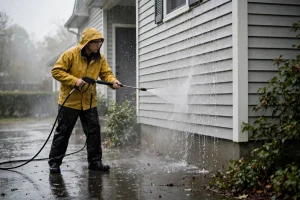

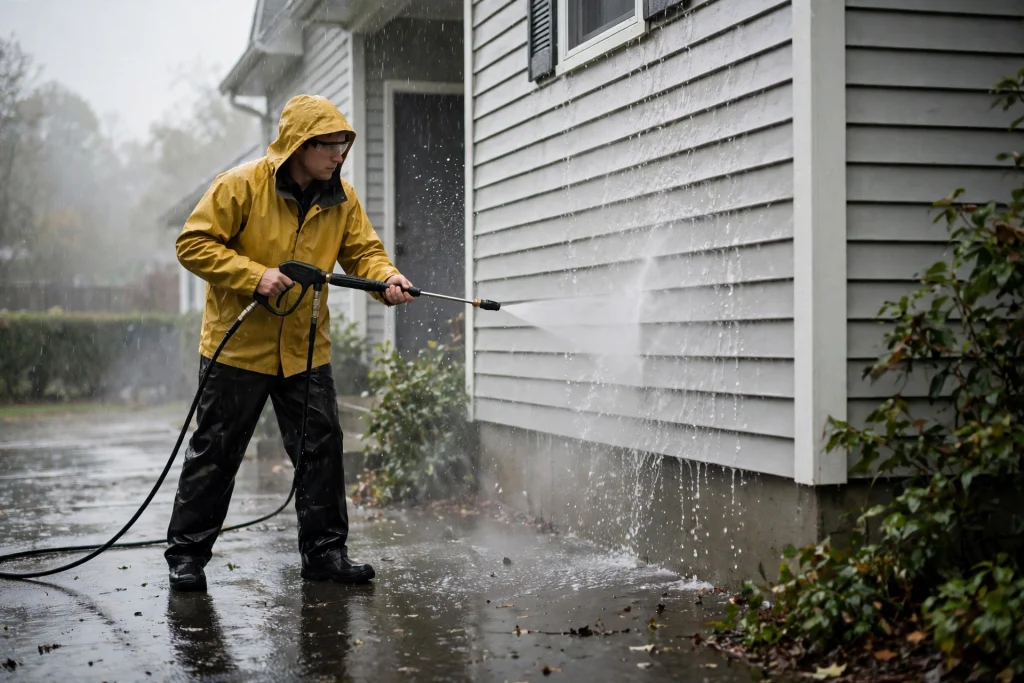
Yes, you can often pressure wash in light rain, and some professional crews keep working through a gentle drizzle. Rain doesn’t stop the cleaning itself, since the job already puts a lot of water on your home. What changes the answer is the type of rain, the equipment, and whatever comes after the wash.
Thunder and lightning are a hard stop. Heavy downpours, strong wind, and plans to seal or stain right after cleaning are also good reasons to wait. This guide explains where the line usually falls, so you can decide whether a rainy forecast means you should go ahead or reschedule.
The Short Answer
- Light rain or drizzle: Usually fine for house washing, concrete cleaning, and rinsing.
- Moderate, steady rain: Possible, but cleaning solutions get diluted and results are harder to check.
- Heavy rain: Usually better to wait, since the rain can rinse cleaner off before it works.
- Thunder or lightning: Stop. Follow the National Weather Service rule: “When thunder roars, go indoors,” and wait at least 30 minutes after the last thunder before going back outside.
- Freezing or near-freezing temperatures: A separate issue covered in our guide to Virginia winter temperature limits for washing.
How Much Rain Is Too Much?
For pressure washing, the practical line is less about a fixed rainfall number and more about whether the rain is affecting cleaner dwell time, visibility, runoff control, or safe footing. A light drizzle may be workable. Steady or wind-driven rain is a reason to reconsider the job.
When Light Rain Can Actually Help
A cloudy, drizzly day can give better results than a hot, sunny one, for a few reasons.
- Cleaners stay wet longer. In direct sun, cleaning solution can dry on siding before you rinse it, which may leave streaks or spots. Overcast, damp conditions slow that drying.
- Plant protection still applies. Overcast conditions can slow cleaner drying, but rain should not replace the plant-protection steps required by the cleaner or soft wash procedure. Follow the product label and normal pre-wetting and rinsing practices.
- Less glare. Without bright sun and hard shadows, it can be easier to see the surface while you work.
These benefits only apply to light rain. Once the rain gets steady or heavy, the drawbacks start to outweigh them.
When You Should Wait
Thunder or Lightning
There is no gray area with thunder. No place outdoors is safe when thunderstorms are in the area. Stop work at the first sound of thunder, move to a substantial building or an enclosed, metal-topped vehicle, and wait at least 30 minutes after the last thunder before resuming.
Richmond gets frequent afternoon thunderstorms in late spring and summer, so check the hourly forecast before you start a job that will take several hours.
Heavy or Wind-Driven Rain
Heavy rain dilutes cleaning solution and can rinse it off before it loosens mildew, algae, or grime. You may finish the job, only to see green streaks return once the siding dries. Strong wind adds another problem: it pushes spray and cleaner where you don’t want it, including onto windows, cars, plants, and you.
Freezing or Near-Freezing Temperatures
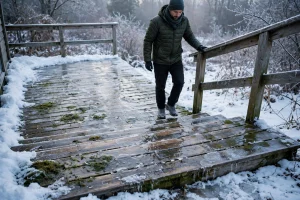
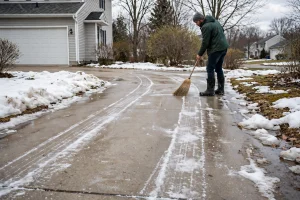
Cold rain brings a different set of risks, including ice on walkways and water freezing inside equipment. Temperature limits are covered in detail in our guide on when to wait during a Virginia winter.
When Sealing or Staining Is the Next Step
Rain doesn’t hurt the wash itself, but it can hold up whatever comes next. Sealers and stains usually need a dry surface and a dry forecast to bond and cure, so check the product label for how long it needs. If you plan to seal your concrete driveway after pressure washing, or to stain or seal your deck after cleaning, plan the wash around the dry days that will follow it, not just the day of the wash.
Gas vs. Electric Pressure Washers in the Rain
If you’re doing the job yourself, your equipment matters as much as the weather. Always check your owner’s manual first, since manufacturers set their own limits for wet conditions.
Electric Pressure Washers
Many electric pressure washer manuals warn against exposing the unit to rain or using it in wet conditions. Water getting into the motor, switch, or cord connections can create a shock risk and damage the machine. If your manual allows any outdoor use in damp conditions:
- Plug only into a GFCI-protected outdoor outlet, or use the GFCI built into the cord if your model has one.
- Use an extension cord rated for outdoor use, only if the manual allows one, and keep every connection off wet ground.
- Stop if the cord, plug, or outlet gets wet, or if the GFCI trips.
In moderate or heavy rain, the safer choice is to put an electric unit away and wait.
Gas Pressure Washers
A gas engine doesn’t carry the same shock risk, but rain can still cause trouble for the engine, so follow your owner’s manual on wet conditions. Some homeowners are tempted to move a gas pressure washer somewhere covered to keep it dry. Don’t. Gas engines produce carbon monoxide. Never run a gas pressure washer in a garage, carport, porch, shed, or other enclosed or partially enclosed space, even with doors open. Keep the engine outdoors and at least 20 feet from doors, windows, and vents.
How Rain Affects Different Surfaces
| Surface | Light rain | Main thing to watch |
|---|---|---|
| House siding (vinyl, Hardie, painted wood) | Usually fine, especially with soft washing | Cleaner dilution and runoff into plant beds. Results are harder to inspect until the siding dries. |
| Brick | Usually fine | Brick absorbs water, so it can look darker or cleaner than it really is until it dries. |
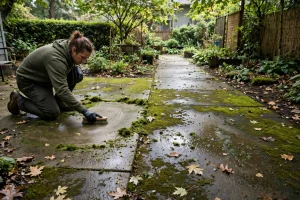
| Driveways, patios, and walkways | Usually fine | Rain can hide spots you missed. Water pooling in low spots makes it harder to see the final result. |
| Decks and fences | Workable with care | Wet wood and composite get slippery fast, and the wood needs time to dry out before any stain or sealer. |
The common thread is that rain makes it harder to judge your work. A driveway or wall can look evenly clean while wet, then show stripes or missed areas once it dries. Plan to check the surface again after it dries completely.
Stay Safe on Wet Surfaces
Rain adds slip risk to a job that already involves water, cleaners, and hoses underfoot.
- Wear shoes with good grip. Wet decks, painted porches, and algae-covered concrete can be very slick.
- Avoid pressure washing from a ladder. Wet rungs, soft ground, hose movement, and spray reaction all increase fall risk. Use a ground-based extension system or professional access equipment instead.
- Watch where hoses and cords run. Wet hoses across a walkway are easy to trip on.
- Keep your eyes covered. Wind-blown spray mixed with cleaner can get past a hat brim. Wear safety glasses.
Can You Pressure Wash After It Rains?
Yes. The day after a rain is often a good time to wash, as long as standing water has drained and the forecast is dry. Rain can soften dirt and loose debris, making them easier to rinse away.
A few things to keep in mind:
- Let deep puddles drain first, so you can see the surface and the water has somewhere to go.
- Clear mud and debris that the rain washed onto driveways and walkways before you start.
- If you plan to seal or stain afterward, the surface still needs to dry fully, and that can take longer after a heavy rain.
How a Professional Crew Handles a Rainy Forecast
Professional crews keep an eye on the forecast in the days before your appointment. Light rain usually doesn’t change the plan, but thunder, lightning, or heavy rain may lead to a pause or a new date. If rain is in the forecast for your appointment, it’s worth calling ahead to ask whether the crew plans to go ahead. Our homeowner’s prep checklist covers what to do before the crew arrives, rain or shine.
If you’d rather not watch the radar and guess, Jacobson’s Power Washing provides house washing across Richmond, Midlothian, and the surrounding area. Contact us to schedule a wash or ask about timing.
Frequently Asked Questions
Should you pressure wash in the rain?
In light rain, you usually can, and overcast weather can help cleaners work by slowing drying. In heavy rain, it’s usually better to wait, since the rain can dilute cleaning solution and rinse it off early. Stop completely if you hear thunder or see lightning.
Can you leave a pressure washer out in the rain?
It’s best not to. Rain can get into the engine, motor, or electrical parts and cause damage or rust over time. Store the pressure washer in a dry place when you’re not using it. Never run a gas model in a garage, carport, shed, or other enclosed space to keep it out of the rain, because of the carbon monoxide risk.
What happens if my pressure washer gets rained on?
For an electric unit, disconnect power if it can be done safely, and don’t reuse the machine until it has dried and the manufacturer’s instructions say it is safe. For either gas or electric equipment, follow the owner’s manual after unintended rain exposure. If water may have entered electrical, engine, or fuel-system components, have the unit inspected before restarting it.
Does rain ruin soft washing?
Light rain usually doesn’t. Heavy rain can dilute the cleaning solution and wash it off before it fully works on mildew and algae, which can lead to streaks or quicker regrowth. That’s why heavy rain is a common reason to reschedule a soft wash.
Can I pressure wash my deck in the rain?
You can clean a deck in light rain, but take extra care on the slippery surface. The bigger issue is timing. If you plan to stain or seal the deck, it needs to dry fully first, so a run of dry days after the wash matters more than the weather during it.
When should you not pressure wash?
Don’t pressure wash during thunder or lightning, in heavy or wind-driven rain, or when temperatures are near freezing. It’s also best to wait if you plan to seal or stain soon and the forecast doesn’t give the surface enough time to dry.