
A pressure washer usually gets put away in the fall still holding a little water in the pump, the hose, and the wand. That is fine on a mild night. On a hard freeze, that leftover water can expand, crack the pump housing, and damage the seals inside. Spring then starts with a repair bill instead of a clean driveway.
Winterizing takes less than an hour and costs very little. Here is how to do it for gas and electric models, and how to bring the machine back to life when the weather warms up.
Why Freezing Damages a Pressure Washer
Water expands as it freezes. The pump in a pressure washer has small passages, valves, and seals that are built to handle high water pressure, not the pressure of ice forming inside them. A cracked manifold or a split seal usually shows up in spring as leaks, pulsing pressure, or a pump that will not build pressure at all.
Freezing is not the only issue. Detergent left in the system can dry and clog lines, and minerals in leftover water can build up on internal parts. Winterizing deals with all three by draining the system and protecting the pump before it sits for months.
What You Need
- The owner’s manual for your model
- A pressure washer pump protector, often sold as pump saver, or the antifreeze type your manual approves
- A garden hose and a bucket of clean water for flushing
- A rag and a container to catch drained water
- For gas models: fuel stabilizer or a way to drain the fuel, plus the oil your manual specifies
Check the manual before you start. Pumps and engines differ, and the manufacturer’s instructions take priority over any general guide, including this one.
How to Winterize a Pressure Washer Step by Step
These steps apply to both gas and electric pressure washers. Gas models need the extra engine steps in the next section.
- Flush the detergent system. If you used soap this season, run clean water through the detergent line or tank so no cleaner is left to dry inside. Empty and rinse any onboard detergent tank.
- Shut it down and relieve the pressure. Turn the machine off, shut off the water supply, and squeeze the spray gun trigger until water stops flowing. This releases trapped pressure before you disconnect anything.
- Disconnect and drain the hoses. Remove the garden hose, high-pressure hose, wand, and nozzle. Hold each one so water drains out completely, and coil the hoses loosely.
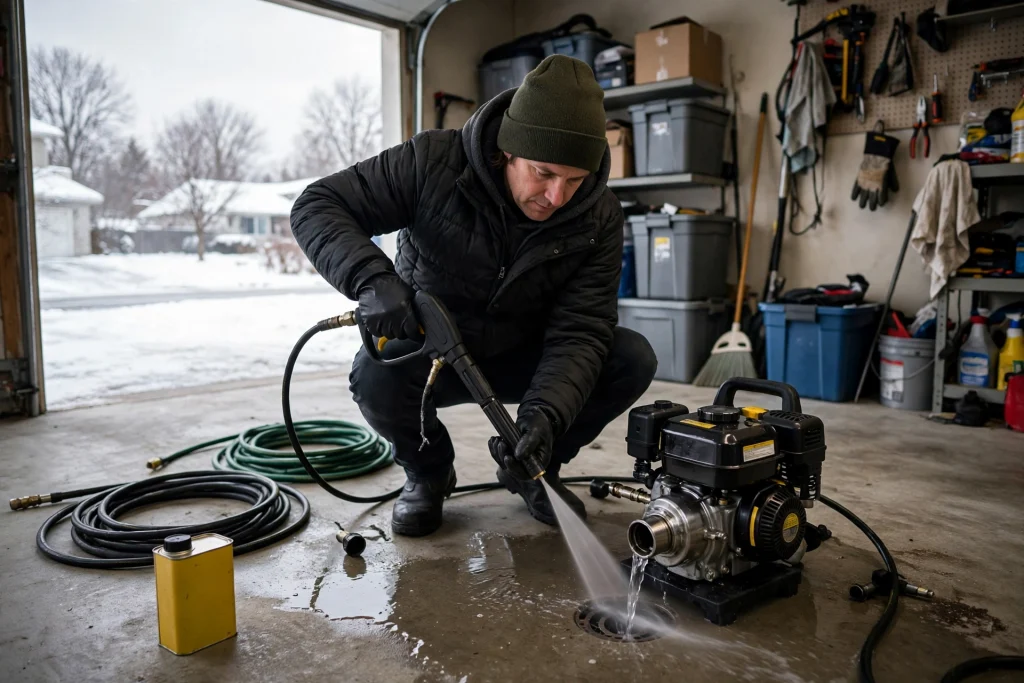
- Drain the pump. Tip the unit as your manual allows so water runs out of the inlet and outlet. On gas models, some manuals say to pull the starter cord a few times with the ignition off to push remaining water out of the pump. Follow your manual for this step.
- Add pump protection. Connect the pump protector to the water inlet and push it through the pump until it comes out of the outlet, following the directions on the product. This leaves a protective coating on the seals and keeps any remaining moisture from freezing.
- Clean and store the accessories. Rinse nozzles, check that their openings are clear, and store them with the wand and hoses in a dry place.
Use a product made for pressure washer pumps, or the type of antifreeze your manual specifically approves. Do not substitute automotive engine coolant or windshield washer fluid unless your manual says it is acceptable.
Extra Steps for Gas Pressure Washers
The engine needs attention too. Fuel that sits all winter can break down and gum up the carburetor, which is one of the most common reasons a pressure washer will not start in spring.
- Treat or drain the fuel. Either add fuel stabilizer and run the engine briefly so it reaches the carburetor, or drain the tank and run the engine until it stops. Your manual will say which approach the manufacturer prefers.
- Change the oil if it is due. Old oil holds contaminants that can sit on engine parts all winter. Use the oil type and amount in your manual.
- Check the spark plug and air filter. Replace them now if they look worn, so the machine is ready when you need it.
Always do fuel work outdoors or in a well-ventilated area, away from flames and pilot lights, with the engine cool.
Extra Steps for Electric Pressure Washers
Electric models skip the engine work, but the pump still needs the same draining and protection.
- Unplug the unit before draining or adding pump protection.
- Check the power cord and GFCI plug for cuts, cracks, or loose connections.
- Wrap the cord loosely so it does not kink or crack in the cold.
Where to Store a Pressure Washer for Winter
The best place is somewhere dry that stays above freezing, such as a heated garage, basement, or utility room. Keep it away from furnaces, water heaters, and other ignition sources, especially if it is a gas model.
If the only option is an unheated shed or garage, the draining and pump protection steps above matter even more. Raise the unit off a damp floor, cover it to keep out dust and moisture, and avoid wrapping it so tightly that condensation gets trapped underneath.
Store hoses where they will not be crushed or bent sharply. A cracked or kinked high-pressure hose is a common spring surprise. If yours is already damaged, here is what to know about whether you can repair a pressure washer hose.
Using a Pressure Washer During Winter
If you plan to use your machine through the cold months, a full winterization is not practical after every job. Instead, drain the pump, hoses, and wand completely after each use and store the unit somewhere above freezing.
Cold weather also limits when washing makes sense. Water can refreeze on surfaces and create slick spots. This guide on washing in a Virginia winter explains when it is better to wait.
How to Get Your Pressure Washer Ready in Spring
When the weather warms up, a few checks help the machine start cleanly.
- Inspect everything. Look for cracks in the pump housing, damaged hoses, worn O-rings, and loose fittings.
- Flush out the pump protector. Connect the water supply and run water through the pump with the spray gun open before starting the engine or motor.
- Check the engine on gas models. Confirm the oil level and add fresh fuel if you drained it.
- Test at low pressure first. Start with a wide nozzle and watch for leaks or pulsing before moving to tougher jobs.
Pressure Washer Winterizing FAQs
Can a pressure washer freeze?
Yes. Water left in the pump, hoses, or wand can freeze and expand, which can crack the pump housing or damage seals. Draining the system and adding pump protection before cold weather reduces that risk.
Can I use RV antifreeze in a pressure washer?
Some manufacturers allow non-toxic RV antifreeze, and others recommend a pump protector made specifically for pressure washers. Check your owner’s manual. A dedicated pump protector also lubricates seals, which plain antifreeze may not do.
Do I need to winterize an electric pressure washer?
Yes, if it will be stored somewhere that can drop below freezing. The pump holds water the same way a gas model does. You can skip the fuel and engine steps, but still drain the system and protect the pump.
Should I drain the gas or use fuel stabilizer?
Either can work. Some manufacturers prefer draining the fuel completely, and others recommend stabilizer. Follow your owner’s manual, and do any fuel work outdoors with the engine cool.
Can I store a pressure washer in an unheated garage?
You can, as long as the pump, hoses, and wand are fully drained and the pump is protected. Keep the unit off a damp floor and away from ignition sources if it is a gas model.
Prefer to Leave It in the Shed?
Winterizing your own machine is worth doing if you use it a few times a year. If you would rather skip the equipment, the setup, and the cleanup altogether, our team handles professional house pressure washing across the Richmond area. Call (804) 754-5200 for a free quote when spring cleaning season comes around.