
Virginia winters are not the deep freeze that places up north deal with, but they are cold enough to change how exterior cleaning works. Some people assume pressure washing shuts down entirely once the weather turns, and others try to push through a cold snap and end up with problems. The truth sits in the middle. There are limits worth knowing, and there are days when the smart move is to wait.
If you have wondered if it is too cold to pressure wash, the answer depends on the temperature, the surface, and what you are trying to clean. Here is how to think through it.
Why Temperature Matters for Washing
Water and cold do not get along, and that is the heart of the issue.
Freezing Is the Main Problem
The obvious limit is freezing. When water freezes on a surface, it turns to ice, and ice on a driveway or a walkway is a hazard the moment someone steps on it. Water left in equipment, hoses, and lines can freeze too, which damages the gear. Once the temperature sits at or below freezing, washing stops making sense for both safety and practical reasons.
Surfaces Stay Wet Longer in the Cold
In summer, a washed surface dries in an hour. In winter, that same surface can stay wet all day, since the sun is weaker and the air is cold. A wet walkway that has not dried by late afternoon becomes an ice patch overnight when the temperature drops. The washing itself might go fine, but what happens after matters just as much.
Cleaning Solutions Work Slower
The cleaning agents used on siding and other surfaces depend on chemistry to break down mold and grime, and cold slows that chemistry down. A solution that works in twenty minutes on a mild day may take much longer when it is cold, or may not reach full strength at all. Cold water rinsing is also less effective at clearing what the solution loosened.
Reading the Numbers
A few temperature ranges give you a rough map of what is workable.
Above Fifty Degrees Is Comfortable
When the daytime temperature climbs above fifty and stays there for a few hours, washing runs about the same as any other time of year. Central Virginia gets plenty of these days scattered through the winter, and they are good windows for exterior work.
Between Forty & Fifty Calls for Judgment
In this range, the work is doable, but timing becomes the deciding factor. You want to start early enough that surfaces have hours of daylight to dry before the evening cold sets in. A wash that wraps up at noon has a chance to dry. One that finishes at four in the afternoon in January does not.
Below Forty Means Waiting on Most Jobs
Once daytime highs sit below forty, and especially when overnight lows drop below freezing, most washing is better put off. The risk of ice and the drop in cleaning power outweigh the benefit of getting the job done that day. There are exceptions for certain surfaces and situations, but as a rule, this is wait territory.
What You Can & Cannot Do in the Cold
The surface changes the answer as much as the thermometer does.
Concrete Handles Cold Better
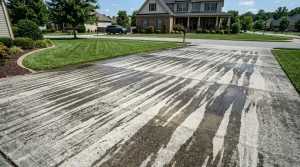
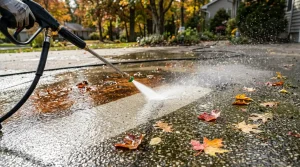
Concrete driveways and walkways tolerate cold-weather cleaning better than most surfaces, as long as the water is not freezing on contact and the slab has time to dry. Concrete does not care about a cleaning solution’s dwell time the way siding does, so a mild winter day works for a driveway more often than for a house wash.
House Washing Wants Warmer Days
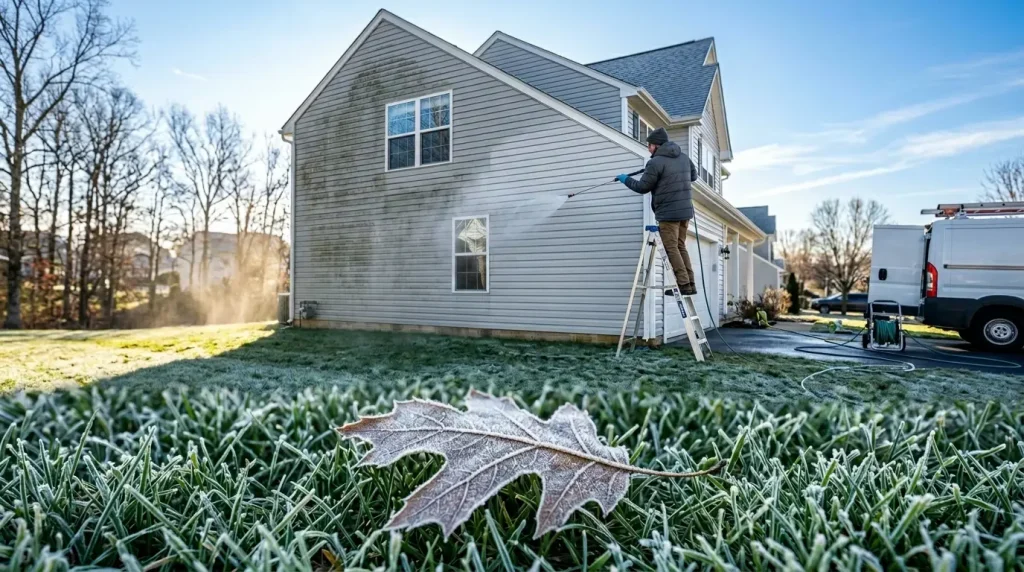
Soft washing siding relies on cleaning solutions doing their work, and the cold slows that down. House washing is generally better saved for the milder stretches, since a cold day undercuts the part of the process that actually removes the mold and algae.
Gutter Cleaning Is Fine
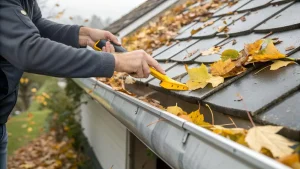
Clearing gutters is not really a wash in the cold-weather sense, since it is mostly about removing debris. That work continues through winter without much trouble, and getting gutters clear before a freeze is a good idea anyway.
Why Pushing Through the Cold Backfires
There is a temptation to just get it done, and it usually costs more than it saves.
Ice Creates Liability
A walkway or driveway that ices over after a winter wash is a fall waiting to happen. Getting the job done a day early is not worth someone slipping on the result.
The Clean Does Not Hold
A house wash done in conditions too cold for the solution to work leaves mold and algae behind, because the chemistry never finished. You pay for a wash and get a partial result, then need it done again when the weather warms.
Equipment Takes Damage
Water freezing in pumps, hoses, and lines cracks equipment. A crew that works in the cold manages this carefully, but it is one more reason that pushing a wash into freezing weather is a bad trade.
Timing Winter Work the Right Way
The move in a Virginia winter is to watch for the mild windows rather than forcing a job onto a cold day. The region gives you plenty of days in the forties and fifties, and those are the days to book. Starting in the morning leaves the most daylight for drying, which is the part that keeps a clean surface from turning into an icy one.
Our crew works through the winter across Richmond, Midlothian, Glen Allen, Short Pump, and the surrounding areas, and we watch the forecast to schedule jobs on the days that suit them. We know which surfaces handle the cold and which ones are better held for a warmer stretch, so the work gets done right rather than just done fast.
If you have an exterior cleaning job that has been waiting on the weather, give us a call and we will help you find the right window for it. Some jobs can go now, and some are worth waiting a week for, and we will tell you honestly which is which.