
A season of fires leaves its mark. Inside, the brick around the firebox turns gray and black. Outside, dark streaks can creep down the chimney crown, and brick near a vent, grill, or fire pit can pick up a sooty film of its own.
Soot can be cleaned off brick, but brick is more porous and more delicate than it looks. Scrubbing too hard, using the wrong chemical, or blasting it with high pressure can do more damage than the soot ever did. Here is how to clean soot off brick safely, inside and out, and how to tell when a stain is a sign of a bigger problem.
Why Soot Sticks to Brick
Soot is made up largely of fine carbon-rich particles produced by incomplete combustion. Smoke deposits can also contain oily or tar-like compounds that make some stains harder to remove. Brick is full of tiny pores, so soot settles into the surface instead of sitting on top. The longer it stays, the deeper it works in, and the harder it is to lift.
That is why soot rarely wipes off with water alone. It usually takes a cleaner that cuts through grease, a soft scrub, and patience.
Check This First: Is It Soot or a Chimney Problem?
Before you clean the outside of a chimney, look closely at the stain. Light staining can occur around a chimney termination, but sticky, heavy, unusual, or quickly recurring black deposits deserve a closer look before cleaning.
- Dark, sticky, or tar-like streaks running down the chimney can be creosote that has mixed with moisture and leaked through the masonry.
- Stains that come back quickly after cleaning often mean water or flue gases are still getting into the chimney.
- A strong smoky or tar smell indoors, especially in humid weather, can point to creosote buildup or moisture in the flue.
- White crystalline deposits may be efflorescence rather than soot. This guide on how to remove efflorescence from brick covers that problem.
- Orange or brown staining may have a different cause, such as rust, and should be identified before cleaning.
If you see any of the first three signs, have a certified chimney sweep inspect the chimney before you clean the outside. Leaks, a missing cap, or a damaged flue can affect how safely the fireplace works, and cleaning the brick will not fix the cause.
What You Need
- A vacuum with a brush attachment, or a soft dry brush, for loose soot
- A nylon or natural-bristle scrub brush (not wire)
- A mild detergent, or a masonry cleaner labeled for soot or smoke stains on brick
- Buckets, sponges, and clean water
- Drop cloths or plastic for indoor work
- Gloves and eye protection
How to Clean Soot Off Brick Step by Step
These steps work for interior fireplace brick and for exterior brick you can safely reach from the ground.
- Make sure the area is cold. For a fireplace, wait until the firebox and ashes are completely cold. Embers can stay hot in ash longer than you expect. Let ashes cool, then place them in a tightly covered metal container outdoors and away from the house or other combustible structures.
- Remove loose soot dry. Vacuum or brush away loose soot before adding any water. Wetting loose soot first tends to smear it deeper into the brick.
- Test your cleaner. Try it on a small, hidden area and let it dry fully before judging the result. Brick can look different wet and dry, and some cleaners can lighten or stain certain brick.
- Pre-wet the brick. Lightly dampen the brick with clean water. A damp surface absorbs less cleaning solution, which helps keep soot and cleaner from soaking in.
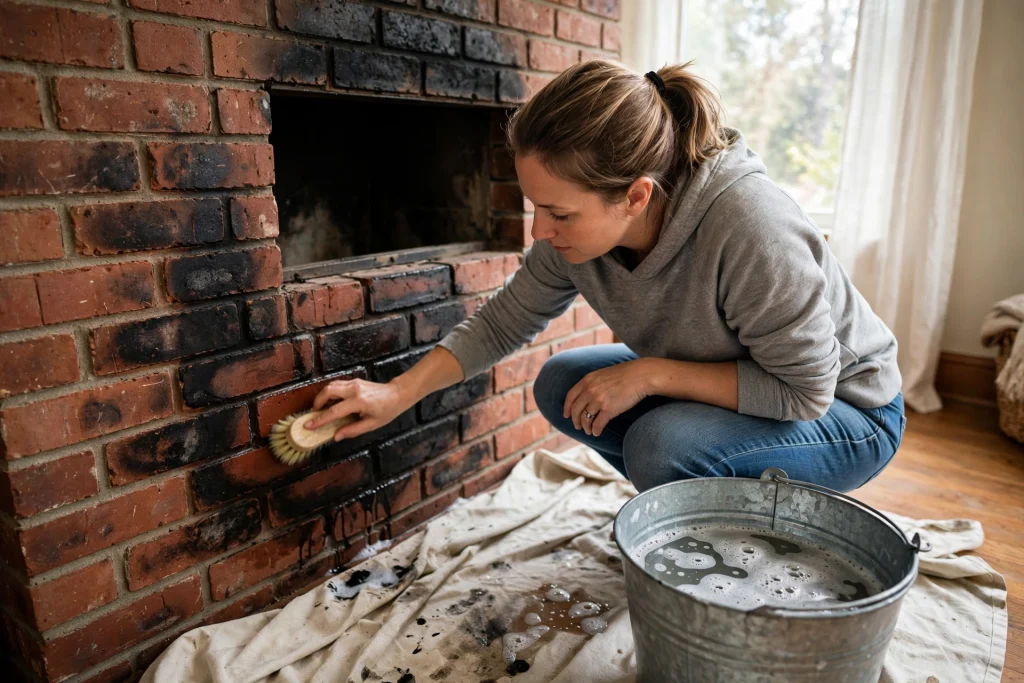
- Clean in small sections from the bottom up. Apply the cleaner and scrub gently with a nylon brush. Working from the bottom up helps keep dirty runoff from streaking the clean brick below.
- Rinse well. Rinse each section with clean water before moving on, so cleaner residue does not dry on the surface.
- Repeat if needed. Stubborn soot may take more than one gentle pass. Several light cleanings are better for brick than one aggressive scrub.
Cleaning Soot Off Exterior Brick and Chimneys
Outside, soot or smoke staining may appear near chimney terminations, combustion-appliance vents, outdoor fireplaces, grills, or fire features. Soot near a gas or other combustion appliance vent can also point to an appliance or venting problem, so have the appliance checked before you clean the wall.
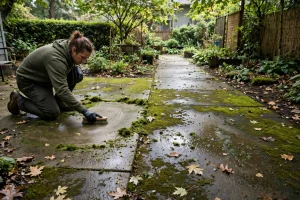
- Low walls and ground-level brick: The step-by-step method above works well. A garden hose is usually enough for pre-wetting and rinsing.
- Pressure washing: If you use a pressure washer, keep it on a low setting with a wide fan tip, keep the wand moving, and hold it at a distance. High pressure can erode mortar joints and damage the brick face. It also drives water into the masonry, which is the last thing a chimney needs.
- The chimney itself: Cleaning a chimney usually means working on a ladder or a roof. That is a job for a professional with the right equipment and fall protection, not a weekend DIY project.
Older brick needs extra care. Soft historic brick and lime mortar can be damaged by pressure and strong cleaners that newer brick tolerates. This post on pressure washing historic brick homes in Richmond explains why.
Cleaning Soot Off Interior Fireplace Brick
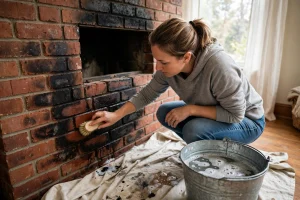
The fireplace surround and firebox take the most soot. Protect the floor and nearby furniture with drop cloths, keep the room ventilated, and follow the same dry-first, test, pre-wet, bottom-up approach.
For light soot, a mild detergent and a soft scrub are often enough. For heavier staining, a masonry cleaner labeled for soot or smoke stains on brick is a better next step than reaching for harsh household chemicals. Some soot inside the firebox is normal and will come back with every fire, so the goal is a clean surround, not a spotless firebox.
Cleaners to Avoid on Brick
- Muriatic acid and other strong acids. They can etch brick and mortar, change the color of the surface, and leave it more porous. Leave acid cleaning to masonry professionals.
- Mixing cleaning products. Never mix ammonia with bleach, or combine different cleaners in the same bucket. Some combinations release dangerous gases.
- Wire brushes. Steel bristles can scratch brick and leave metal fragments that rust and stain.
- Undiluted vinegar on older brick. Vinegar is acidic and can affect older brick and mortar. If you use it, test it first and rinse thoroughly.
Painted brick needs a different approach altogether. This guide on how to clean painted brick without peeling covers that.
How to Keep Soot From Coming Back
- Burn dry, seasoned wood. Wet or green wood produces more smoke and soot.
- Schedule regular chimney inspections and sweeping, as recommended by a certified chimney professional.
- Make sure the chimney has a cap and that the crown is in good shape to keep water out.
- Keep exterior vents and appliances maintained so they do not leave sooty streaks on nearby walls.
Soot on Brick FAQs
What is the best way to remove soot from brick?
Start dry. Vacuum or brush off loose soot, test a cleaner on a hidden spot, pre-wet the brick, then scrub gently with a nylon brush and a mild detergent or a masonry cleaner labeled for soot. Work in small sections from the bottom up and rinse well.
Can you pressure wash soot off brick?
On sound exterior brick that you can reach safely, low pressure with a wide fan tip can help rinse loosened soot. High pressure can damage mortar and the brick face and push water into the masonry. Chimneys and older brick are better left to a professional.
Does vinegar remove soot from brick?
Vinegar is acidic, so it is not the first choice for soot-stained brick. Brick, mortar, sealers, paint, and historic masonry can react differently to acids. Start with water and mild detergent or a cleaner labeled for the masonry instead.
Why is there black soot on the outside of my chimney?
Light staining can occur around a chimney termination, but heavy, sticky, unusual, or recurring stains can point to creosote, moisture getting into the chimney, a missing cap, or a damaged flue. Have a certified chimney sweep take a look.
How do I clean soot off a brick fireplace without damaging it?
Let the firebox cool completely, protect the floor, remove loose soot dry, and use the gentlest cleaner that works. Avoid wire brushes, strong acids, and mixing cleaning products.
Need Your Brick Cleaned the Right Way?
Brick looks tough, but it rewards a careful approach. If you would rather not climb a ladder or risk the mortar, our team provides professional brick cleaning across the Richmond area, with pressure and cleaners matched to the age and condition of the brick. Call (804) 754-5200 for a free quote.