
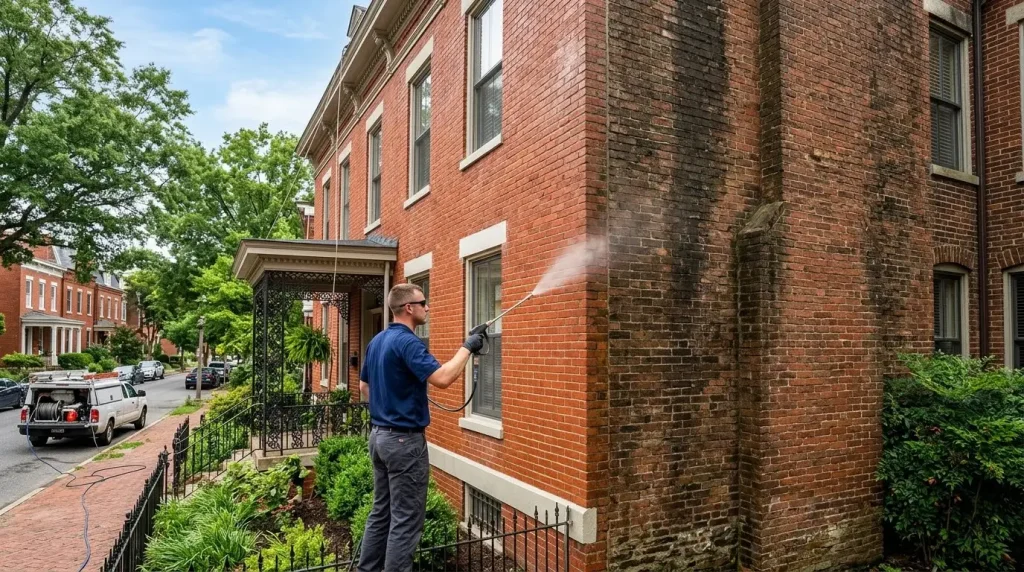
Historic brick homes are a major part of Richmond’s architectural character, but older masonry should not be cleaned the same way as modern brick veneer. The short answer is that some historic brick can be cleaned with carefully controlled water pressure, but high pressure washing is risky and should not be treated as the default method.
Older brick may be softer and more porous than modern brick, and historic mortar can be weaker or more vapor permeable than today’s hard portland cement mortars. Aggressive cleaning can scar brick faces, erode mortar joints, drive water deeper into the wall, or create damage that is difficult to reverse.
For historic masonry, the best approach is to start with the gentlest method that will remove the actual soiling problem, test it in a small area, and increase cleaning strength only when the masonry condition supports it.
Why Historic Brick Is Different From Modern Brick
Historic brick can vary widely in hardness, firing quality, porosity, surface texture, and condition. Some older bricks were fired at lower temperatures than many modern units, which can make them softer and more vulnerable to surface loss.
The mortar also matters. Historic buildings often used lime rich mortar that is softer and more permeable than modern portland cement mortar. That softer mortar was part of the wall system, allowing movement and moisture to pass through the joints rather than forcing stress into the brick.
A cleaning method that seems harmless on a newer brick wall can remove the weathered face of an old brick or wash material from a historic mortar joint.
What High Pressure Can Do to Historic Masonry
Remove the Protective Brick Surface
A concentrated water stream can roughen or scar the exterior face of softer brick. Once the fired surface is damaged, the brick can become more porous and more vulnerable to future moisture and weathering.
Erode Lime Mortar Joints
Historic lime mortar is intentionally softer than many modern mortars. High pressure water can wash material from the joints, deepen recesses, and expose weak sections that may then require repointing.
Force Water Into the Wall
Historic masonry walls can absorb water. Aggressive spraying can drive moisture into cracks, joints, and porous brick, especially around windows, trim, and areas where mortar has already failed.
Create Uneven Color and Texture
Spot cleaning with too much pressure can leave bright patches or visible wand patterns. On historic facades, those changes can alter the character of the masonry even when the brick remains structurally intact.
What Preservation Guidance Recommends
National Park Service preservation guidance recommends cleaning historic masonry with the gentlest method possible. Examples include low pressure water, detergent, and natural or soft bristle brushes rather than abrasive blasting or high pressure water.
The same guidance warns that inappropriate cleaning can cause irreversible damage, and that cleaning methods should be tested on a small, inconspicuous area before a larger section is treated.
How to Evaluate a Historic Brick Wall Before Cleaning
Check the Brick Faces
Look for spalling, flaking, powdering, cracks, missing corners, previous abrasive cleaning, or bricks that appear unusually soft. If the face is already deteriorating, powered cleaning can accelerate the damage.
Check the Mortar Joints
Inspect for missing mortar, deep erosion, open cracks, loose material, previous hard cement repairs, and areas where the joint has separated from the brick.
If the mortar is failing, cleaning should not be used as a substitute for masonry repair.
Look for Paint, Coatings, and Previous Treatments
Historic brick may have old paint, limewash, waterproof coatings, sealers, patching compounds, or previous chemical treatments. These materials can change how the wall responds to water and cleaners.
Identify the Actual Soiling
Dirt, algae, atmospheric staining, paint, efflorescence, rust, and biological growth do not all require the same treatment. The cleaning method should be chosen for the specific contaminant rather than using pressure as a universal solution.
A Safer Cleaning Process for Historic Brick
Step 1. Start With Dry Cleaning
Remove loose cobwebs, dust, leaves, and surface debris with a soft brush or low impact dry method before adding water.
Step 2. Test the Gentlest Wet Method First
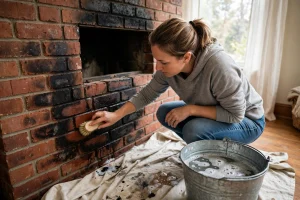
Begin with low pressure water or a mild, non acidic detergent that is appropriate for the masonry. Use a natural or soft bristle brush where gentle agitation is needed.
Test a small area and let it dry completely before judging the result. A test patch can reveal color change, surface loss, mortar erosion, or staining that may not be obvious while the wall is wet.
Step 3. Use Cleaning Chemistry Only When Needed
If water and gentle brushing are not enough, use a masonry cleaner that is suitable for the specific brick, mortar, and stain. Avoid assuming that acid, bleach, or another strong chemical is safe simply because it is commonly used on newer masonry.
Historic preservation guidance specifically cautions against cleaners that can damage masonry and stresses complete rinsing or neutralization when a chemical system requires it.
Step 4. Keep Water Pressure Conservative
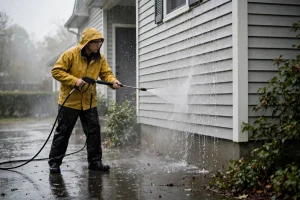
If pressurized water is used, the operator should control pressure, flow, spray pattern, angle, distance, temperature, and dwell time. Do not use a narrow zero degree stream or an aggressive setting intended for concrete surface preparation.
Historic masonry condition matters more than a single PSI number. Even relatively low pressure can damage a weak brick face or deteriorated mortar if the stream is concentrated in one place.
Step 5. Work in Manageable Sections
Clean small areas so the masonry can be observed as the process moves forward. This makes it easier to stop if the brick face, mortar, or color begins to change.
Step 6. Avoid Cleaning in Freezing Conditions
Water based cleaning should not be performed when there is a risk that absorbed moisture will freeze inside the masonry. Freezing water expands and can contribute to cracking, spalling, and mortar deterioration.
What Not to Use on Historic Brick
Do not use sandblasting, media blasting, or abrasive cleaning for routine historic masonry cleaning.
Do not use high pressure water simply to make the wall look brighter.
Do not use a zero degree pressure washer nozzle on historic brick.
Do not use strong acids or harsh cleaners without confirming compatibility with the brick and mortar.
Do not use metal brushes that can scratch masonry or leave metal particles behind.
Do not continue cleaning if mortar starts washing out or brick faces begin to roughen.
Do not apply waterproof or water repellent coatings automatically after cleaning.
Why Lime Mortar Needs Special Attention
Historic lime mortar is often softer and more vapor permeable than modern portland cement mortar. That difference is important because the mortar is intended to accommodate movement and moisture.
If historic joints are repaired with mortar that is too hard, the brick can become the weaker part of the wall and may deteriorate faster. National Park Service guidance stresses matching the properties of the existing historic mortar rather than automatically using a harder modern mix.
What If the Brick Has Efflorescence
White powder or crystalline deposits on brick can indicate soluble salts moving through the masonry with moisture. Pressure washing the visible deposit does not necessarily solve the moisture source.
Before treating repeated efflorescence, check for roof, gutter, downspout, grading, flashing, or mortar problems that may be introducing excess water.
What If the Brick Was Previously Painted or Coated
Paint removal from historic brick is a separate preservation problem. Aggressive water pressure, abrasive blasting, and incompatible chemical strippers can permanently change brick texture.
If paint or a coating must be removed, use a method designed for historic masonry and test it carefully before treating a larger area.
Do All Historic Brick Homes in Richmond Need Cleaning
No. Historic masonry does not need to look new to be healthy. Patina, minor color variation, and age related appearance are not automatically defects.
Cleaning makes the most sense when heavy soiling is contributing to deterioration, when biological growth is holding moisture, when a specific contaminant needs removal, or when maintenance work requires a clean surface.
Historic Richmond Homes and Local Preservation Context
Richmond has neighborhoods with nineteenth and early twentieth century brick buildings, row houses, and other masonry construction. On older properties, previous repairs may have introduced hard cement mortar, coatings, or patching materials that behave differently from the original masonry.
If a property is individually listed, located in a historic district, or subject to local preservation requirements, owners should check whether exterior masonry work needs review before major cleaning, paint removal, repointing, or coating work.
For general brick cleaning services in the Richmond area, see brick cleaning in Richmond, VA.
When to Stop Cleaning and Call a Preservation Specialist
Historic brick cleaning should stop if the surface is powdering, mortar is washing out, bricks are spalling, cracks are active, or the cleaning test changes the color or texture of the masonry.
A masonry contractor experienced with historic materials or an architectural conservator is a better choice when the building has significant deterioration, unknown coatings, failing lime mortar, complicated staining, or preservation requirements.
Frequently Asked Questions
Can you pressure wash a 100 year old brick house
Possibly, but age alone does not determine safety. The condition and hardness of the brick, mortar type, previous repairs, coatings, and cleaning goal all matter. High pressure should not be the default approach.
What pressure is safe for historic brick
There is no universal safe PSI. Historic preservation guidance favors the gentlest effective method and low pressure water when appropriate. Weak brick or mortar can be damaged even at relatively low pressure if the spray is concentrated.
Can pressure washing damage lime mortar
Yes. Concentrated water can erode soft or deteriorated lime mortar, deepen joints, and expose weak areas. Inspect mortar condition before cleaning.
Can you use bleach on historic brick
Do not assume bleach is appropriate for every historic brick wall. The correct cleaner depends on the masonry, mortar, stain, coatings, and surrounding materials. Test any chemical system before larger use.
Should historic brick be sealed after cleaning
Not automatically. Water repellent treatments can change how historic masonry handles moisture and may be inappropriate on some walls. Evaluate the need and product compatibility before applying a coating or repellent.
Is sandblasting safe for historic brick
No. Abrasive blasting can remove the original brick surface, increase porosity, and permanently alter historic masonry. Preservation guidance recommends gentler methods instead.
Final Takeaway
Historic brick homes in Richmond can sometimes be cleaned with carefully controlled water pressure, but high pressure washing should not be treated as a standard maintenance method.
Start with inspection, identify the brick and mortar condition, test the gentlest cleaning method first, and protect historic surfaces from abrasion, harsh chemicals, and concentrated pressure. On older masonry, preserving the brick face and mortar is more important than making the wall look newly installed.