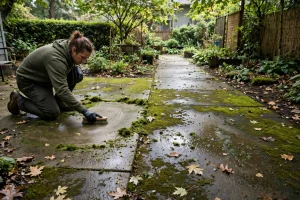

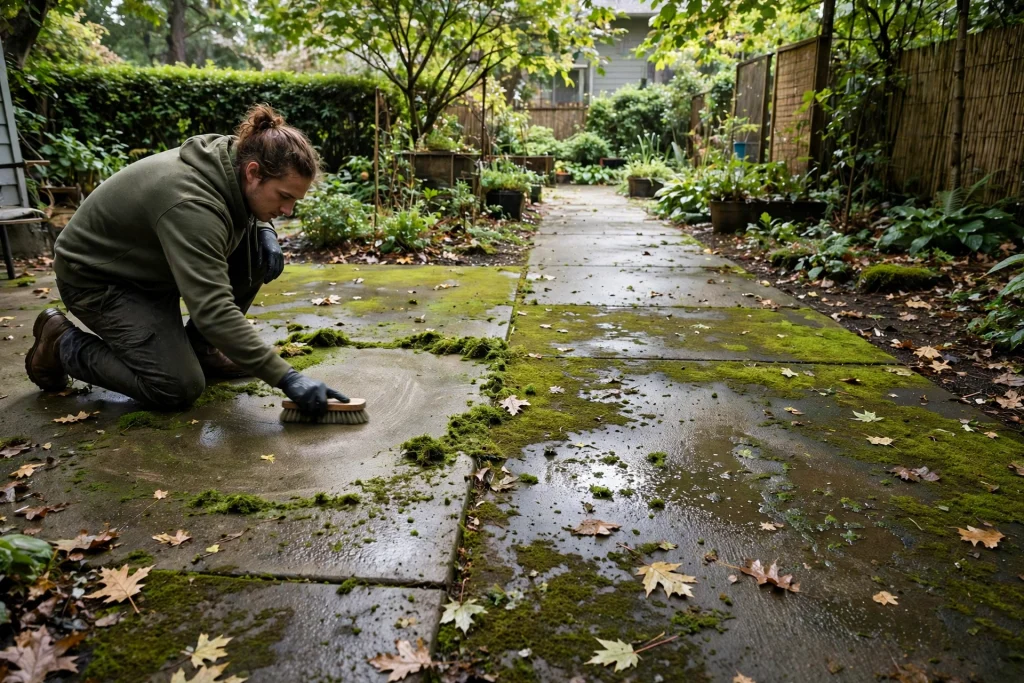
Moss tends to show up quietly. A green fuzz appears along the edge of the patio, in the joints between pavers, on the shady side of the front steps, or across a brick walkway that never quite dries out. By late winter, it can cover whole sections and turn the surface slick underfoot.
The good news is that moss on hardscape is usually a surface problem. The less good news is that it comes back if the conditions that grew it stay the same. Here is how to get rid of moss on concrete, brick, and walkways, and how to make it less likely to return.
Why Moss Grows on Concrete and Brick
Moss does not need soil. It needs moisture, shade, and a slightly rough surface to hold onto. Concrete, brick, and pavers give it all three, especially in spots like these:
- Areas shaded by trees, fences, or the house for most of the day
- North-facing walkways and steps that stay damp longer
- Low spots and joints where water collects
- Surfaces covered by fallen leaves, pine needles, or other debris that holds moisture
- Older, more porous concrete and brick that absorbs water
Richmond’s humid climate, shaded sites, and extended cool or wet periods can give moss plenty of time to establish. Cool, wet months are when it often grows most actively, which is why many homeowners notice it most in late winter and early spring. The same conditions explain why the north side of a house turns green.
Why Moss on Hardscape Is Worth Removing
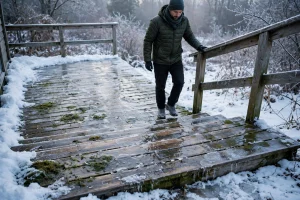
- It is slippery. Wet moss on steps and walkways is a real fall hazard.
- It holds moisture. A mat of moss keeps the surface underneath damp, which is not ideal for concrete or brick in freezing weather.
- It holds debris in joints. Moss often grows where joint material is already damp, loose, or collecting soil. Thick growth can trap more debris and make those joints harder to maintain.
How to Get Rid of Moss on Concrete Step by Step
- Clear the surface. Sweep away leaves, needles, and loose debris so you can see how much moss there is.
- Scrape or brush off the moss. Use a stiff nylon brush, a push broom, or a flat plastic scraper. For moss in cracks and joints, a narrow weeding tool or an old screwdriver works. Physical removal is the most direct way to get moss off the surface.
- Treat what remains, if needed. If moss keeps coming back, a moss or algae product labeled for use on patios, walkways, or other hard surfaces can help with what brushing leaves behind. Follow the label for dilution, dwell time, and weather conditions.
- Remove the dead moss. Moss killers do not make moss disappear. Once it dies and browns, it still needs to be brushed or scraped away.
- Rinse the surface. Rinse away loosened debris and any product residue, keeping runoff out of storm drains and away from plants where you can.
Avoid metal or wire brushes on brick and decorative concrete. They can scratch the surface and leave metal fragments that rust and stain.
Moss on Concrete, Brick and Pavers: What Changes
| Surface | What works | What to watch for |
|---|---|---|
| Concrete patios and walkways | Stiff nylon brush, scraper, low-pressure rinse | Older or flaking concrete can be damaged by high pressure |
| Brick walkways and steps | Gentle scrubbing with a nylon brush | Brick and mortar joints can erode under high pressure; older brick is softer |
| Pavers | Brush and scrape the joints, then rinse gently | Pressure can blow out joint sand; plan to re-sand joints after cleaning |
| Stamped or sealed concrete | Gentle scrubbing and products that the sealer or installer approves | Some cleaners can dull or strip sealers |
Pavers need special care because moss often lives in the joints. This guide on how to pressure wash pavers without losing sand covers the details.
Moss Killers: What to Use and What to Avoid
Moss products can help, but chemical moss treatments are generally short-acting and do not provide long-term control if shade and moisture remain.
- Choose a product labeled for hard surfaces. Read the label to make sure it is meant for patios, walkways, or masonry, not just lawns.
- Be cautious with metal-based moss-control products. Zinc and copper products can stain concrete and harm plants and aquatic life. Some iron-containing moss products can also leave rust-colored staining on concrete, so check the label and test first.
- Be careful with bleach. Bleach can harm nearby plants and lawns, discolor some surfaces, and should never be mixed with ammonia or other cleaners.
- Check the forecast. Apply on a dry day when rain is not expected soon, so the product does not wash into drains before it works.
- Protect plants and people. Wet down or cover nearby plants, keep children and pets away until the surface dries, and wear eye protection and gloves.
Can You Pressure Wash Moss Off Concrete?
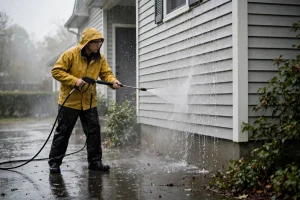
Yes, with care. Pressure washing can remove moss from sound concrete patios and walkways. Use a wide fan tip or a surface cleaner, keep the wand moving, and start with lower pressure. On brick, older concrete, and pavers, high pressure can erode mortar joints, etch the surface, or blast out joint sand. On historic or deteriorated brick, avoid treating pressure washing as a default method. Inappropriate cleaning can permanently damage masonry surfaces and mortar.
Pressure washing removes the moss you can see, but it does not change the shade and moisture that grew it. Combining cleaning with the prevention steps below gives longer-lasting results.
Moss on the roof is a different job. High pressure can strip shingle granules, so roofs need a gentler approach. This guide covers moss and lichen on asphalt shingles.
How to Keep Moss From Coming Back
- Let in more light. Trim or thin branches and shrubs that shade the area for most of the day.
- Improve drainage. Redirect downspouts, fix low spots, and keep water from pooling on the surface.
- Keep it clear. Sweep leaves and debris regularly, especially in fall and winter, so they do not hold moisture against the surface.
- Clean on a schedule. Shady, damp areas may need a light cleaning every year to stay ahead of regrowth.
- Consider sealing. A compatible sealer can help some concrete and pavers absorb less water. Here is when sealing a concrete driveway after pressure washing makes sense.
Moss on Concrete FAQs
What kills moss on concrete permanently?
Nothing removes moss permanently if the area stays shady and damp. Physical removal clears what is there, and a product labeled for hard surfaces can help with regrowth for a while, but long-term control comes from more light, better drainage, and keeping debris off the surface.
Does vinegar kill moss on concrete?
Vinegar may affect moss, but it is acidic and can etch concrete and affect mortar and sealers with repeated use. Brushing and a product labeled for use on hard surfaces are safer starting points.
Does bleach kill moss on concrete?
Bleach-based products can kill biological growth on compatible surfaces, but they may harm plants or discolor some materials. Never mix bleach with ammonia or acids, and follow the product label for application, dwell time, plant protection, and rinsing.
How do I remove moss between pavers?
Scrape the joints with a narrow tool or stiff brush, sweep out the debris, and rinse gently. If cleaning removes joint sand, re-sand the joints afterward to help keep moss and weeds from moving back in.
Is it bad to leave moss on a walkway?
Moss makes walkways and steps slippery, especially when wet, and it keeps the surface underneath damp. Removing it improves footing and helps the surface dry out between rains.
Need Your Patio or Walkway Cleaned?
Scrubbing moss out of a large patio or long walkway is slow work. Our team provides professional exterior surface cleaning across the Richmond area for concrete, brick, and pavers, with pressure matched to the surface. Call (804) 754-5200 for a free quote.