
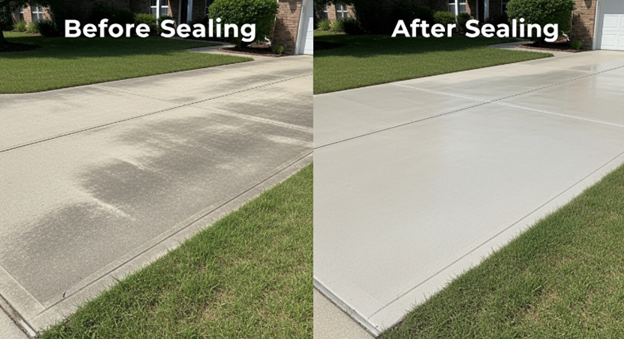
If you’ve just pressure washed your driveway, you’re already halfway to restoring its appearance. But here’s the critical next step most homeowners overlook: should you seal your concrete driveway after pressure washing?
The short answer is yes but the real value lies in understanding why, when, and how to do it properly. Done right, sealing can protect your investment for years, reduce maintenance, and dramatically improve curb appeal, which is why professionals like Jacobson’s Power Washing always recommend proper sealing after pressure washing for long-term results.
Let’s break it down in detail.
Short Answer – Should I Seal My Concrete Driveway After Pressure Washing?
Yes, you should seal your concrete driveway after pressure washing in most cases.
- It prevents moisture penetration
- It protects against stains and surface damage
- It extends the life of your driveway
- Best timing: after the surface is completely dry (24–48 hours)
Quick summary:
Pressure washing removes dirt—but it also opens up the pores of the concrete. Sealing those pores afterward locks in protection and keeps contaminants out.
Exceptions:
- Recently sealed driveways
- Low-traffic areas with minimal wear
Why You Should Seal Concrete After Pressure Washing
Protection Against Water and Moisture Damage
Concrete is porous, meaning it absorbs water easily. Without sealing:
- Water seeps into the surface
- Freeze-thaw cycles cause expansion and cracking
- Long-term structural damage develops
Sealing creates a protective barrier that reduces these risks significantly.
Stain Resistance and Easier Maintenance
Unsealed concrete acts like a sponge.
- Oil, grease, and chemicals penetrate quickly
- Stains become harder (or impossible) to remove
- Future cleaning takes longer
A sealed driveway resists stains, making maintenance faster and easier.
Enhances Appearance and Longevity
Sealing doesn’t just protect it improves aesthetics.
- Restores color and brightness
- Adds a matte or glossy finish
- Extends driveway lifespan by years
In simple terms: sealing keeps your driveway looking “new” longer.
Should I Seal My Concrete Driveway After Pressure Washing Every Time?
When Sealing Is Necessary
You should seal your driveway if:
- It’s newly installed or freshly cleaned
- You notice fading, rough texture, or porosity
- Water no longer beads on the surface
These signs indicate the previous seal has worn off.
When You Can Skip Sealing
You may not need to reseal if:
- The driveway was sealed within the last 1–2 years
- Water still beads on the surface
- It’s a low-traffic residential driveway
In these cases, sealing too frequently can lead to buildup.
What Happens If You Don’t Seal Your Driveway After Pressure Washing?
Increased Risk of Cracks and Surface Damage
Without protection, moisture enters the concrete and weakens it over time.
Faster Stain Absorption
Oil spots, tire marks, and spills penetrate deeply into unsealed concrete.
Reduced Lifespan of Concrete
Neglecting sealing can shorten your driveway’s lifespan by several years.
Best Time to Seal a Driveway After Pressure Washing
How Long to Wait Before Sealing
- Wait at least 24–48 hours after pressure washing
- Ensure the surface is completely dry
Moisture test tip:
Tape a small plastic sheet to the driveway. If condensation appears underneath after a few hours, it’s not dry yet.
Ideal Weather Conditions
- Temperature: 50°F to 85°F
- Low humidity
- No rain for at least 24 hours after application
Weather plays a crucial role in proper curing and performance.
Step-by-Step Guide: Sealing Concrete After Pressure Washing
Step 1 – Ensure the Driveway Is Completely Clean
Remove all dirt, debris, and leftover cleaning residue. Any contamination will get trapped under the sealer.
Step 2 – Allow Proper Drying Time
Let the driveway dry fully. Sealing a damp surface leads to poor adhesion and cloudy finishes.
Step 3 – Choose the Right Sealer
- Penetrating sealers: Best for protection
- Acrylic sealers: Enhance appearance
- Epoxy sealers: Heavy-duty durability
Choose based on your needs—protection vs aesthetics.
Step 4 – Apply the Sealer Evenly
- Use a sprayer or roller
- Apply thin, even coats
- Avoid pooling or over-application
Consistency is key for a professional finish.
Step 5 – Let It Cure Properly
- Dry time: 24–48 hours
- Full cure: up to 72 hours
- Avoid walking or driving on the surface during this time
Proper curing ensures long-lasting results.
Types of Concrete Sealers – Comparison Table
| Sealer Type | Best For | Durability | Finish | Cost | Reapplication |
| Penetrating | Protection | High | Natural | $$ | 3–5 years |
| Acrylic | Appearance | Medium | Glossy | $ | 1–3 years |
| Epoxy | Heavy-duty | Very High | High gloss | $$$ | 5+ years |
DIY vs Professional Sealing – What’s Better?
Time and Effort Comparison
- DIY: 3–6 hours including prep
- Professional: Faster with better equipment
Cost vs Long-Term Value
- DIY: Lower upfront cost
- Professional: Higher durability and finish quality
When Hiring a Professional Makes Sense
- Large driveways
- Decorative or stamped concrete
- Severe wear or damage
Professionals deliver consistent, long-lasting results.
Common Mistakes to Avoid When Sealing After Pressure Washing
Sealing Too Soon (Wet Surface)
Traps moisture and causes peeling or cloudiness.
Applying Too Much Sealer
Leads to slippery surfaces and uneven finish.
Choosing the Wrong Sealer Type
Using the wrong product reduces effectiveness and durability.
Ignoring Weather Conditions
Rain or humidity can ruin the sealing process.
Pro Tips for Best Sealing Results
Test a Small Area First
Ensures compatibility and desired finish.
Apply Thin, Even Coats
Multiple thin coats outperform one thick coat.
Use Quality Sealers
Higher-quality products last longer and perform better.
Maintain Regular Sealing Schedule
Routine sealing reduces long-term maintenance effort.
How Often Should You Seal a Concrete Driveway?
- General recommendation: Every 2–3 years
- Cold climates: More frequent due to freeze-thaw cycles
- High traffic: May require sealing every 1–2 years
Regular sealing ensures continuous protection.
FAQs – Should I Seal My Concrete Driveway After Pressure Washing?
Should I seal my concrete driveway after pressure washing immediately?
No. Wait at least 24–48 hours until the driveway is fully dry.
How long after pressure washing should I seal my driveway?
Typically 24–48 hours, depending on weather and moisture levels.
Can I seal damp concrete?
No. Sealing damp concrete leads to poor adhesion and cloudy results.
Is sealing necessary every time I clean my driveway?
Not always. Only reseal when the previous layer has worn off.
What is the best sealer for concrete driveways?
Penetrating sealers are best for protection, while acrylics enhance appearance.
Does sealing prevent cracks completely?
No, but it significantly reduces the risk by limiting moisture penetration.
How long does driveway sealer last?
Typically 1–5 years depending on the type of sealer used.
Is sealing a driveway worth the cost?
Yes. It protects your driveway, reduces maintenance, and extends its lifespan.
Conclusion: Should I Seal My Concrete Driveway After Pressure Washing?
So, should you seal your concrete driveway after pressure washing? Yes, in most cases, it’s one of the smartest maintenance steps you can take.
Key takeaways:
- Always wait 24–48 hours after washing
- Choose the right sealer based on your needs
- Apply properly for long-lasting protection
Sealing not only protects your driveway from damage but also enhances its appearance and durability. Whether you go DIY or hire a professional, this step ensures your driveway stays cleaner, stronger, and more attractive for years to come.