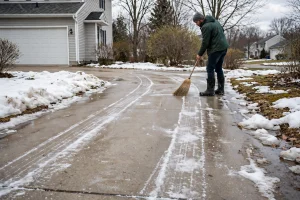

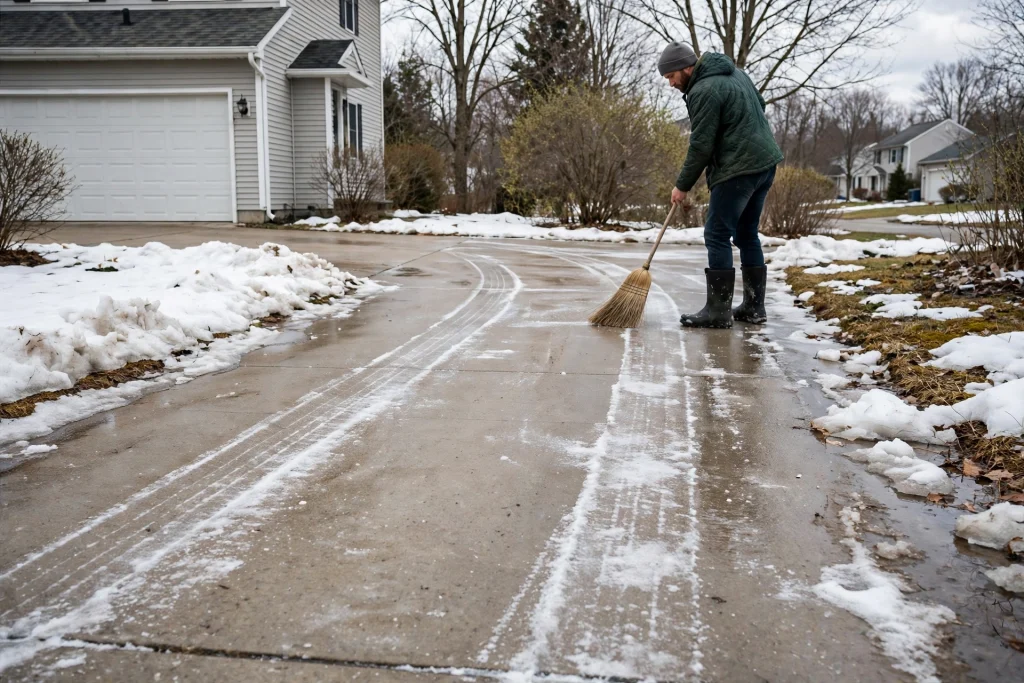
By late winter, most driveways carry the evidence: a pale white film along the tire tracks, crusty residue on the front steps, and gritty patches where the plow pushed slush onto the apron. The question most homeowners ask next is simple. Is that salt hurting the concrete?
The short answer is that it can, but the risk depends a lot on the concrete itself. Here is how salt affects a driveway, how to tell residue from real damage, and how to clean up properly once winter is over.
The Short Answer
Salt can contribute to concrete damage, but it rarely acts alone. Well-made, properly cured, air-entrained concrete is generally much more resistant to salt than concrete that is new, poorly finished, or constantly wet. The biggest problems usually show up where salt, standing water, and repeated freezing and thawing all meet.
How Salt Affects Concrete
It Adds to Freeze-Thaw Damage
Salt melts ice into salty water, and that brine soaks into the pores of the concrete. De-icing salts can make freeze-thaw deterioration worse by keeping the surface exposed to salt-rich moisture and increasing the time concrete stays highly saturated. Research also points to thermal, osmotic, crystallization, and chemical effects that can contribute to scaling. Over many cycles, the surface can begin to scale, which is thin flaking across the top of the slab.
The concrete industry generally points to saturation as the key factor. Concrete that drains well and is not constantly soaked is far less likely to suffer freeze-thaw damage.
Some De-Icers Can Also React With Cement Paste
Research has linked certain de-icing chemicals, especially concentrated calcium chloride and magnesium chloride, to chemical reactions with the cement paste that can cause expansion and cracking. Some laboratory studies found less chemical distress from sodium chloride than from concentrated calcium- or magnesium-chloride solutions. That does not make rock salt harmless, since sodium chloride can still contribute to surface scaling and corrosion of embedded steel.
If you are choosing a product for next winter, this guide to ice melt safe for concrete compares the common options.
It Can Corrode Steel Inside the Slab
The importance of this mechanism depends on whether the slab contains reinforcing steel or wire and how close it is to the surface. Where embedded steel is present, chloride penetration can eventually contribute to corrosion, cracking, delamination, and spalling.
What About Road Brine?
Many road crews treat streets with liquid brine before and during storms. It is usually a salt solution, sometimes blended with other de-icing chemicals. That brine does not stay on the road. It sprays onto cars, drips off wheel wells, and ends up on your driveway, the apron in front of the garage, and the garage floor.
That is why salt residue often concentrates in the first few feet inside the driveway and along the tire tracks, even if you never salt your own driveway. If the residue has made its way into the garage, this guide on how to clean a garage floor covers the inside.
Which Concrete Is Most at Risk?
Salt is far more likely to cause trouble on some slabs than others.
- New concrete. Newer concrete is especially vulnerable before it has had adequate curing and drying time. This post on new concrete curing time explains why the first months matter.
- Concrete with a weak surface. A slab that was overworked during finishing, or had water added to the surface, can start scaling sooner.
- Concrete without enough entrained air. Exterior concrete in freezing climates is typically designed with an air-void system that gives freezing water room to expand.
- Concrete that stays wet. Low spots, downspouts draining across the slab, and joints that hold water keep the concrete saturated, which raises the risk.
- Concrete that is already damaged. Cracks and flaking give salty water an easier path into the slab.
Salt Residue or Salt Damage? How to Tell
Not everything white on your driveway is a problem. This table helps separate cosmetic residue from damage worth a closer look.
| What you see | What it likely is | What to do |
|---|---|---|
| White film or crust that brushes off | Dried salt residue | Clean it off in spring |
| White deposits that keep coming back after cleaning | Possibly efflorescence or minerals moving up through the slab | Clean gently and watch it; persistent deposits may point to a moisture issue |
| Thin flaking over a wide area | Scaling | Clean carefully and consider sealing once the surface is sound |
| Deeper chips or broken patches, often at edges or joints | Spalling | Have it assessed before heavy cleaning |
| Rust stains with cracking above them | Possible corroding steel near the surface | Have a concrete professional take a look |
If you are seeing flaking or chipping, this guide to concrete spalling explains what causes it, how to judge how serious it is, and when it can be repaired.
How to Clean Salt Residue Off Concrete in Spring
Removing winter residue is the main thing you can control once the season is over.
- Wait for the right window. Choose a dry period when rinse water can drain and will not refreeze on the driveway or apron before the surface dries.
- Sweep first. Remove loose salt crystals, sand, and grit with a stiff broom so they do not turn into a paste when wet.
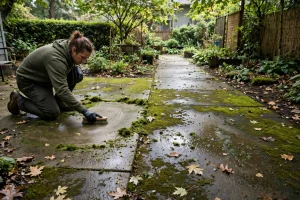
- Rinse and scrub. Wet the surface, apply a mild detergent or a cleaner made for concrete salt residue, and scrub with a stiff brush, focusing on tire tracks, steps, and the apron.
- Rinse thoroughly. Rinse in controlled sections and remove or direct dirty water where practical without concentrating salty runoff in storm drains, planting beds, or low spots beside the slab. A wet/dry vacuum or squeegee can help when runoff is difficult to control.
- Check after it dries. If a white haze returns as the concrete dries, repeat the scrub and rinse on those areas.
Avoid strong acids. They can etch the surface and leave the concrete more porous than before.
Can You Pressure Wash Salt Off Concrete?
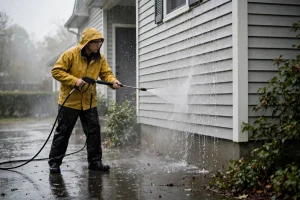
Yes, with care. A pressure washer is useful for flushing loosened residue off a sound driveway. Use a wide fan tip or a surface cleaner, keep the spray moving, and use lower pressure on older, weathered, or flaking areas. High pressure aimed at damaged concrete can lift more loose material and etch the surface. The goal is to clean the slab, not blast away weak spots.
Should You Seal Concrete After Winter?
Once the concrete is clean, dry, and sound, a compatible penetrating sealer can reduce how much water and de-icing solution the surface absorbs next winter. How long that protection lasts depends on the product, surface condition, and exposure, so follow the manufacturer’s guidance. Here is when sealing a concrete driveway after pressure washing makes sense.
Sealing is prevention, not repair. If the slab is already scaling or spalling badly, deal with that first.
How to Reduce Salt Damage Next Winter
- Use less. Clear snow by hand first and follow the label rate on any de-icer. This guide on how to melt ice on your driveway walks through the process.
- Clear slush quickly. Shovel salty slush off the driveway instead of letting it sit and refreeze.
- Fix drainage. Extend downspouts and address low spots that hold meltwater.
- Use sand where you only need grip. It adds traction without adding de-icing chemicals.
Salt and Concrete FAQs
Does rock salt ruin concrete?
Not necessarily. Sound, mature, properly air-entrained concrete is more resistant to winter salt exposure than new, weak, or highly saturated concrete, but it is not immune. Rock salt can still contribute to scaling and, where reinforcing steel is present, chloride-related corrosion.
How long does salt stay on concrete?
Residue can remain on the surface and around joints and edges until it is washed away. Rain removes some of it, but a deliberate spring cleaning does a more thorough job.
Will salt residue come off with rain?
Partly. Rain can rinse away loose residue, but crusted deposits on steps, tire tracks, and the garage apron usually need sweeping, scrubbing, and rinsing.
Can I use vinegar to remove salt from concrete?
Vinegar is acidic, so it is not a good default cleaner for concrete and can affect sealers. A mild detergent or a cleaner made for concrete salt residue is the safer option.
When should I clean salt off my driveway?
Wait for a dry stretch when rinse water can drain and will not refreeze on the driveway before it dries. Early spring is usually the best time, once the hardest freezes have passed.
Start Spring With a Clean Driveway
Winter residue does not have to sit on your concrete until summer. A thorough spring cleaning clears away salt, grime, and stains and shows you exactly where your concrete stands.
Our team provides professional driveway and concrete cleaning across the Richmond area, with pressure matched to the condition of the surface. Call (804) 754-5200 for a free quote.