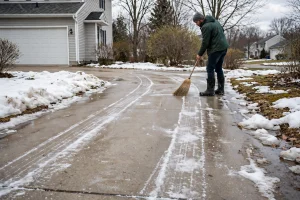

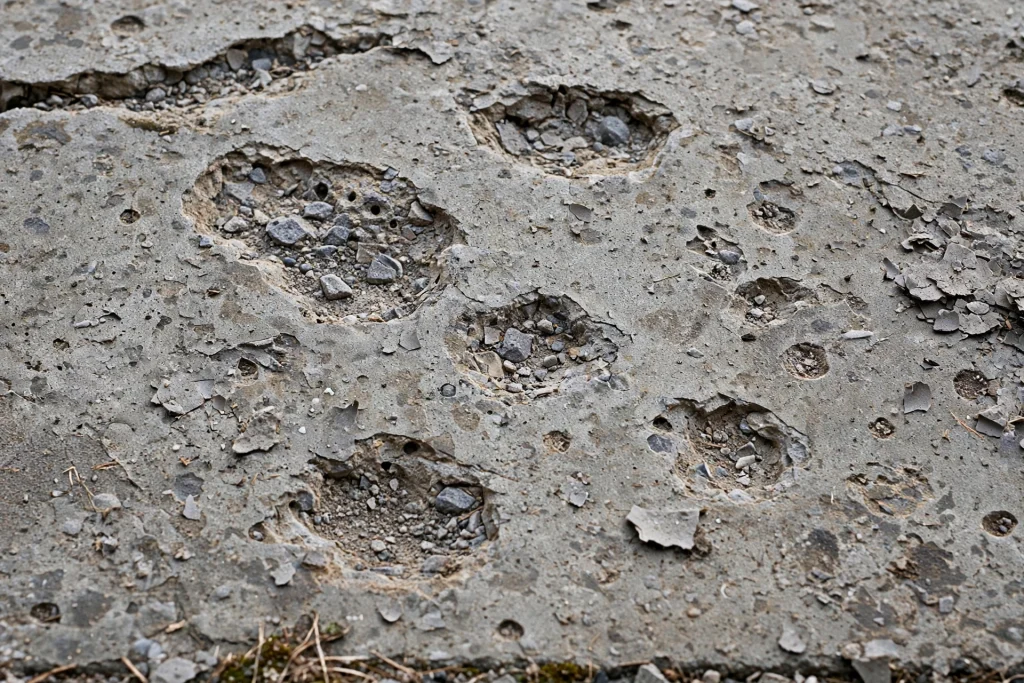
You pull out of the garage on the first warm day of spring and notice it. Patches of the driveway that were smooth in the fall now look rough, chipped, or peeled, with small flakes of concrete sitting loose on the surface. That damage has a name: concrete spalling.
Spalling rarely happens overnight. It builds up through the winter and becomes visible once the snow and slush are gone. Knowing what causes it helps you figure out how serious your damage is and how to keep it from spreading next year.
What Concrete Spalling Is
Concrete spalling is when pieces of the surface break away from the slab. It can look like shallow peeling across a wide area or deeper chips and craters in specific spots. Spalled concrete usually exposes the coarser stone underneath the smooth top layer, which is why the damaged areas look rough and darker than the rest of the driveway.
The surface is often where deterioration becomes visible first because it receives the most direct exposure to moisture, de-icers, tires, and weather. If the surface layer was weakened during finishing or curing, it can begin scaling or spalling sooner than the concrete below.
Spalling, Scaling, Popouts and Pitting: How to Tell Them Apart
Homeowners and contractors use these terms loosely, but they describe different kinds of damage. Matching what you see to the right name makes it easier to find the right fix.
| Type of damage | What it looks like | Typical depth | Common cause |
|---|---|---|---|
| Scaling | Thin, flaky peeling over a wide area, often in sheets | Less than 1/4 inch | Freeze-thaw cycles and de-icing salt on the surface layer |
| Spalling | Chips and broken patches, sometimes deep, often at edges and joints | 1/4 inch to an inch or more | Freeze-thaw, poor finishing or curing, water trapped in the slab |
| Popouts | Small cone-shaped holes with a broken stone at the bottom | Up to 1 inch | A weak or absorbent piece of aggregate swelling as it freezes |
| Pitting | Scattered small holes across the surface | Shallow | Salt, chemicals, or air pockets near the surface |
Many people searching for spalling are actually looking at scaling, which is the shallower form of the same freeze-thaw problem. The difference matters because scaling is mostly cosmetic early on, while spalling that reaches deeper into the slab tends to spread faster.
Why Spalling Shows Up After Winter
Concrete looks solid, but it is full of tiny pores that soak up water. When that water freezes, it expands by about 9 percent and pushes against the walls of the pores. One freeze rarely does much. Dozens of them, winter after winter, slowly break the bond that holds the surface together.
That is why a mild winter can still be hard on a driveway. In Central Virginia, temperatures often drop below freezing at night and climb back above it by the afternoon. Each swing is a full freeze-thaw cycle. A place that stays frozen for weeks can actually see fewer cycles than a place that freezes and thaws every few days.
What Causes Concrete Spalling
Freeze-thaw cycles are the trigger, but most spalling happens because something else left the surface weak or waterlogged first.
De-Icing Salt
De-icing chemicals can amplify freeze-thaw deterioration by keeping concrete exposed to salt-rich moisture and repeated winter cycling. Research also points to osmotic, thermal, and chemical mechanisms that can weaken cement paste over time. For a full breakdown of which products are gentler, see this guide to ice melt safe for concrete.
Poor Finishing
When concrete is poured, water rises to the top, which is called bleed water. If the surface is troweled while that water is still there, or if extra water is sprinkled on to make finishing easier, the top layer ends up weak and porous. It may look fine for a year or two, then start peeling at the first hard winter.
Missing Air Entrainment
Exterior concrete exposed to freezing weather is typically designed with an appropriate air-void system, created by adding an air-entraining admixture to the mix. Those microscopic air bubbles give freezing water room to expand. A slab poured without enough entrained air has no relief valve, and the surface pays the price.
Rushed Curing and First-Winter Exposure
Concrete gains strength slowly. A slab that dried out too fast, or that faced freezing weather and salt in its first winter, is far more likely to scale and spall. This is one common pattern behind a driveway that starts flaking within its first year. This post on new concrete curing time explains why the first months matter so much.
Standing Water and Poor Drainage
Low spots, downspouts that empty onto the driveway, and edges that hold puddles keep the concrete saturated. Concrete that stays highly saturated is more vulnerable because more of its pore space contains freezable water, increasing internal pressure during freeze-thaw cycles. Those areas often spall first. If the damage on your driveway lines up with a downspout or a dip in the slab, drainage is likely part of the problem.
Corroding Steel Near the Surface
Many commercial guides list rusting rebar as the main cause of spalling. That is true for parking decks, bridges and foundations, but many residential driveways have little or no steel. When wire mesh or rebar does sit too close to the surface, rust expands and pops off chunks of concrete above it, often leaving a visible rust stain in the spall.
How to Tell How Serious Your Spalling Is
A few minutes on the driveway with a screwdriver and a straightedge will tell you a lot.
- Cosmetic: Shallow flaking less than 1/4 inch deep, the surface underneath feels hard, and the damage has not grown noticeably since last year.
- Watch closely: Patches that grew over the past winter, damage clustered at joints or edges, or loose material you can scrape away with a screwdriver.
- Needs a professional: Spalls deeper than about 1/2 inch, exposed or rusting steel, cracks running through the slab, or pieces that sound hollow when you tap them.
Shallow damage is a maintenance issue. Deep damage, exposed steel, or hollow-sounding concrete means the problem goes past the surface.
Can Concrete Spalling Be Repaired?
In most cases, yes. The right repair depends on how deep and how widespread the damage is. Every repair starts the same way: loose and damaged concrete has to come out and the surface has to be clean, or new material will not bond.
- Shallow scaling over a wide area: Once the surface is prepped and loose material is removed, a resurfacing product designed to bond to existing concrete can restore a smooth finish. This only works when the concrete underneath is sound.
- Isolated deeper spalls: The damaged concrete is removed down to solid material, and the area is filled with a patching compound rated for exterior use and freeze-thaw exposure.
- Spalling at joints and edges: A targeted partial-depth repair removes the broken section along the joint or edge and rebuilds it. Highway agencies use this same partial-depth approach for spalls and popouts.
- Deep, widespread, or hollow-sounding damage: Get a professional evaluation. A thin resurfacing layer over weakened concrete often fails quickly, and some sections may need replacement.
- Exposed steel or a slab that moves: This calls for a concrete repair contractor. Cleaning and sealing will not fix corroding steel or a failing base.
Fixing the cause matters as much as the patch. If water still pools on the slab or a downspout still drains across it, new spalling will show up next to the repair.
How to Keep Spalling From Spreading
You cannot change how a slab was poured, but you can limit how much water and salt it absorbs each winter.
- Move the water away. Extend downspouts so they empty onto grass instead of the driveway, and keep low spots clear of standing water and slush.
- Clean before the cold sets in. Leaves, dirt, and organic growth hold moisture against the surface all winter. A fall cleaning removes them, but it should be done at a pressure that suits the slab’s condition, since too much force can etch a surface that is already weak.
- Seal after cleaning. A penetrating sealer reduces how much water and salt the concrete can soak up. Here is when sealing a concrete driveway after pressure washing makes sense.
- Use de-icers sparingly. Shovel first, use as little product as possible, and be especially cautious with de-icers on newer concrete. Follow the installer or concrete supplier’s recommendations before applying them. Sand gives traction without the chemistry. If pets use your driveway, see our guide to pet safe ice melt.
- Rinse in spring. Salt residue keeps working on the surface long after the last freeze. This guide covers whether salt damages concrete and how to clear it.
Concrete Spalling FAQs
Can concrete spalling be repaired?
Yes. Shallow scaling can often be resurfaced once the surface is cleaned and prepped, and isolated deeper spalls can be patched after the damaged concrete is removed. Deep, widespread, or hollow-sounding damage needs a professional evaluation.
Will concrete spalling get worse?
It can. If moisture, freeze-thaw exposure, de-icers, poor drainage, or another underlying cause continues, the damaged area may widen or deepen over time.
Is spalling the same as scaling?
No, though they are related. Scaling is thin, flaky peeling less than about 1/4 inch deep over a broad area. Spalling involves deeper chips and broken pieces. Both are often driven by freeze-thaw cycles and de-icing salt.
Can you pressure wash spalling concrete?
Yes, with care. Use lower pressure, a wider spray pattern or a surface cleaner, and keep the spray moving. High pressure aimed at damaged areas can lift more loose material and etch the surface. The goal is to clean the slab before sealing or repair, not to blast away damage.
Should spalled concrete be sealed?
A penetrating sealer helps sound and lightly scaled concrete absorb less water and salt. Seal after the surface is cleaned and after any repairs have cured. Sealer will not reattach loose concrete or fix deep spalls.
Give Your Driveway a Clean Start This Spring
Spalling starts small, and most of the damage happens out of sight under snow and salt. A spring cleaning shows you exactly where your concrete stands and clears away the residue that keeps feeding the problem.
If your driveway came through winter looking rough, our team provides careful driveway and concrete cleaning across the Richmond area, with pressure matched to the condition of the slab. Call (804) 754-5200 for a free quote.