
Pet Safe Ice Melt: What’s Safe for Paws and Your Concrete
The first icy morning of winter can turn a normal driveway or front walk into a slipping hazard. If you have a dog, choosing an ice melt gets more complicated: the product has to help with traction and ice while also reducing the chance of paw irritation or accidental ingestion.
That is where pet safe ice melt products come in. The important thing to know is that “pet safe” does not mean harmless. Different products use different salts or non-salt ingredients, and even products marketed for pets should be used carefully. The safest approach is to read the ingredient list, use only the amount you need, and clean your pet’s paws after exposure.
What the “Pet Safe” Label Really Means
There are no specific requirements for labeling a de-icer product “pet safe.” That means the phrase on the front of the bag should not be the only thing you rely on when choosing a product. The ingredient list and the directions for use matter more.
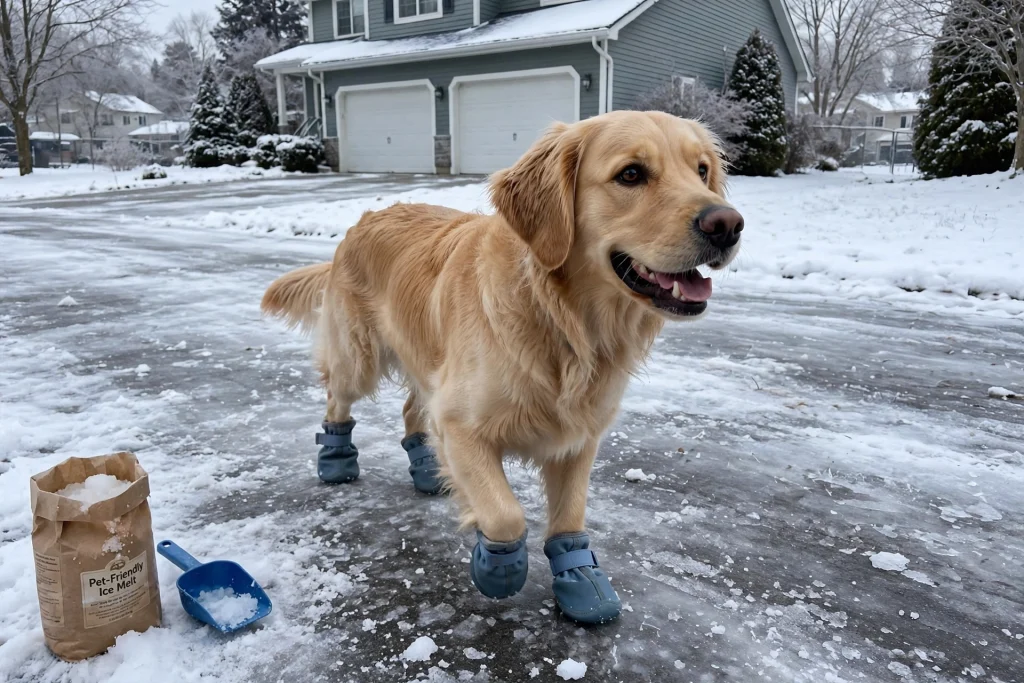
Pet-friendly ice melts often use ingredients such as urea or magnesium chloride instead of plain rock salt. These can be gentler choices in some situations, but they can still irritate paws or cause stomach upset if a pet licks enough residue from its feet or eats treated snow.
A useful rule is simple: treat every chemical de-icer as something your pet should not eat, even when the package says pet friendly.
Common Ice Melt Ingredients: What Pet Owners Should Know
Most ice melts are built around one or more chloride salts, while some pet-oriented products use alternatives such as urea. Instead of ranking ingredients as completely “safe” or “unsafe,” it is better to understand the main concern with each one.
| Ingredient | What pet owners should know |
|---|---|
| Sodium chloride (rock salt) | Can be harsh on paws. If enough is ingested, it can raise sodium levels to dangerous levels. |
| Calcium chloride | Can irritate paws and the gastrointestinal tract. Ingestion may cause significant irritation. |
| Potassium chloride | Can cause gastrointestinal irritation if swallowed. |
| Magnesium chloride | Often found in products marketed as pet friendly, but it can still irritate the stomach and should not be treated as harmless. |
| Urea | Common in some pet-friendly formulas. It may still cause drooling, vomiting, or stomach upset if enough is ingested. |
| Calcium magnesium acetate (CMA) | Used as an alternative de-icer, but it should still be kept away from pets and may cause irritation or stomach upset if ingested. |
Important: The formula matters more than the marketing. Some bags contain blends, so always read the full ingredient list and follow the manufacturer’s application directions.
How to Choose a Pet Safe Ice Melt
When you are comparing products at the store, focus on the label rather than the paw-print graphic. A good buying checklist is:
- Read the active ingredients instead of relying only on the words “pet safe” or “pet friendly.”
- Avoid products with vague ingredient descriptions if you cannot tell what the main de-icer is.
- Choose a product that gives clear application directions so you can avoid overusing it.
- Think about where your dog actually walks. A product used on a pet-free section of a driveway creates a different exposure risk than one spread across the front steps your dog uses several times a day.
- Store the bag where pets cannot reach it. Direct access to the product can create a much larger ingestion risk than walking across a treated surface.
Use Less Ice Melt Whenever You Can
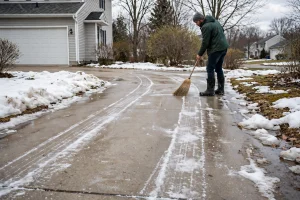
Even a gentler formula is better used in smaller amounts. Start with mechanical removal first: shovel snow, break up loose ice, and sweep away slush before applying a de-icer. That leaves less ice for the product to handle and reduces the amount of residue left behind.
If you want a full step-by-step breakdown of timing, traction, and removal methods, see how to melt ice on your driveway.
For areas where you mainly need traction rather than melting, sand can provide grip without adding another de-icing chemical. Whatever product you use, apply it according to the label instead of assuming more will work faster.
Is Pet Safe Ice Melt Also Safe for Concrete?
Not necessarily. A formula marketed as gentler for pets can still contain ingredients that are hard on concrete under repeated winter exposure. Deicing salts, moisture, and freeze-thaw cycles can all contribute to deterioration in vulnerable concrete, especially when salt-rich water is allowed to sit on the surface or collect in joints.
For a deeper comparison of de-icer types and concrete exposure, see our guide to ice melt that is safer for concrete.
Newer concrete deserves extra caution. If your driveway or walkway was recently poured, follow the guidance from your concrete contractor before using de-icing chemicals.
You can also review our guide to new concrete curing time for more context on why young concrete needs careful treatment.
Protect Your Dog’s Paws After Winter Walks
The most practical protection happens after the walk. Ice melt can stick between toes and around paw pads, and dogs may lick that residue during grooming.
- Wipe or rinse paws after walking on treated sidewalks, parking lots, or driveways.
- Check between the toes for trapped crystals or slush.
- Use dog booties if your pet tolerates them, especially on heavily treated public sidewalks.
- A pet-appropriate paw balm can provide an extra barrier for sensitive pads.
- Do not let pets eat treated snow or lick piles of de-icer.
Watch for signs such as repeated paw licking, limping, redness, vomiting, diarrhea, drooling, unusual weakness, tremors, or other concerning behavior after possible exposure. If you think your pet swallowed ice melt or is showing symptoms, contact your veterinarian or a pet poison service promptly.
ASPCA Animal Poison Control Center: (888) 426-4435 | Pet Poison Helpline: (855) 764-7661. Fees may apply.
Clean Up Winter Residue When the Weather Breaks
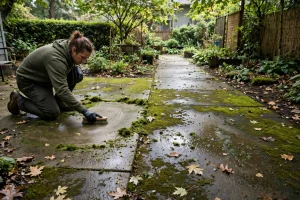
By the end of winter, de-icer residue often shows up as a pale or white film on driveways, steps, garage floors, and walkways. Even after the ice is gone, that residue can keep tracking onto paws and into the house.
If you want to understand what repeated salt exposure can do to the surface, read does salt damage concrete? for the full damage-and-cleanup discussion.
Once freezing conditions have passed, removing built-up winter residue is a sensible part of spring exterior maintenance. Light residue may rinse away, while heavier buildup, grime, and staining can require a more thorough cleaning process.
For Richmond-area homeowners dealing with a dirty driveway after winter, professional driveway and concrete cleaning can remove seasonal grime and restore a cleaner surface. Call (804) 754-5200 for a free quote.
The Bottom Line
The best pet safe ice melt is not simply the bag with the friendliest label. Look at the actual ingredients, use the minimum amount needed, keep pets away during application, and clean their paws after walking across treated surfaces. If you are also trying to protect your driveway, treat pet safety and concrete protection as two separate questions and choose a product that fits both needs.