
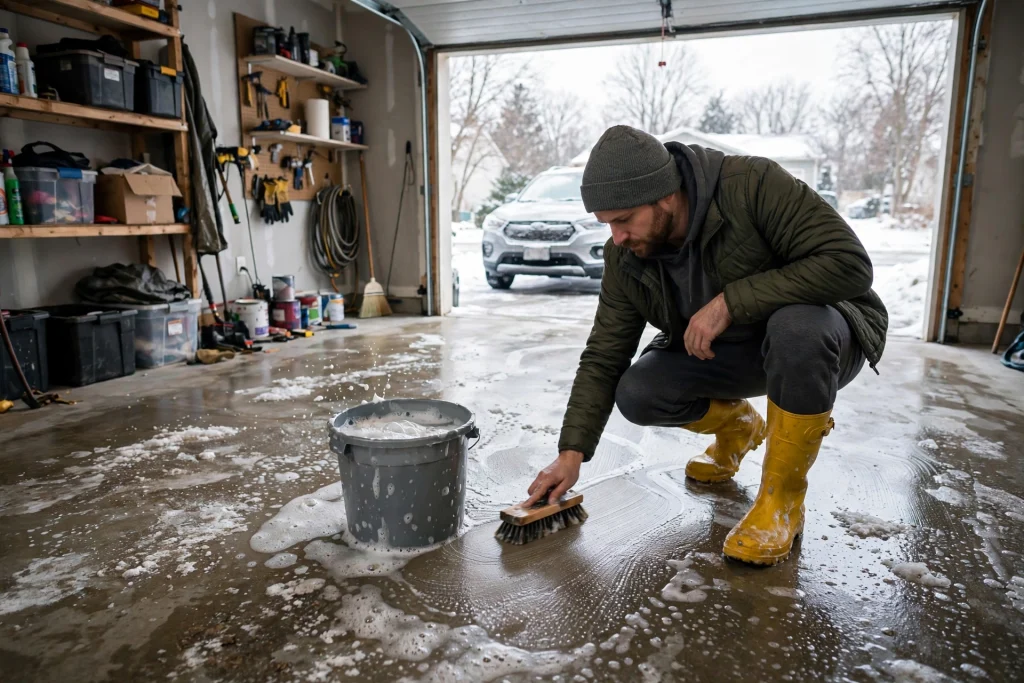
By the end of winter, most garage floors tell the same story. There is a pale, chalky film where the car parks, gray tide lines where slush melted, gritty sand in the corners, and a few new oil drips mixed in with all of it. Every snowy drive brings a little more road salt and brine inside on the tires and undercarriage.
Sweeping takes care of the loose grit, but salt residue does not come up with a broom. Here is how to clean a garage floor properly after winter, and what to change depending on whether your floor is bare concrete, sealed, or coated.
Why Winter Residue Needs More Than a Rinse
Road salt and liquid de-icers dissolve in meltwater, and that salty water spreads across the floor and soaks into bare or worn concrete. When the water evaporates, the salt stays behind as a white haze. Rinsing with a hose often just spreads it around, and some of it can resurface as the slab dries.
Leaving it in place is not only a cosmetic issue. De-icing chemicals can contribute to surface damage on concrete over time, especially where salty water sits in low spots or near the garage door. The full picture is covered in this guide on whether salt damages concrete.
The most effective approach is to loosen the residue with a cleaner, scrub it, and then physically remove the dirty water instead of letting it dry back onto the floor.
When to Clean Your Garage Floor After Winter
Choose a dry period when rinse water can drain and the garage apron will not freeze before the floor dries. If hard freezes are still expected, avoid leaving water at the garage entrance or on the driveway. A mild, dry stretch with good airflow is an easier window for a deeper cleanup.
What You Need
- A stiff push broom and a shop vac for loose grit
- A stiff-bristle deck brush or push broom for scrubbing
- A bucket, warm water, and a cleaner suited to your floor (see the table below)
- A degreaser made for concrete, for oil spots
- A wet/dry vac or a floor squeegee to remove dirty water
- Rubber boots and gloves, and eye protection if you are using a degreaser or a pressure washer
How to Clean a Garage Floor Step by Step
- Empty the floor. Move cars, bins, tools, and anything stored on the floor. Lift extension cords and cover low outlets before any water goes down.
- Remove the loose grit. Sweep or vacuum sand, salt crystals, and debris, starting at the back of the garage and working toward the door. Grit left on the floor turns into a gritty paste once it is wet.
- Treat oil spots first. Blot fresh drips, cover them with absorbent material such as clay cat litter, let it sit, and sweep it up. Then apply a concrete degreaser, let it dwell for the time on the label, and scrub.
- Apply your cleaner. Mix the cleaner according to its directions and spread it across the floor in sections. Focus on the salt film near the tire tracks and the area just inside the door.
- Scrub. Work the cleaner into the surface with a stiff brush. The scrubbing breaks up the salt haze that rinsing alone leaves behind.
- Remove the dirty water. This is the step most guides skip. Use a wet/dry vac or a squeegee to pull the dirty solution off the floor and out the door, rather than letting it dry in place.
- Rinse and extract again. Rinse with clean water and remove it the same way. If a white haze returns as the floor dries, repeat steps 4 through 7 on those areas.
- Let it dry. Leave the garage door open. Most floors are ready for foot traffic within a few hours, but give it longer before parking if the floor is coated or you plan to seal it.
Cleaning by Floor Type
The method above works for most garages, but the cleaner and the pressure you use depend on what is on the surface.
| Floor type | Best cleaner | What to avoid |
|---|---|---|
| Bare concrete | Mild detergent or a salt-residue cleaner made for concrete; concrete degreaser for oil | Strong acids, which can etch the surface and leave it more porous |
| Sealed concrete | Mild detergent or a cleaner that the sealer manufacturer approves | Harsh solvents and acids that can dull or strip the sealer |
| Epoxy or polyaspartic coating | A pH-neutral cleaner and a soft mop or soft brush | Abrasive pads, stiff wire brushes, citrus or acidic cleaners, and high pressure close to the coating |
| Painted concrete | Mild detergent and gentle scrubbing | Pressure washing, which can peel paint that is already worn |
When in doubt, check the coating or sealer manufacturer’s care instructions before using any new product.
Can You Pressure Wash a Garage Floor?
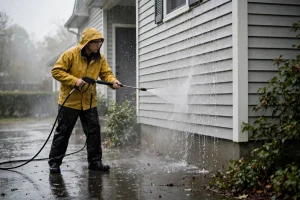
You can, with some care. A pressure washer is useful for rinsing a bare concrete floor and flushing residue toward the door. It is not a substitute for a cleaner and a scrub, and it does not lift salt out on its own.
Safety: Never run a gas-powered pressure washer inside a garage, even with the garage door open. Keep the engine outdoors and away from doors, windows, and air intakes. If you use an electric pressure washer, keep electrical connections away from standing water and follow the manufacturer’s GFCI and electrical-safety instructions.
- Use a wide fan tip or a surface cleaner, not a narrow jet, and keep the wand moving.
- Use lower pressure on older, worn, or flaking concrete, and on coated or painted floors.
- Work from the back of the garage toward the door so water flows out, and keep water away from walls, outlets, and stored items.
- Pull the rinse water out with a squeegee or wet vac instead of letting it sit.
If you would rather skip the pressure washer, the brush-and-extract method above works on every floor type.
Dealing With Stubborn Stains
- Oil and grease: Older stains may need several rounds of degreaser and scrubbing. An absorbent poultice left overnight can draw out more of what has soaked in. Some deep stains will fade rather than disappear completely.
- Rust marks: Use a rust remover that is labeled safe for concrete, and test it on a small area first. Rust stains often come from tools, cans, or metal shelving left on a damp floor.
- Tire marks: Hot tires can leave dark marks, especially on coated floors. A degreaser and scrubbing usually lift them on bare concrete. On epoxy, use a cleaner approved for the coating.
- White haze that keeps coming back: It may be dissolved road salt or cleaner residue drying back onto the surface. If repeated light cleaning does not remove it, the deposit could be efflorescence or another moisture-related issue and may need a different diagnosis.
How to Keep Salt Off Your Garage Floor Next Winter
- Use containment mats. A garage floor containment mat with raised edges catches slush and salty meltwater under the car so it can be emptied instead of spreading across the floor.
- Seal bare concrete. A suitable penetrating sealer may help reduce how much salty water the slab absorbs. Choose a product that is appropriate for the concrete and follow the manufacturer’s surface-preparation and application instructions.
- Squeegee during the season. Pushing standing meltwater out the door after a storm keeps salt from drying onto the floor.
- Knock off the slush outside. Clearing packed snow from wheel wells before pulling in keeps a lot of salt out of the garage.
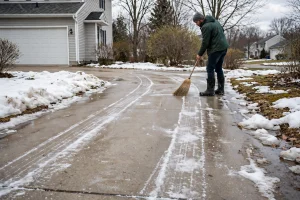
- Clean the apron too. The concrete just outside the garage door collects the same salt. If the outside of your driveway is also showing winter wear, see what causes concrete spalling after a freeze-thaw season.
Garage Floor Cleaning FAQs
How do you get salt stains off a garage floor?
Sweep up loose crystals, apply a cleaner made for concrete salt residue or a mild detergent, scrub with a stiff brush, and remove the dirty water with a wet vac or squeegee. Rinse and extract again. Plain rinsing tends to spread the salt rather than remove it.
Can I use vinegar to clean my garage floor?
Vinegar is acidic, so it is not a good default cleaner for a garage floor. It may affect coatings, sealers, and bare concrete. Use a cleaner recommended for your floor finish instead.
How often should you clean a garage floor?
Sweep regularly through the year, and plan on a deeper cleaning at least once after winter. Garages that see heavy salt exposure may need a mid-winter cleaning as well.
How long should a garage floor dry before parking on it?
A bare concrete floor is often dry enough to park on within a few hours with good airflow. Wait longer if you are applying a sealer or coating, and follow that product’s cure time.
Need a Hand With Your Concrete This Spring?
A clean garage floor is a good start, but the driveway outside usually took more of winter’s beating. Our team provides professional driveway and concrete cleaning across the Richmond area, with pressure matched to the condition of the surface. Call (804) 754-5200 for a free quote.