
The biggest cleaning mistake is assuming that more pressure will produce a better result. Exposed aggregate needs enough cleaning action to reach the low areas between stones without eroding the cement paste, damaging an existing sealer, or loosening already weak aggregate.
The safest approach is to remove loose debris first, identify the stain and surface condition, use a compatible cleaner, and rinse with controlled pressure.
Why Exposed Aggregate Needs a Different Cleaning Approach
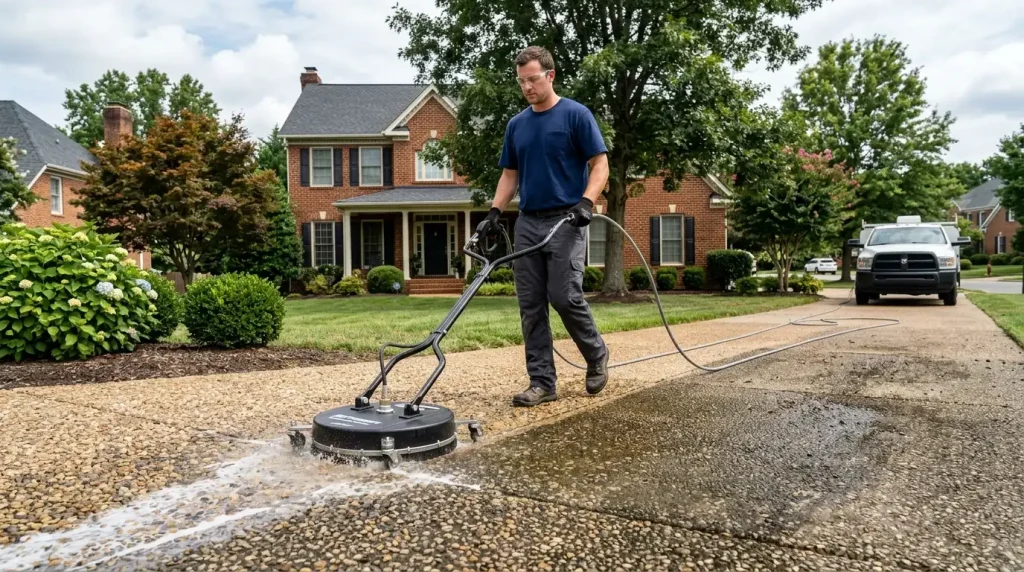
Exposed aggregate is created by revealing the decorative stone near the surface of the concrete. Unlike smooth finished concrete, the surface has raised stones and recessed cement areas that collect dirt and moisture.
The stones are held within the hardened concrete matrix. If the surrounding cement paste is already weathered, cracked, or weak, aggressive pressure or harsh chemicals can make the damage more visible.
Common Ways Exposed Aggregate Gets Damaged During Cleaning
Aggressive Pressure Washing
A concentrated pressure washer stream can erode the cement paste between stones, create uneven clean lines, or loosen aggregate that was already poorly bonded or weathered.
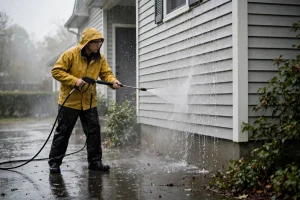
Avoid zero degree nozzles, turbo nozzles used too close to the surface, and prolonged spraying in one spot. There is no single safe PSI for every exposed aggregate slab because age, concrete strength, stone exposure, sealer condition, nozzle selection, and working distance all matter.
Harsh or Incompatible Chemicals
Strong acids, aggressive solvents, or other incompatible cleaners can alter concrete, affect some exposed stones, or damage a topical sealer. A cleaner should be chosen for both the stain type and the surface finish.
Cleaning Over Loose or Failing Aggregate
If stones are already loose, the slab is flaking, or the cement between aggregate is crumbling, pressure washing can make the condition worse. Inspect damaged areas before cleaning and use gentler rinsing around compromised sections.
How to Clean Exposed Aggregate Concrete Safely
Step 1. Sweep or Blow Away Loose Debris
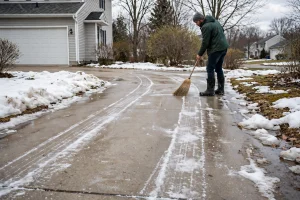
Start dry. Use a broom or leaf blower to remove leaves, grit, loose soil, pine needles, seeds, and other surface debris.
Clearing loose material first keeps it from turning into muddy residue that settles deeper into the textured surface once water is introduced.
Step 2. Inspect the Concrete and Existing Sealer
Look for loose stones, cracks, scaling, white or cloudy sealer, worn glossy areas, previous repairs, and sections where the aggregate appears unusually exposed.
If the surface has a topical sealer or coating, confirm that any cleaner you plan to use is compatible with it. Test a small hidden area before treating the full driveway or patio.
Step 3. Start With a Mild Cleaner for General Dirt
For ordinary dirt and light buildup, begin with water and a mild concrete compatible detergent. Apply the cleaner according to the product directions and use a synthetic bristle broom or brush to work it into the low areas between stones.
Routine cleaning does not require the strongest chemical available. Starting mild helps protect decorative stone, cement paste, and existing sealers.
Step 4. Match the Cleaner to the Stain
General dirt, organic growth, oil, rust, tire marks, red clay, and tree tannins are different types of contamination. Using the same cleaner for every stain can be ineffective or unnecessarily harsh.
Use a cleaner labeled for the specific stain and confirmed as suitable for exposed aggregate or decorative concrete. Follow the manufacturer instructions for dilution, personal protective equipment, dwell time, agitation, and rinsing.
Step 5. Protect Landscaping and Nearby Materials
Protect grass, shrubs, painted surfaces, metals, doors, and other nearby materials from overspray and runoff. Follow the cleaner label for plant protection and pre wetting instructions.
Control where rinse water travels, especially around pool decks, garden beds, drains, and areas where cleaning residue could collect.
Step 6. Allow the Cleaner to Work Without Drying
Use the dwell time specified on the product label rather than a universal time. On warm or sunny surfaces, work in manageable sections so the cleaner does not dry before rinsing.
Step 7. Agitate Stubborn Areas With a Synthetic Brush
For dirt packed between stones, a synthetic bristle brush can improve cleaning without concentrating water pressure in one place.
Avoid wire or steel brushes. They can scratch some stones, damage surface finishes, and leave small metal fragments that may later create rust spots.
Step 8. Rinse With Controlled Pressure
Start with the least aggressive rinsing method that removes the loosened material. A garden hose may be sufficient for routine maintenance.
If a pressure washer is needed, begin at a safe distance with a broad spray pattern and keep the nozzle moving. Gradually adjust only if the surface is sound and the dirt is not releasing. Avoid fixed PSI rules because different slabs and machines behave differently.
Step 9. Let the Surface Dry Before Evaluating It
Exposed stone and concrete look darker when wet. Allow the surface to dry before deciding whether stains remain or whether another controlled cleaning pass is necessary.
How to Treat Common Stains on Exposed Aggregate
Oil and Grease Stains
Use a concrete compatible, water rinsable degreaser that is safe for the existing surface and sealer. Fresh spills should be absorbed before wet cleaning when practical. Older oil may require repeated treatment rather than aggressive pressure.
Rust Stains
Rust requires a mineral stain treatment rather than a general detergent. On decorative aggregate, product compatibility and spot testing are especially important because some acidic rust removers can change the surrounding cement or affect certain stones and sealers.
For a detailed process, read how to remove rust stains from concrete without damaging the surface.
Red Clay and Mud Stains
Fine soil can settle into the spaces around exposed stone. Remove loose clay first, then use a concrete compatible treatment appropriate for mineral staining rather than trying to blast the discoloration out with pressure.
For Virginia red clay, see how to remove red clay stains from concrete in Virginia.
Acorn, Walnut, and Leaf Stains
Organic debris can collect between aggregate and leave dark tannin staining after rain or repeated wetting. Remove the plant material promptly and use a cleaner appropriate for organic staining and the specific surface finish.
For more detail, read how to remove acorn and walnut stains from concrete.
Tire Marks
Tire marks can contain rubber residue, oils, and road film. A concrete compatible degreaser and controlled agitation usually make more sense than increasing pressure.
For driveway tire residue, read can pressure washing remove tire marks from concrete.
Algae, Moss, and Organic Growth
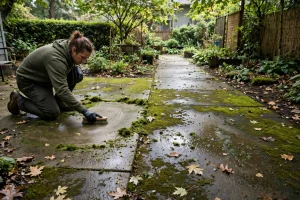
Shaded and damp exposed aggregate can develop algae, moss, or other organic buildup because the textured surface holds moisture and debris.
Use an exterior cleaner that is labeled for the surface and organic growth. Do not assume that bleach, oxygen bleach, or any other chemical is universally safe for every aggregate mix or sealer. Check product and sealer compatibility first.
What Not to Do When Cleaning Exposed Aggregate
Do not use a zero degree pressure washer nozzle.
Do not hold a pressure washer nozzle close to the slab to force out a stain.
Do not use one fixed PSI recommendation for every exposed aggregate surface.
Do not use raw acid as a general purpose cleaner.
Do not use wire or steel brushes on decorative aggregate.
Do not use a cleaner without checking compatibility with an existing sealer or coating.
Do not pressure wash loose, crumbling, or badly weathered areas aggressively.
Do not seal the surface until it is clean, properly prepared, and dry according to the sealer instructions.
Should You Seal Exposed Aggregate After Cleaning
Sealing can be useful for many exposed aggregate surfaces, but it should not be treated as an automatic step after every cleaning.
Penetrating sealers and topical sealers serve different purposes. A penetrating product may reduce moisture and contaminant absorption without creating a visible film, while some topical sealers can enhance stone color or sheen.
A sealer does not repair loose aggregate or rebuild weakened cement paste. If stones are already coming loose, the cause should be evaluated before simply applying another coating.
Reapplication timing depends on the product, traffic, weather exposure, surface preparation, and the condition of the existing sealer. Follow the sealer manufacturer guidance instead of relying on a fixed one, two, or three year schedule.
For more on sealing after cleaning, read should I seal my concrete driveway after pressure washing.
How to Maintain Exposed Aggregate Between Deep Cleanings
Sweep or blow away leaves, dirt, and plant debris before they stay wet in surface crevices.
Clean fresh spills and stains before repeated traffic works them deeper into the texture.
Keep drainage paths clear so water does not repeatedly pool on the same sections.
Use care with snow tools and other hard edges that can catch raised aggregate.
Inspect sealed surfaces periodically for wear, clouding, peeling, or other changes.
Address loose stones, cracking, or surface deterioration before aggressive cleaning.
When Professional Exposed Aggregate Cleaning Makes Sense
DIY maintenance can work well for light dirt on sound exposed aggregate. Professional cleaning becomes more useful when the surface covers a large driveway or patio, algae and staining are widespread, the existing sealer is unknown, stones are beginning to loosen, or previous pressure washing has left uneven marks.
Professional cleaning also makes sense when several stain types are present at the same time because oil, rust, tree tannins, tire marks, and mineral staining can require different treatment methods.
Jacobson’s Power Washing provides driveway and concrete cleaning in Richmond, Virginia for exterior concrete surfaces that need controlled cleaning and stain treatment.
Frequently Asked Questions
Can you pressure wash exposed aggregate concrete
Yes, but the pressure washer should be used carefully. Start with a broad spray pattern, safe working distance, and controlled passes. Avoid concentrated pressure on loose, weathered, or damaged areas.
What is the best cleaner for exposed aggregate concrete
The best cleaner depends on what is on the surface. Mild detergent may be enough for routine dirt, while oil, rust, organic growth, and mineral stains need different products. Always confirm compatibility with the concrete and any existing sealer.
Can bleach damage exposed aggregate concrete
The answer depends on the product concentration, aggregate, cement surface, existing sealer, and surrounding materials. Do not assume bleach is universally safe or universally harmful. Use a cleaner labeled for the surface and follow its directions.
Why are stones coming loose from exposed aggregate
Loose stones can result from weathering, weak or deteriorated cement paste, freeze and thaw exposure, installation issues, previous aggressive cleaning, or other surface deterioration. A sealer alone may not correct an underlying structural or bonding problem.
Should I reseal exposed aggregate after pressure washing
Not automatically. Inspect the existing sealer and surface first. If resealing is needed, follow the selected sealer manufacturer requirements for cleaning, drying, preparation, and application.
How often should exposed aggregate concrete be cleaned
There is no universal schedule. Clean as needed based on tree cover, shade, moisture, vehicle traffic, staining, and local conditions. Regular sweeping and prompt spot cleaning can reduce the need for aggressive deep cleaning.
Final Takeaway
Learning how to clean exposed aggregate concrete without damaging it comes down to using the least aggressive method that gets the surface clean.
Remove loose debris, inspect the concrete and sealer, match the cleaner to the stain, allow the product to work according to its label, and rinse with controlled pressure. Avoid fixed pressure rules, harsh general purpose chemicals, and aggressive spot cleaning that can leave permanent changes in the decorative finish.
Need Help Cleaning Exposed Aggregate in Richmond
If an exposed aggregate driveway, patio, walkway, or other concrete surface in the Richmond area has embedded dirt, algae, tire marks, mineral stains, or uneven buildup, Jacobson’s Power Washing can inspect the surface and choose a cleaning approach that matches its condition.
Contact Jacobson’s Power Washing to request an estimate for professional driveway and concrete cleaning.