
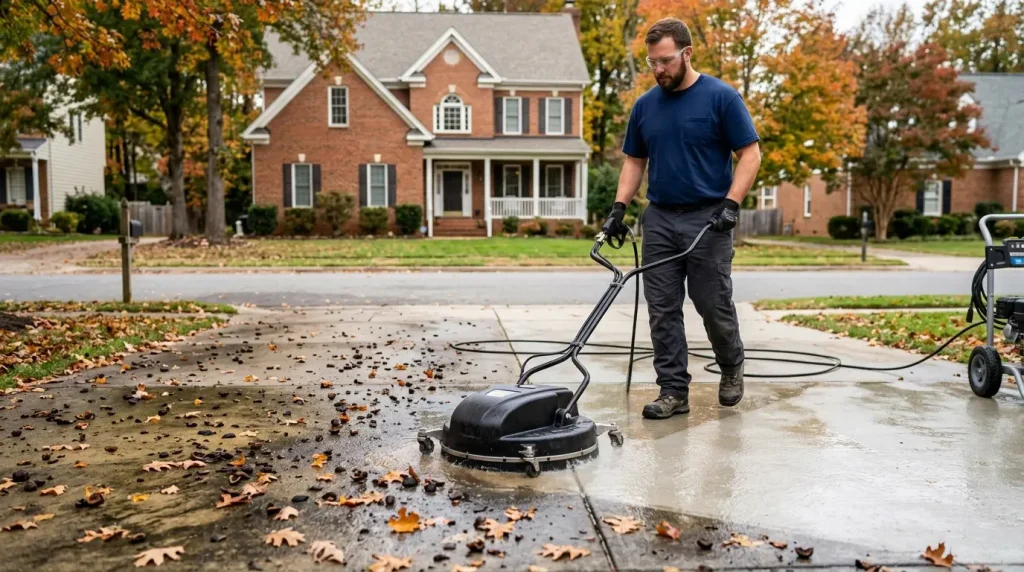
Every autumn, oak and walnut trees can leave more than leaves on driveways, walkways, and patios. Fallen acorns, walnut hulls, caps, and plant debris can leave dark brown, black, or yellowish marks that remain after the debris is swept away.
These marks are different from mineral stains such as rust or red clay. Acorns and walnuts contain natural plant compounds, including tannins, that can leach into porous concrete when the debris gets wet or is crushed underfoot or by vehicle tires.
The safest cleaning approach is to remove the source material, identify the concrete finish, use a cleaner that is compatible with organic staining, and rinse with controlled pressure instead of trying to blast the stain out of the slab.
Why Acorns and Walnuts Stain Concrete
Plant material naturally contains tannins and other organic compounds that can create dark discoloration. When acorns, walnut husks, leaves, or other debris stay wet on concrete, rain and moisture can carry those compounds into the small pores and texture of the surface.
Walnut hulls can be especially messy because their dark plant pigments can transfer easily when crushed. The longer wet organic debris sits on porous concrete, the more noticeable the staining can become.
Why Pressure Washing Alone May Not Remove Tannin Stains
A pressure washer is useful for clearing away loose dirt and rinsing treated concrete, but it may not remove dark organic discoloration by itself. If the stain remains after the loose debris is gone, increasing pressure can create surface damage before the mark disappears.
Holding a narrow nozzle too close to the slab can leave wand marks, expose aggregate, or create a visibly lighter patch. For stubborn acorn and walnut stains, the cleaner should do most of the stain lifting while pressure is used mainly for controlled rinsing.
How to Remove Acorn and Walnut Stains From Concrete Safely
Step 1. Remove All Nuts, Hulls, Leaves, and Debris
Sweep or blow away fallen nuts, walnut husks, leaves, twigs, and loose material before applying water or cleaner. If fresh plant debris is crushed into the surface, remove as much of it as possible first so additional moisture does not spread more organic residue.
Step 2. Identify the Concrete Surface
Before choosing a cleaner, determine whether the surface is plain concrete, sealed concrete, stamped concrete, exposed aggregate, colored concrete, or another decorative finish.
A product that works well on bare concrete may affect a sealer, coating, or decorative color. Always test a small hidden area first and follow the cleaner manufacturer instructions.
Step 3. Choose a Cleaner Suitable for Organic Tannin Stains
Acorn and walnut stains are organic, so a cleaner intended for plant, leaf, tannin, or other organic staining is a better match than a mineral stain remover.
Oxidizing cleaners are commonly used for many organic stains, but no single chemical is appropriate for every concrete finish. Use a product that is labeled for the surface you are cleaning and follow its dilution, application, protective equipment, and rinsing directions.
Do not mix cleaning chemicals. Never combine bleach based products, acids, or other cleaners unless the manufacturer specifically states that they are compatible.
Step 4. Protect Plants and Nearby Materials
Protect nearby grass, shrubs, painted surfaces, metals, doors, and other materials from overspray or runoff. If the product label recommends pre wetting surrounding vegetation, follow those directions and control where rinse water travels.
Covering delicate plants can be appropriate in some situations, but avoid leaving plastic coverings in place long enough to trap excessive heat. Keep clean water available for rinsing surrounding areas when the product instructions call for it.
Step 5. Apply the Cleaner and Follow the Label Dwell Time
Apply the cleaner evenly over the stained area. Do not rely on a universal ten or twenty minute dwell time because different products work at different concentrations and speeds.
Use the dwell time listed by the manufacturer and do not allow the cleaner to dry on the concrete unless the label specifically permits it. On warm or sunny days, work in smaller sections so the cleaning process remains controlled.
Step 6. Agitate Stubborn Areas if Needed
If the product instructions allow agitation, use a stiff synthetic bristle brush to work the cleaner into the textured surface. The goal is to loosen residue, not to grind the concrete.
Avoid wire or steel brushes because they can scratch finished concrete and may leave behind small metal fragments that later rust.
Step 7. Rinse Thoroughly With Controlled Pressure
Rinse the treated area thoroughly with clean water. A garden hose may be sufficient for light staining, while a pressure washer can help on larger areas when used carefully.
If a pressure washer is used, choose a controlled spray pattern, keep the nozzle moving, and avoid concentrating the stream on one spot. Safe pressure depends on the age, finish, and condition of the concrete.
Step 8. Let the Concrete Dry Before Judging the Result
Concrete looks darker when wet, so remaining stains can be difficult to evaluate immediately after rinsing. Allow the slab to dry before deciding whether another treatment is needed.
Older or deeply set stains may require more than one controlled treatment. Repeating a surface safe process is usually better than using excessive pressure or overly aggressive chemicals.
Acorn and Walnut Stains Versus Other Concrete Stains
Correct stain identification matters because organic stains and mineral stains respond to different cleaning approaches.
Acorn and Walnut Stains Versus Rust Stains
Acorn and walnut stains come from plant material, while rust is caused by iron contamination from metal, fertilizer, irrigation water, or other sources.
If the stain is orange or reddish and comes from metal or iron, read how to remove rust stains from concrete without damaging the surface.
Acorn and Walnut Stains Versus Red Clay Stains
Red clay discoloration is associated with mineral rich soil and muddy runoff, while acorn and walnut marks come from organic plant residue.
If the staining was caused by muddy soil runoff, see how to remove red clay stains from concrete in Virginia.
How to Prevent Acorn and Walnut Stains
Sweep or blow fallen nuts and leaves away before they stay wet on the concrete.
Avoid driving or parking over piles of acorns, walnuts, or hulls.
Keep drainage areas clear so plant debris does not collect in wet spots.
Trim or maintain overhanging branches when appropriate for the property.
Clean fresh organic residue before repeated rain and traffic make the staining more noticeable.
Should You Seal Concrete After Removing Tannin Stains
A compatible penetrating sealer may reduce the absorption of water and some contaminants, which can make future cleanup easier. However, no sealer should be treated as a guarantee that acorns, walnuts, or leaves will never stain the surface.
Do not seal over remaining discoloration or damp concrete. The surface should be cleaned, rinsed, and prepared according to the sealer manufacturer instructions before application.
For more detail on sealing after cleaning, read should I seal my concrete driveway after pressure washing.
When Professional Concrete Cleaning Makes Sense
DIY cleaning may be practical for a few fresh stains on plain, sound concrete. Professional cleaning becomes more useful when the stains cover a large driveway or patio, have built up over multiple seasons, appear on decorative or sealed concrete, or previous cleaning attempts have left uneven marks.
A professional can also clean the surrounding slab so the treated area blends more evenly instead of leaving one noticeably brighter spot.
Jacobson’s Power Washing provides driveway and concrete cleaning in Richmond, Virginia for homeowners dealing with organic staining, embedded dirt, and seasonal concrete buildup.
Frequently Asked Questions
Will pressure washing alone remove walnut stains from concrete
Pressure washing can remove loose debris and help rinse a treated surface, but stubborn organic discoloration may remain. A cleaner that is suitable for tannin or plant based staining is often needed first.
Does bleach remove acorn and walnut stains from concrete
Bleach based cleaners can work on some organic stains, but concentration, surface type, surrounding materials, and product instructions matter. Use a product labeled for the surface and never mix bleach with acids or other cleaners.
Will vinegar remove black walnut stains from concrete
Vinegar is an acid and is not the preferred first choice for organic tannin stains. It can also affect some concrete finishes if used incorrectly. A cleaner intended for organic staining is generally a better option.
Can acorn and walnut stains become difficult to remove
Yes. Stains that remain through repeated wet and dry cycles or sit on porous concrete for a long time can become more stubborn. Older stains may need more than one controlled treatment.
How quickly should fallen acorns and walnuts be removed
There is no universal time limit, but prompt cleanup is best. Removing wet plant debris before it is repeatedly crushed, rained on, or driven over can reduce the chance of deeper discoloration.
Can these stains damage sealed or decorative concrete
The stain itself may affect appearance, but the bigger cleaning risk is using an incompatible product or overly aggressive pressure. Always confirm surface compatibility before treatment.
Final Takeaway
Removing acorn and walnut stains from concrete starts with identifying them as organic plant stains rather than mineral stains. Clear away the debris, use a concrete compatible cleaner suited to organic staining, follow the product directions, and rinse with controlled pressure.
Fresh marks are usually easier to manage, while older or deeper stains may need repeated treatment. The goal is to improve or restore the appearance of the concrete without trading a dark tannin stain for etched, striped, or discolored concrete.
Need Help With Tree and Tannin Stains in Richmond
If acorns, walnut hulls, leaves, or other organic debris are staining your driveway, walkway, patio, or concrete surface in the Richmond area, Jacobson’s Power Washing can inspect the surface and choose a cleaning method that matches the condition of the concrete.
Contact Jacobson’s Power Washing to request an estimate for professional driveway and concrete cleaning.