
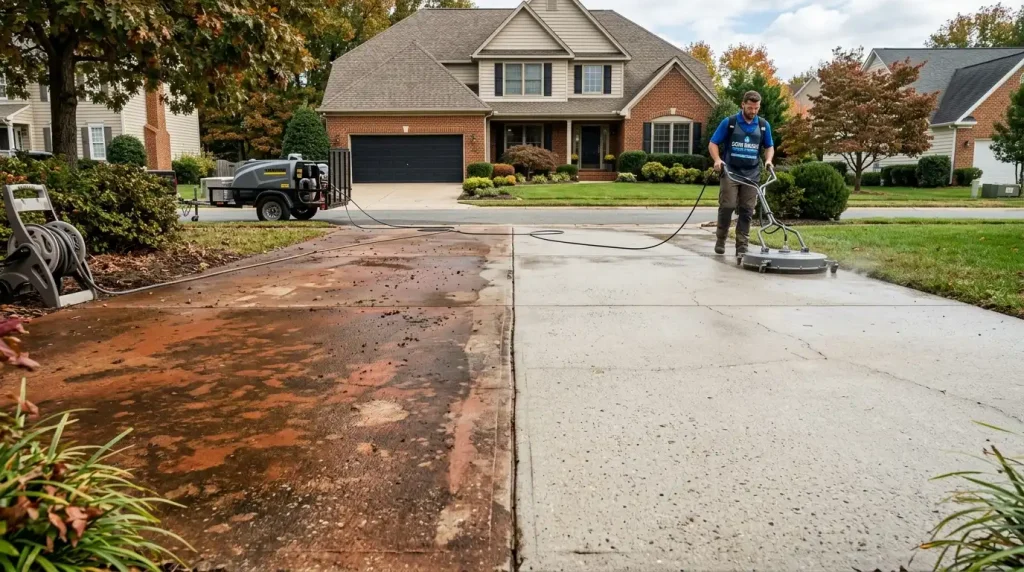
If you live in Virginia, especially across the Piedmont, Central Virginia, or Northern Virginia, you may already know how stubborn red clay can be. It sticks to shoes, washes across driveways after heavy rain, and can leave red or orange marks on concrete long after the loose mud is gone.
Virginia red clay often contains iron rich minerals. When wet clay reaches porous concrete, fine soil particles and mineral residue can work into the surface pores. After the concrete dries, the remaining discoloration can be much harder to remove than ordinary dirt.
The key is to treat red clay as a mineral stain, not simply as mud. The safest process is to remove loose soil first, identify the surface condition, use a concrete compatible stain treatment, and rinse without relying on excessive pressure.
Why Red Clay Stains Concrete
Concrete appears solid, but its surface contains small pores and voids. Wet clay can settle into those pores, especially on older, unsealed, or weathered concrete. As the water evaporates, fine clay particles and iron based residue can remain behind and create red, orange, or brown discoloration.
These stains often become more noticeable after heavy rain, grading work, landscaping, irrigation runoff, or construction activity. Driveways and walkways beside exposed soil are especially vulnerable because muddy water can repeatedly cross the same section of concrete.
Why Pressure Washing Alone Often Fails
A pressure washer can remove loose clay and surface dirt, but stubborn red discoloration may remain because mineral residue can stay inside the concrete pores. Using more pressure is not always the answer.
Holding a nozzle too close or using an aggressive tip can leave wand marks, roughen the surface, expose aggregate, or create uneven cleaning patterns. For this type of stain, the correct cleaning product should do most of the stain removal work. Pressure should mainly support a controlled rinse.
How to Remove Red Clay Stains From Concrete
Step 1. Remove Loose Clay and Debris
Start with a dry surface when practical. Sweep or blow away loose clay, dirt, leaves, and other debris. If fresh mud is still wet, avoid spreading it across a larger area. Let heavy deposits dry enough to remove them before applying a cleaner.
This allows the stain remover to reach the actual discoloration instead of being wasted on a layer of loose soil.
Step 2. Check the Type and Condition of the Concrete
Before choosing a cleaner, identify whether the surface is plain concrete, sealed concrete, stamped concrete, exposed aggregate, or another decorative finish. Older concrete, previously repaired areas, and coated surfaces can react differently to cleaners.
Always use a product labeled for the surface you are cleaning, follow the manufacturer instructions, and test a small hidden area first.
Step 3. Use a Cleaner Made for Mineral or Iron Based Stains
Red clay staining is different from mold, algae, grease, and leaf tannins. Household bleach can be useful for many organic contaminants, but it is not the right first choice for iron rich mineral discoloration.
Choose a commercial cleaner specifically labeled for red clay, rust, mineral, or masonry staining and confirmed by the manufacturer as suitable for concrete. Some products use acidic ingredients, but the product formulation and label directions matter more than simply choosing an acid by name.
Do not mix cleaning chemicals. Never combine bleach, acids, or other cleaners unless the manufacturer explicitly states that they are compatible.
Step 4. Protect Nearby Plants and Surfaces
Protect nearby plants, metal surfaces, painted areas, siding, doors, and other materials from overspray and runoff. Pre wet surrounding vegetation when the product label recommends it and control where rinse water travels.
Wear the personal protective equipment listed on the product label. Depending on the cleaner, this may include chemical resistant gloves, eye protection, and suitable clothing.
Step 5. Apply the Cleaner and Follow the Label Dwell Time
Apply the cleaner evenly to the stained section and work in manageable areas. Do not assume every product needs the same dwell time. Use the timing specified by the manufacturer and do not allow the cleaner to dry on the concrete unless the label specifically permits it.
If the instructions call for agitation, use a suitable synthetic bristle brush. Gentle agitation can help move the treatment into textured areas without relying on excessive pressure.
Step 6. Rinse Thoroughly and Let the Concrete Dry
Rinse the treated area thoroughly using clean water and a pressure level appropriate for the concrete. A wide spray pattern is generally easier to control than a highly concentrated stream.
Some concrete cleaners require a neutralizing step after treatment, while others do not. Follow the product label rather than using a universal method. After rinsing, allow the slab to dry before judging the result because wet concrete can temporarily hide remaining discoloration.
Older or deeply embedded stains may need another controlled treatment. Repeating a surface safe process is usually better than increasing pressure aggressively.
What Not to Do When Cleaning Red Clay Stains
Do not assume household bleach will remove an iron rich mineral stain.
Do not use maximum pressure simply because the stain is stubborn.
Do not use a zero degree nozzle on a driveway or patio.
Do not mix acids, bleach, or other cleaning chemicals.
Do not let a specialty cleaner dry on the surface unless the label allows it.
Do not treat sealed, stamped, painted, or decorative concrete like plain unfinished concrete.
Do not use raw muriatic acid as a casual spot treatment because strong acid can etch concrete and permanently change the surface.
Red Clay Stains Versus Rust Stains
Red clay and rust stains can look similar because both may create orange or reddish discoloration. The source is important. Red clay is usually carried onto the surface by soil and runoff, while rust may come from metal furniture, tools, irrigation water, fertilizer, or other iron contamination.
If the stain comes from metal or another direct rust source, read how to remove rust stains from concrete for a more targeted approach.
Red Clay Versus Leaf and Tannin Stains
Leaves, acorns, walnuts, and other plant material can also leave brown or dark marks on concrete, but those stains are organic rather than mineral based. That difference matters because the correct cleaner may be completely different.
For organic staining caused by leaves and plant material, see the guide to leaf tannin stains on concrete.
How to Reduce Red Clay Staining in the Future
Cover exposed soil next to driveways and walkways with mulch, gravel, grass, or another suitable ground cover.
Correct drainage or downspout problems that carry muddy water across concrete.
Rinse fresh clay residue before repeated wet and dry cycles make the discoloration harder to remove.
Use edging where landscape beds meet concrete to reduce soil movement.
If you plan to seal the concrete, make sure the surface is fully clean, dry, and prepared for the specific sealer.
Should You Seal Concrete After Removing Red Clay Stains
A suitable concrete sealer can reduce water and contaminant absorption, but it is not a one size fits all solution. The right sealer depends on the concrete finish, condition, desired appearance, traffic, and previous coatings.
Do not seal over remaining red clay or mineral residue. Trapped discoloration can become harder to correct later. If you are considering sealing after cleaning, follow the sealer manufacturer surface preparation and reapplication guidance.
For more detail, read should I seal my concrete driveway after pressure washing.
When Professional Concrete Cleaning Makes Sense
DIY cleaning can make sense for a small stain on plain, sound concrete when you can identify a compatible product and follow the label safely. Professional help is more useful when staining covers a large driveway, the surface is decorative or sealed, the concrete is older or damaged, or previous attempts have already created uneven marks.
Jacobson’s Power Washing provides driveway and concrete cleaning in Richmond, Virginia for homeowners dealing with embedded dirt, staining, and weather related buildup.
A professional cleaning process should begin with surface inspection and stain identification. That reduces the risk of using a method that removes the stain but damages the concrete.
Frequently Asked Questions
Will bleach remove red clay stains from concrete
Bleach is commonly used for organic growth such as mold and algae. Red clay discoloration can involve iron rich mineral residue, so bleach alone may leave the red or orange stain behind. A concrete compatible cleaner designed for mineral, red clay, or rust type staining is usually a better starting point.
Can a pressure washer remove red clay from a driveway
A pressure washer can remove loose clay and help rinse a treated surface, but stubborn mineral discoloration may remain. Using more pressure is not always better because aggressive washing can mark or roughen concrete.
Can red clay permanently stain concrete
Red clay can become difficult to remove when fine particles and mineral residue settle into porous concrete over time. Many stains can still be improved significantly with the correct treatment, although older or deeper staining may require more than one controlled application.
Is muriatic acid the best way to remove red clay stains
No. Raw muriatic acid is a strong acid that can etch concrete, change the surface texture, and create a visibly different spot. Use a product specifically intended for the stain and confirmed as suitable for concrete, then follow its label instructions.
Why does Virginia red clay leave orange marks
Virginia red clay can contain iron rich minerals. When wet soil enters porous concrete and later dries, mineral residue can remain in the pores and produce red, orange, or brown discoloration.
Final Takeaway
Learning how to remove red clay stains from concrete in Virginia starts with understanding that the problem is not ordinary surface dirt. The safest approach is to remove loose soil, identify the surface, use a concrete compatible mineral stain treatment, follow the product directions, and rinse without excessive pressure.
For widespread or stubborn staining, especially on older, sealed, decorative, or previously damaged concrete, professional cleaning can help avoid turning a red clay problem into permanent surface damage.
Need Help With Red Clay Stains in Richmond
If red clay is staining your driveway, walkway, patio, or another concrete surface in the Richmond area, Jacobson’s Power Washing can evaluate the surface and choose a cleaning method that matches the condition of the concrete.
Contact Jacobson’s Power Washing to request an estimate for professional driveway and concrete cleaning.