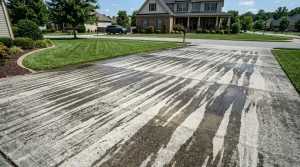

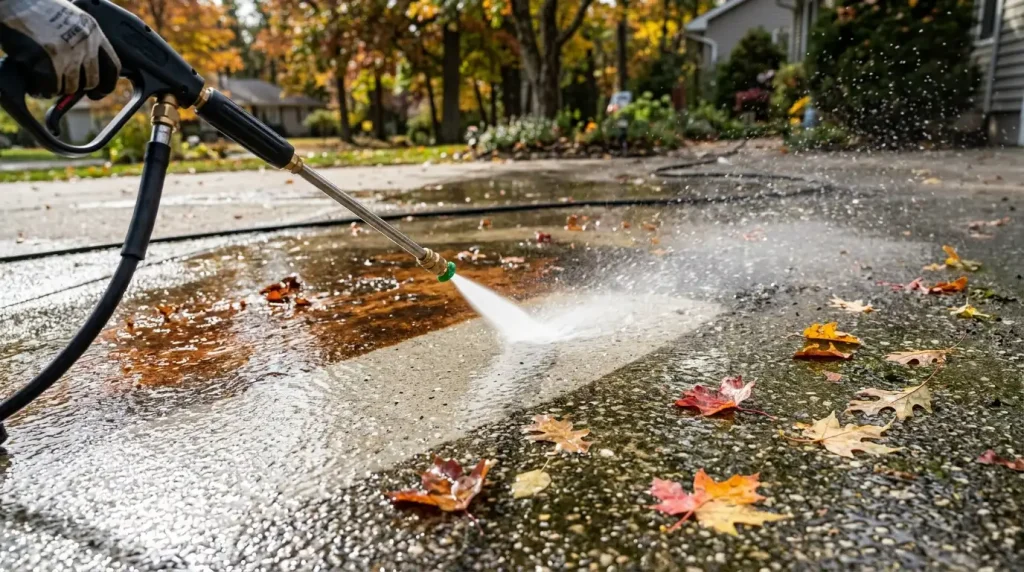
You rake the leaves off the driveway, and underneath them you find a set of brown and reddish shadows where they were sitting. Sometimes the outline of the leaf is still there, printed into the concrete like a stamp. You reach for the bleach, scrub at it, and the stain fades a little but never really goes away. That is because bleach is the wrong tool for this kind of stain, and knowing why saves you a lot of scrubbing that goes nowhere.
Tannin stains on concrete are one of the most common marks homeowners deal with, and they are also one of the most misunderstood. Here is what causes them and why the usual approach falls short.
What Tannin Stains Actually Are
The brown marks are not dirt, and treating them like dirt is where people go wrong.
Tannins Come From Organic Material
Tannins are compounds found in leaves, acorns, bark, mulch, and a lot of other plant material. Oak leaves are among the worst offenders, and central Virginia has no shortage of oaks. When leaves sit on concrete and get wet, the tannins leach out and soak into the surface. Concrete is porous, so the color does not just sit on top. It works its way down into the material.
The Stain Is Below the Surface
This is the part that matters. A tannin stain is not a coating on the concrete that you can scrub off. The color has penetrated into the pores, sometimes a fair distance down. Scrubbing the top does nothing, because the stain you are seeing is coming from underneath. You have to draw it out or break it down where it sits, not scrape at the surface.
Time Makes It Worse
A leaf that sat for a weekend leaves a light mark. A pile that sat through a wet fall leaves a deep one. The longer the organic material stays in contact with damp concrete, the further the tannins travel and the harder the stain is to lift. Fall is when most of this damage happens, since that is when leaves pile up and the ground stays wet.
Why Bleach Falls Short
Bleach is the go-to for a lot of people, and it does part of the job while missing the rest.
Bleach Works on Color, Not on the Compound
Household bleach lightens the color of a stain, which is why it looks like it is working at first. What it does not do is chemically break down the tannin or pull it out of the concrete. You are bleaching the visible part of the stain while the tannin stays in the pores, so the color creeps back as the bleach fades. Within a few weeks the mark is often right back where it started.
It Sits on the Surface
Bleach does not penetrate concrete well. Since the stain lives below the surface, a cleaner that stays on top cannot reach the problem. You end up treating the symptom at the surface while the cause sits untouched a layer down.
It Can Cause Other Problems
Bleach poured on concrete runs off into the soil and the plants around the driveway, and it can lighten or discolor the concrete unevenly if it pools. You can end up trading a brown stain for a bleached patch, which is not much of a win.
What Actually Removes Tannin Stains
Getting the mark out means matching the treatment to the way the stain behaves.
The Right Cleaning Agents
Tannin stains respond to cleaners made to break down organic compounds and draw them out of the concrete. These products work on the chemistry of the stain rather than just its color, so they address the tannin itself. The cleaner needs time to sit and do its work, and it often takes more than one application on a stain that has set in deep.
Heat & Pressure Together
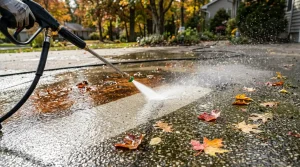
Warm or hot water helps break the stain loose, and pressure flushes it out of the pores once the cleaner has done its part. The combination of the right agent, dwell time, and pressure is what actually clears the mark, and no single one of those on its own gets there.
Working the Whole Slab
Spot-treating one stain often leaves a clean patch on a dirty driveway, which can look worse than the stain did. Cleaning the whole slab at once keeps the color even, so you are not left with bright circles where the leaves used to be.
Keeping Them From Coming Back
Once the concrete is clean, a little maintenance keeps you from fighting the same stains next year.
Clear Leaves Before They Sit
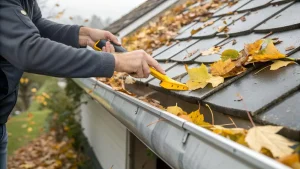
The simplest prevention is keeping organic material from staying on the concrete when it is wet. Blowing or raking leaves off the driveway before a rain, rather than after, keeps the tannins from having the time and moisture they need to soak in. It is not glamorous, but it works.
Watch the Problem Spots
Under trees, along the edges where mulch beds meet the concrete, and anywhere leaves pile up in the wind are the spots that stain first. Those are the areas to keep an eye on through the fall.
Consider Sealing
A sealed concrete surface resists staining because the pores are closed off, so tannins cannot soak in the way they do on bare concrete. Sealing is a bigger project than a cleaning, but on a driveway that stains every year, it changes the equation going forward.
Getting It Done Right
Tannin stains are one of those problems where the DIY approach eats a weekend and leaves you frustrated, because the tools most people reach for cannot get at the stain. The right cleaning agents, the right water temperature, and the right pressure clear marks that bleach and a stiff brush never will.
Our crew handles concrete cleaning across Richmond, Midlothian, Glen Allen, Short Pump, and the surrounding areas. We treat tannin and leaf stains with cleaners made for organic staining, work the whole slab so the color stays even, and clear the marks that surface scrubbing leaves behind. If your driveway or walkway came out of the fall covered in brown leaf shadows, give us a call and we will take care of it.