

How to Clean Painted Brick Without Peeling the Paint
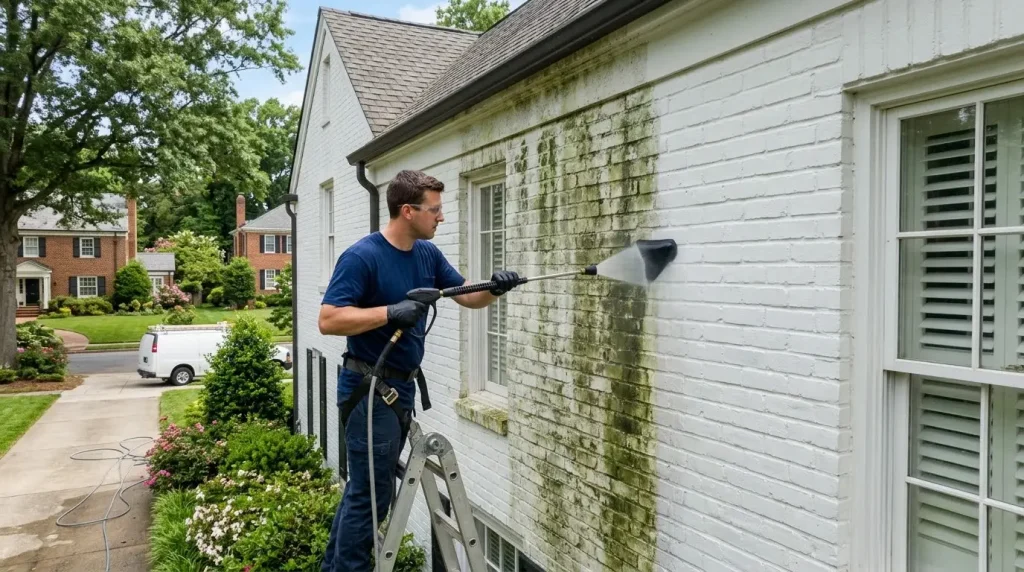
Painted brick needs a different cleaning approach than bare masonry. The brick and mortar still need protection, but the paint film adds another surface that can chalk, soften, blister, crack, or peel if it is scrubbed or pressure washed too aggressively. The safest method is to inspect the paint first, remove loose debris, test a […]
What Is Efflorescence on Brick and How Do You Remove It Safely?
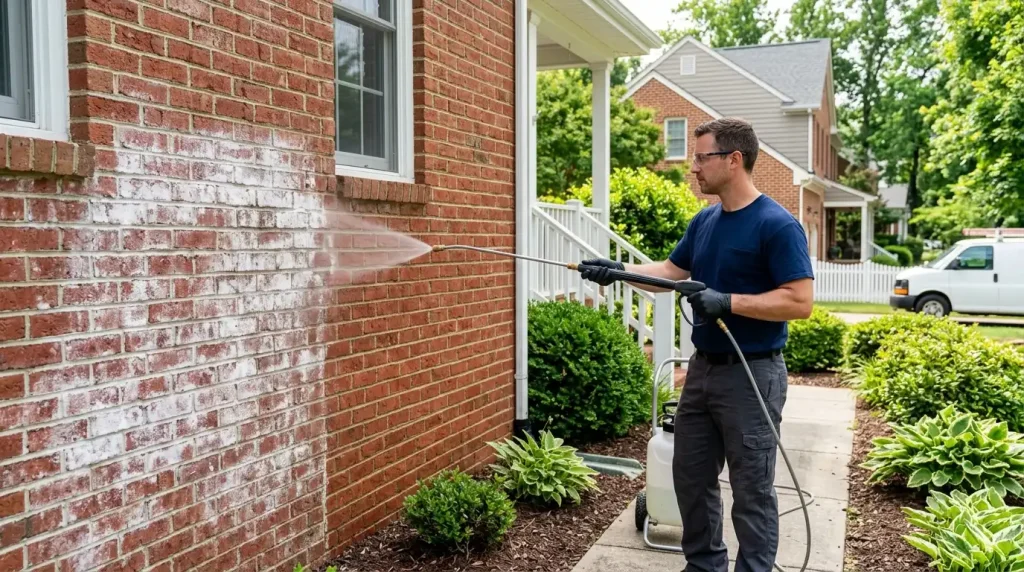
White powder, streaks, or crusty deposits on brick are often signs of efflorescence. Efflorescence forms when water dissolves soluble salts inside masonry, carries those salts toward the surface, and then evaporates. The water disappears, but the salts remain behind. The deposit itself is often removable, but repeated efflorescence is a clue that moisture is moving […]
Can You Pressure Wash Historic Brick Homes in Richmond, VA?
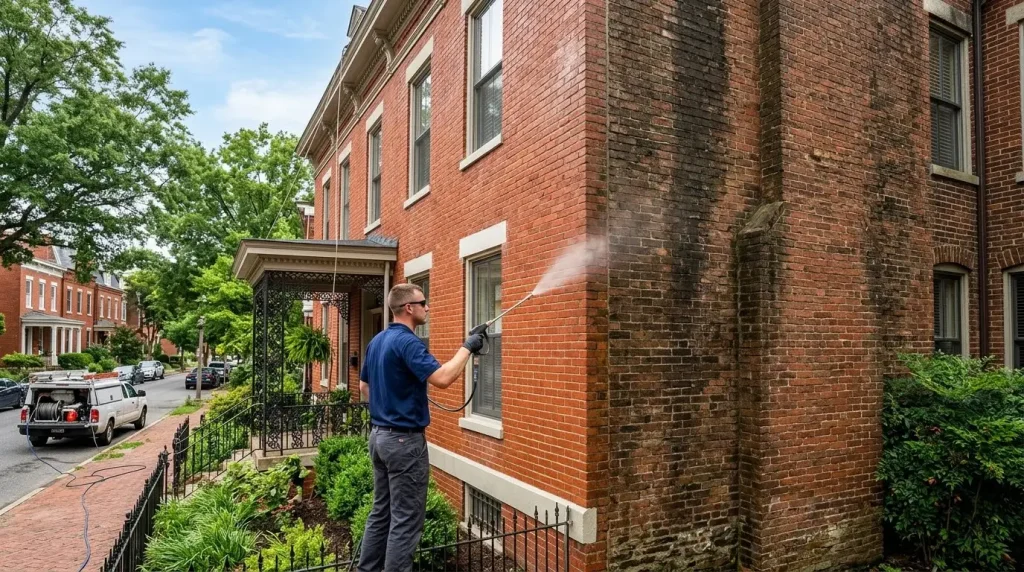
Historic brick homes are a major part of Richmond’s architectural character, but older masonry should not be cleaned the same way as modern brick veneer. The short answer is that some historic brick can be cleaned with carefully controlled water pressure, but high pressure washing is risky and should not be treated as the default […]
How to Clean Concrete With Expansion Joints Without Damaging Them
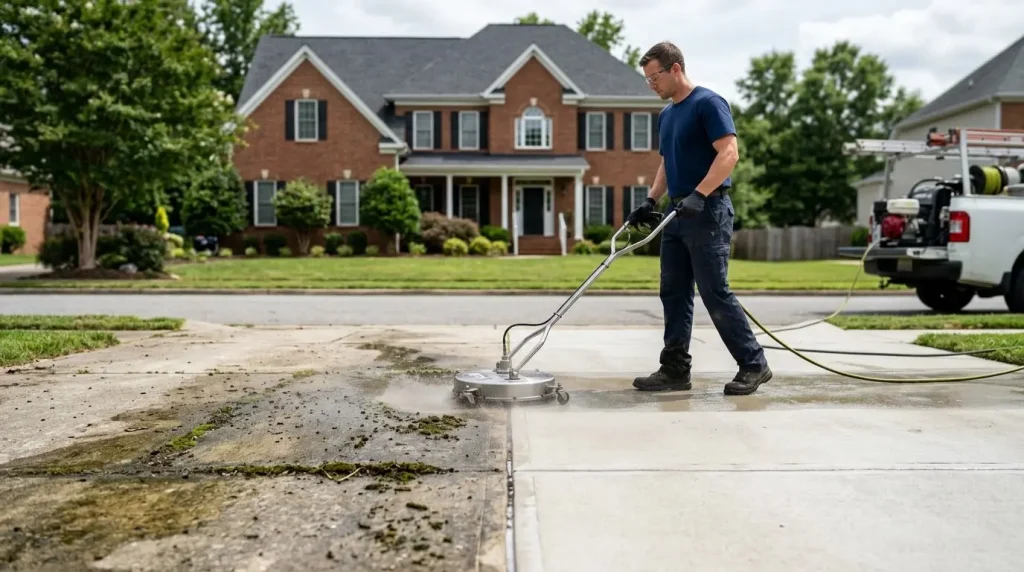
Concrete driveways, patios, walkways, and slabs often include joints that allow sections of concrete to move without pushing directly against each other. These joints can collect dirt, leaves, sand, weeds, algae, and standing water, but cleaning them too aggressively can damage flexible sealant or expose the material beneath it. The safest approach is to identify […]
Pressure Washing New Concrete: How Long Should You Wait After Installation?
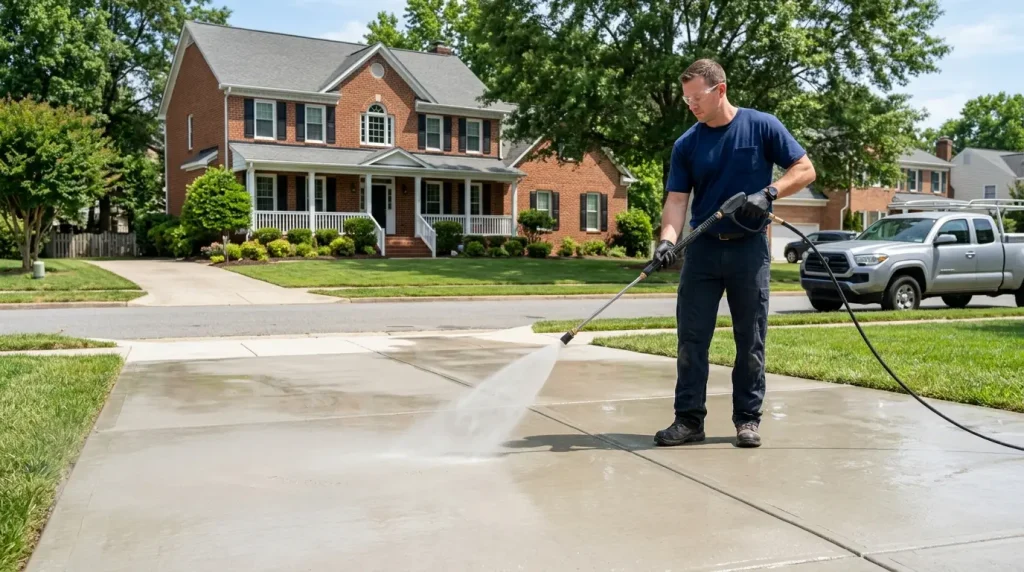
New concrete may look hard within a day or two, but it is still gaining strength beneath the surface. Pressure washing too soon can mark the finish, erode weak surface paste, expose aggregate, or leave permanent lines that become obvious after the slab dries. For many conventional concrete mixes, 28 days is the standard age […]
Can You Pressure Wash Stamped Concrete?
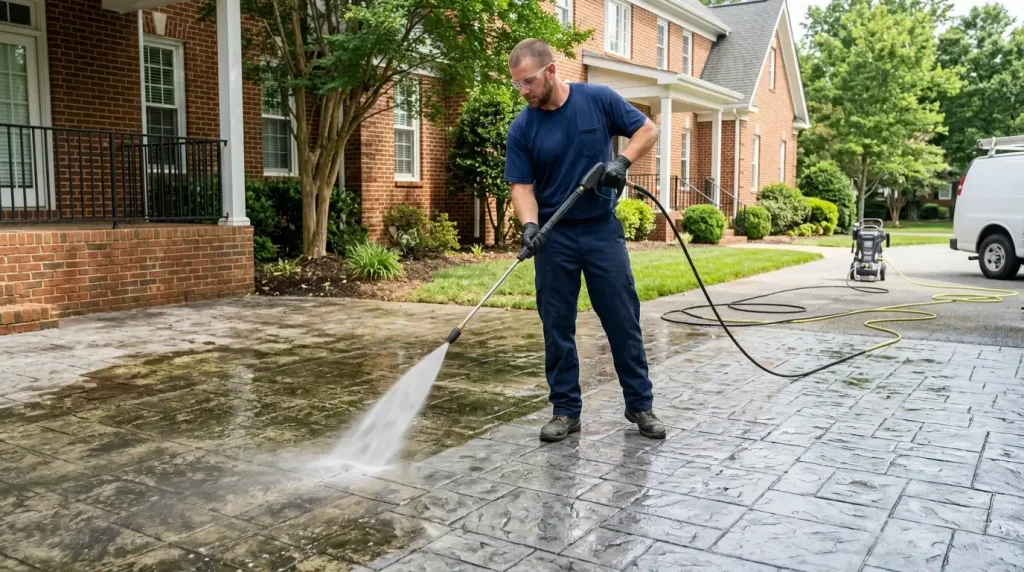
Yes, stamped concrete can be pressure washed, but it needs a gentler approach than ordinary unfinished concrete. Stamped surfaces often combine decorative texture, integral or topical color, antiquing, and a protective sealer. Aggressive pressure washing can leave wand marks, dull the color, damage a worn sealer, or make the stamped pattern look uneven. The safest […]
How to Clean Exposed Aggregate Concrete Without Damaging It
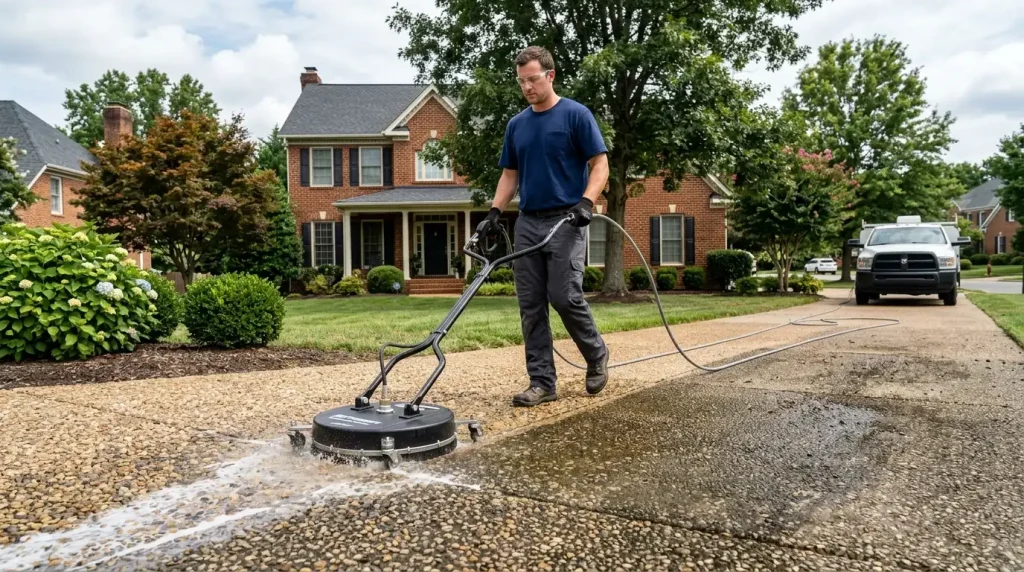
Exposed aggregate concrete is popular for driveways, patios, pool decks, and walkways because it combines a decorative stone finish with a textured surface. That same texture, however, can trap dirt, leaves, algae, oil, and other debris between the exposed stones. The biggest cleaning mistake is assuming that more pressure will produce a better result. Exposed […]
How to Remove Acorn and Walnut Stains From Concrete
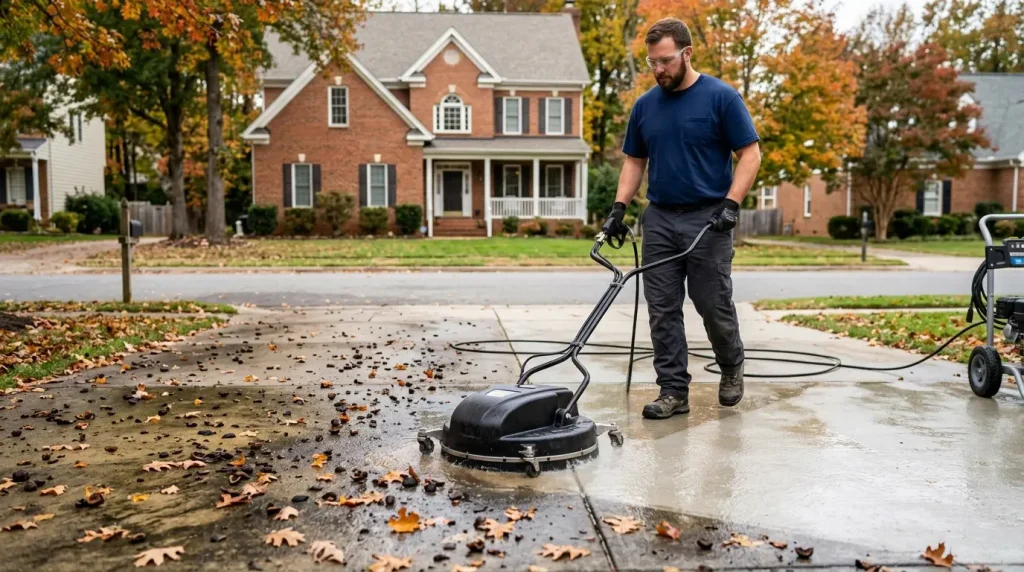
Every autumn, oak and walnut trees can leave more than leaves on driveways, walkways, and patios. Fallen acorns, walnut hulls, caps, and plant debris can leave dark brown, black, or yellowish marks that remain after the debris is swept away. These marks are different from mineral stains such as rust or red clay. Acorns and […]
Can Pressure Washing Remove Tire Marks From Concrete?
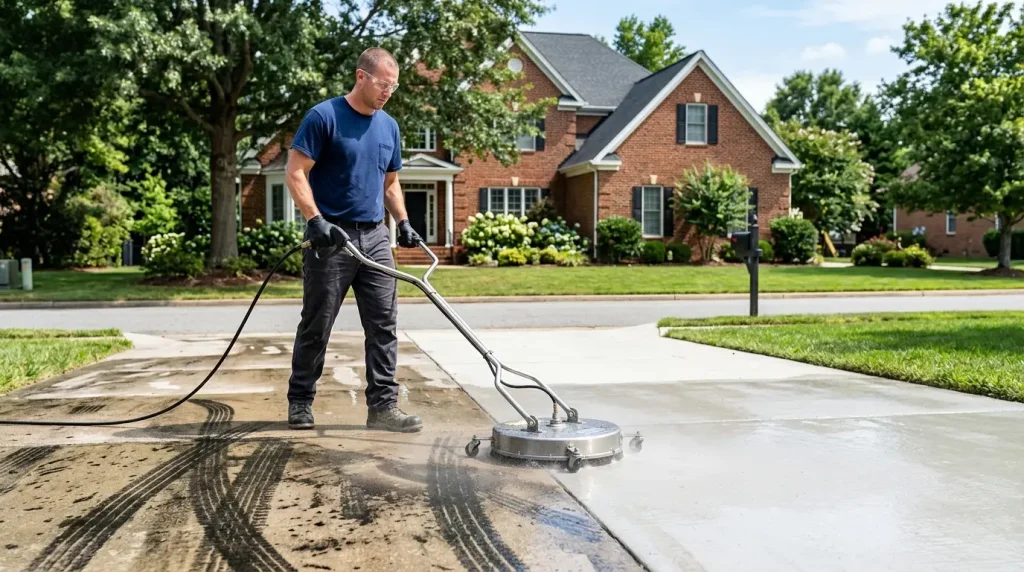
Black tire marks across a concrete driveway or garage apron can make an otherwise clean surface look worn. They may appear after repeated parking, sharp turns, braking, tire spin, or regular vehicle traffic in the same area. Pressure washing can help remove tire marks from concrete, but water pressure alone is not always enough. Tire […]
How to Remove Rust Stains From Concrete Without Damaging the Surface
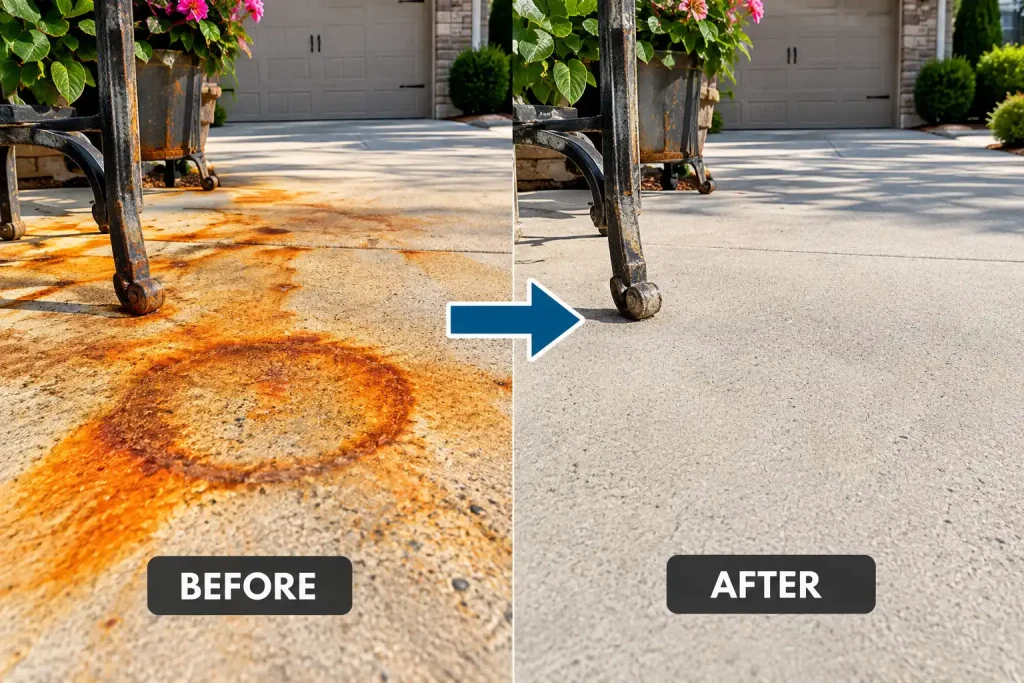
Rust stains on concrete can be frustrating because ordinary washing often removes the surrounding dirt while leaving the orange or reddish brown mark behind. Common sources include metal patio furniture, tools, fertilizer granules, iron rich sprinkler water, exposed steel, and other metal items that stay wet against the slab. Concrete is porous, so iron contaminated […]