
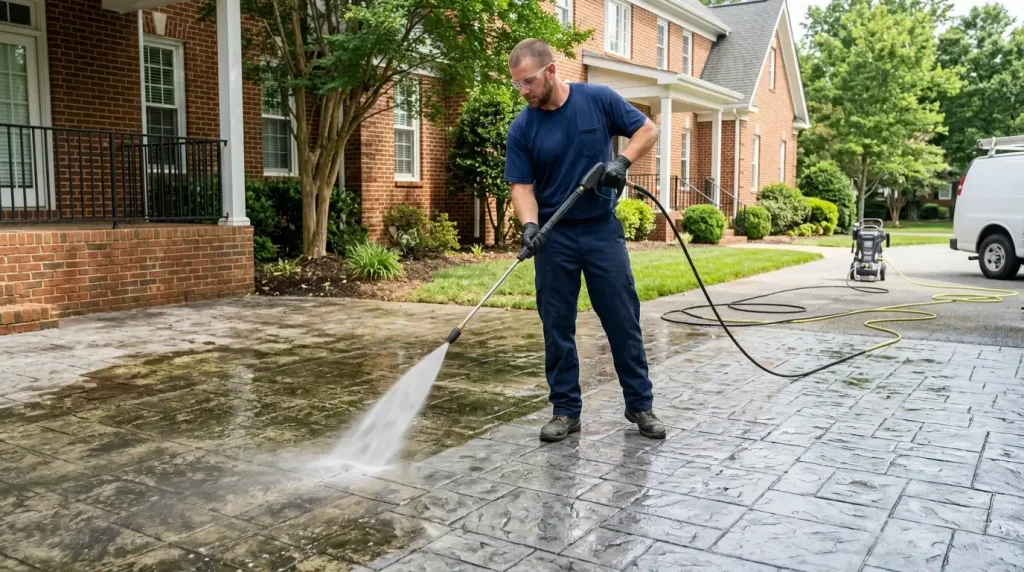
Yes, stamped concrete can be pressure washed, but it needs a gentler approach than ordinary unfinished concrete. Stamped surfaces often combine decorative texture, integral or topical color, antiquing, and a protective sealer. Aggressive pressure washing can leave wand marks, dull the color, damage a worn sealer, or make the stamped pattern look uneven.
The safest method is to inspect the surface first, remove loose debris, use a cleaner that matches the type of buildup, and rinse with controlled pressure. The goal is to clean the texture without stripping protection or changing the decorative finish.
Why Stamped Concrete Needs Extra Care
Stamped concrete is designed to imitate materials such as stone, slate, brick, or wood. The texture and color that make it attractive also create more places for dirt, algae, leaves, and vehicle residue to collect.
Many stamped surfaces are also sealed. That sealer may deepen the color, reduce water absorption, or add sheen. If the sealer is worn, cloudy, peeling, or already failing, pressure washing can expose those differences more clearly.
What Can Go Wrong With Aggressive Pressure Washing
Wand Marks and Uneven Cleaning
A narrow spray pattern or nozzle held too close can create lighter streaks across the stamped pattern. Once the surface dries, those lines can be more noticeable than the original dirt.
Sealer Damage
Topical acrylic sealers and other film forming coatings can be damaged by overly aggressive pressure, incompatible cleaners, or repeated scrubbing. A worn sealer may also lift unevenly, leaving glossy and dull areas across the same patio or driveway.
Color and Antiquing Changes
Decorative color can be affected when the protective surface layer is damaged. If antiquing or accent color is concentrated in low texture areas, aggressive cleaning can change the visual contrast of the pattern.
Can You Pressure Wash Stamped Concrete Safely
Yes, when the surface is sound and the pressure washer is used as a controlled rinsing tool rather than as a way to force stains out of the concrete.
Brickform recommends gentler pressure washing on decorative concrete, along with mild cleaning products, testing a small area first, and avoiding aggressive methods intended for coating removal or surface preparation. That distinction is important because routine cleaning and sealer stripping are completely different jobs.
How to Pressure Wash Stamped Concrete Safely
Step 1. Inspect the Surface Before Cleaning
Look for peeling or cloudy sealer, worn glossy sections, cracks, flaking edges, discoloration, and areas where previous pressure washing has already left lines.
If the sealer is failing, cleaning may make the difference between protected and worn areas more visible. In that situation, the surface may need sealer evaluation rather than simply stronger pressure washing.
Step 2. Sweep or Blow Away Loose Debris
Remove leaves, grit, soil, acorns, grass clippings, and other loose material before introducing water. This prevents debris from turning into muddy residue that settles into stamped joints and low texture areas.
Step 3. Start With a Mild Cleaner
For routine dirt and general grime, begin with a mild concrete compatible or pH neutral cleaner that is suitable for decorative concrete and the existing sealer.
The cleaner should do most of the loosening so the pressure washer only needs to rinse the surface. Do not use a stronger chemical simply because the stamped surface is heavily textured.
Step 4. Match the Cleaner to the Stain
Oil, tire residue, rust, tree tannins, algae, and mineral deposits require different treatments. Use a product labeled for the specific stain and confirmed as suitable for stamped or sealed concrete.
Avoid raw acids and aggressive solvents as general purpose cleaners. Some products can etch the cement surface, strip sealer, or change the appearance of decorative color.
Step 5. Test a Small Hidden Area
Before cleaning the entire patio or driveway, test the cleaner and rinsing method in an inconspicuous section. Let the test area dry completely and check for color change, loss of sheen, whitening, streaking, or texture damage.
Step 6. Follow the Cleaner Dwell Time
Apply the cleaner according to the manufacturer directions and use the stated dwell time. Do not let the product dry on the surface unless the label specifically permits it.
On warm or sunny days, work in smaller sections so you can maintain control over application and rinsing.
Step 7. Agitate Gently if Needed
For textured areas or joints that hold dirt, use a soft or medium synthetic bristle brush when the cleaner instructions allow agitation.
Avoid wire brushes, aggressive abrasive pads, or tools that can scratch the surface or wear away decorative detail.
Step 8. Rinse With Controlled Pressure
Use a broad spray pattern, keep the nozzle moving, and maintain enough distance to rinse the loosened dirt without cutting into the surface or sealer.
There is no single safe PSI for every stamped concrete surface. The correct pressure depends on concrete age, surface strength, texture, sealer type, nozzle, working distance, and existing wear.
Step 9. Let the Surface Dry Before Judging the Result
Stamped concrete looks darker and richer when wet, which can temporarily hide uneven sealer or remaining stains. Allow the surface to dry before deciding whether another cleaning pass or sealer maintenance is needed.
What Not to Do When Pressure Washing Stamped Concrete
Do not use a zero degree nozzle.
Do not hold the pressure washer wand close to the surface to chase one stubborn spot.
Do not use aggressive tips or turbo nozzles for routine decorative concrete cleaning.
Do not use raw muriatic acid as a general purpose cleaner.
Do not use a cleaner without checking compatibility with the existing sealer.
Do not use wire brushes or highly abrasive scrubbers.
Do not assume that cloudy or peeling sealer can be fixed with more pressure.
Do not reseal until the concrete is clean, properly prepared, and dry according to the sealer instructions.
How to Handle Common Stains on Stamped Concrete
Tire Marks
Tire residue can collect on stamped driveways, especially in repeated parking and turning areas. Use a cleaner or degreaser that is compatible with the decorative finish and sealer before rinsing with controlled pressure.
For a detailed process, read can pressure washing remove tire marks from concrete.
Rust Stains
Rust requires a mineral stain treatment. On stamped concrete, the main concern is choosing a rust remover that will not damage the sealer, decorative color, or surrounding finish.
For more detail, read how to remove rust stains from concrete without damaging the surface.
Tree and Tannin Stains
Leaves, acorns, walnuts, and other organic debris can settle into stamped joints and leave dark plant based stains. Remove the debris promptly and use a cleaner that is appropriate for organic staining and decorative concrete.
Algae and Organic Growth
Shaded patios and walkways can develop green or dark organic buildup. Use an exterior cleaner that is compatible with the surface and sealer rather than relying on pressure alone.
What If the Sealer Is Cloudy, Peeling, or Worn
Cleaning and resealing are not the same as stripping a failing sealer. If the surface has cloudy white areas, peeling film, uneven gloss, or worn patches, first determine whether the existing sealer can be cleaned and recoated or whether it needs to be removed.
Do not try to strip a topical sealer with aggressive pressure unless the process and surface are specifically being prepared for that purpose. Routine pressure washing should not be treated as a sealer removal method.
Should Stamped Concrete Be Resealed After Pressure Washing
Not every cleaning requires resealing. The decision depends on the condition of the existing sealer, the type of product, traffic, weather exposure, and the appearance of the surface after it dries.
If water no longer beads as expected, the color looks dull, or the sealer is visibly worn, maintenance may be appropriate. Always follow the sealer manufacturer instructions for cleaning, drying, compatibility, and reapplication.
For more on sealing after cleaning, read should I seal my concrete driveway after pressure washing.
How Often Should Stamped Concrete Be Cleaned
There is no universal cleaning schedule. Tree cover, shade, moisture, vehicle traffic, food spills, pollen, and local weather all affect how quickly stamped concrete gets dirty.
Regular sweeping and prompt spot cleaning can reduce the need for aggressive deep cleaning. Clean the surface when visible buildup or staining appears rather than waiting for dirt to become deeply embedded in the stamped texture.
When Professional Stamped Concrete Cleaning Makes Sense
DIY cleaning can work for light dirt on sound stamped concrete when the sealer type is known and the correct cleaner is available.
Professional help is more useful when the surface is large, the sealer is unknown or failing, color is uneven, several stain types are present, or previous pressure washing has already created streaks.
Jacobson’s Power Washing provides driveway and concrete cleaning in Richmond, Virginia for exterior concrete surfaces that need controlled cleaning and stain treatment.
Frequently Asked Questions
Can a pressure washer damage stamped concrete
Yes. Excessive pressure, a narrow spray pattern, or holding the nozzle too close can leave lines, damage a worn sealer, and change the appearance of the decorative surface.
What is the best cleaner for stamped concrete
For routine cleaning, a mild concrete compatible or pH neutral cleaner is a good starting point. For specific stains, use a product designed for that stain and confirmed as compatible with decorative concrete and the existing sealer.
Can you use bleach on stamped concrete
Some cleaning products containing sodium hypochlorite may be suitable for certain organic stains, but compatibility depends on the sealer, color system, concentration, and surrounding materials. Follow product and sealer guidance rather than assuming bleach is safe for every stamped surface.
Can you use a surface cleaner on stamped concrete
A rotary surface cleaner may distribute pressure more evenly, but it still needs to be used carefully on decorative and sealed surfaces. Test first and avoid aggressive settings or equipment intended for surface preparation.
Will pressure washing remove sealer from stamped concrete
Routine controlled washing should not be used as a sealer stripping method. Aggressive pressure can damage or unevenly remove a worn topical sealer, which may leave the surface blotchy.
Should stamped concrete be resealed after every pressure washing
No. Resealing should be based on the condition of the existing sealer and the manufacturer maintenance guidance, not simply on whether the surface was washed.
Final Takeaway
You can pressure wash stamped concrete, but the safest results come from using the least aggressive method that gets the surface clean.
Inspect the sealer and finish, use a compatible cleaner, test a small area, allow the cleaning product to work, and rinse with controlled pressure. Avoid aggressive nozzles, harsh general purpose chemicals, and pressure washing techniques intended for stripping or surface preparation.
Need Help Cleaning Stamped Concrete in Richmond
If a stamped concrete driveway, patio, walkway, or pool area in the Richmond area has embedded dirt, algae, tire marks, stains, or worn sealer, Jacobson’s Power Washing can inspect the surface and choose a cleaning approach that matches its condition.
Contact Jacobson’s Power Washing to request an estimate for professional driveway and concrete cleaning.