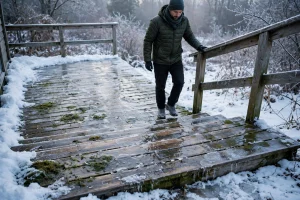

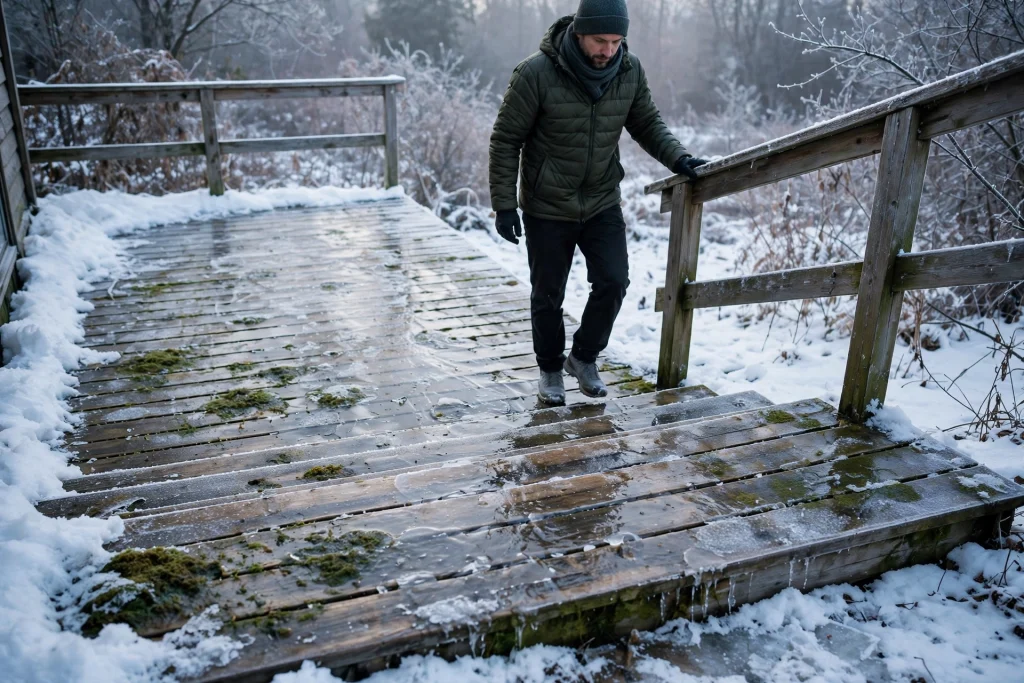
A deck that felt fine all summer can turn slick by December. You step out to grab something from the grill or take the dog out, and the boards feel like they are coated in grease. On a cold morning, that slick layer can turn into something more dangerous.
A slippery deck usually has a cause you can see and fix. Here is why decks get slippery in winter, what you can do today to make it safer, and how to keep it from happening again.
Why Decks Get Slippery in Winter
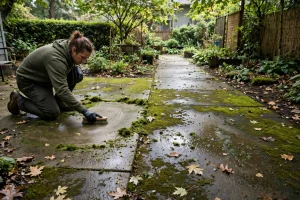
- Algae, mold, and surface film. Algae, mold, and surface biofilm can build up on damp deck boards, especially where pollen, dirt, and organic debris collect. That film can become very slick when wet.
- Wet leaves and debris. Leaves that sit on the deck hold moisture against the boards, feed organic growth, and are slippery on their own.
- Frost and ice. On cold mornings, dew and leftover moisture can freeze into a thin layer of frost or ice that is hard to spot.
- Standing water. Boards that cup, low spots, and gaps clogged with debris keep water on the surface instead of letting it drain through.
- Worn or film-forming finishes. As boards wear, they can lose texture. Some coatings that sit on top of the wood instead of soaking in can also feel slick when wet.
- Shade. Decks on the north side of the house or under trees stay damp longer, so growth and frost linger. The same conditions explain why the north side of a house turns green.
In Richmond, mild and damp stretches between cold snaps give algae plenty of time to grow, and frosty mornings add a slippery layer on top.
Quick Fixes to Make Your Deck Safer Today
These steps improve footing right away while you plan a proper cleaning.
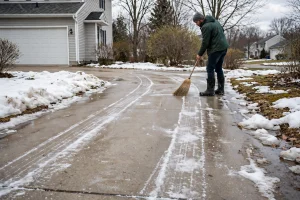
- Sweep it clear. Remove wet leaves, needles, and debris, especially on stairs and the main walking path.
- Add traction where people walk. Outdoor-rated non-slip mats, rugs with slip-resistant backing, or anti-slip treads on stairs can make the busiest spots safer. Choose products that are compatible with your decking material and follow the installation instructions.
- Use traction material carefully. If you use a traction material such as sand, check the decking manufacturer first and sweep it up promptly so grit is not ground into the surface.
- Light the steps. Good lighting on stairs and walkways helps people see frost and wet spots before they step on them.
- Check the railing. A solid handrail on deck stairs matters more when the surface is slick.
How to Clean a Slippery Deck
The longer-term fix for most slippery decks is removing the algae, mildew, and grime that make the boards slick.
- Clear the deck. Move furniture, planters, and grills, and sweep off leaves and loose debris.
- Clear the gaps. Use a thin tool to push debris out from between the boards so water can drain through.
- Apply a deck cleaner. Use a cleaner made for your decking material and follow the label. Many composite manufacturers recommend warm, soapy water and a soft brush for routine mold and mildew cleaning.
- Scrub with the grain. Use a soft or medium nylon brush. Avoid wire brushes, which can damage wood fibers and composite surfaces.
- Rinse thoroughly. Rinse the cleaner off completely so residue does not become a new slippery film.
- Let it dry. Give the deck time to dry fully before walking on it or applying any treatment.
If you would rather skip the pressure washer, this guide on how to clean a wood deck without a pressure washer walks through it.
Wood vs Composite Decks
| Deck type | What to know |
|---|---|
| Wood | Algae and mildew grow into the grain. Use a wood-safe deck cleaner and a soft or medium brush. If you pressure wash, use the lowest effective pressure, a fan pattern, and enough distance to avoid raising or splintering the grain. |
| Composite | Algae and mold can still grow on the surface and on dirt and pollen that collect there. Follow the manufacturer’s care guide. If you pressure wash, use the lowest effective pressure, a fan pattern, and enough distance to avoid marking the surface. Composite limits vary by product line, and some older composite decking should not be pressure washed at all. |
Composite decks have their own rules. This guide on how to pressure wash a composite deck covers what to check before you start.
Dealing With Ice on a Deck
Ice is a different problem from algae, and deck boards need more care than a concrete driveway.
- Use a plastic shovel. Metal shovels and ice choppers can scratch or gouge wood and composite boards. At least one major composite manufacturer specifically warns against metal shovels.
- Check before using a de-icer. Check the decking or finish manufacturer before applying any de-icer. Some composite products allow calcium chloride or rock salt and recommend rinsing residue when practical; other decking systems may have different limits. For wood decks, check with the deck builder or finish manufacturer.
- Consider traction material. When you only need grip, a traction material such as sand avoids de-icer chemicals. Check the decking manufacturer first and sweep it up promptly.
- Clear snow before it packs down. Packed snow on a deck turns into ice that is harder to remove safely.
How to Keep Your Deck From Getting Slippery Again
- Clean before buildup develops. Clean before heavy buildup develops, especially in shaded areas that stay damp. A fall cleanup and a spring check are practical for many homes, but frequency depends on shade, tree cover, drainage, and decking type.
- Keep debris off. Sweep regularly through fall and winter, and keep the gaps between boards clear.
- Improve drainage. Fix gutters or downspouts that drain onto the deck, and address boards that hold water.
- Let in light. Trim branches that keep the deck in shade most of the day.
- Choose finishes carefully. If you plan to reseal a wood deck, a penetrating product generally keeps more of the wood’s natural texture than a thick film-forming coating. Some products include grip additives for steps and walkways.
- Replace worn boards. Boards that are worn smooth, cupped, or soft are slip and safety hazards.
Slippery Deck FAQs
How do I make my deck less slippery?
Start by sweeping off leaves and debris and cleaning off algae and mildew with a cleaner made for your decking. For quick traction on stairs and walkways, use outdoor-rated non-slip mats or treads that are compatible with your deck material.
Why is my composite deck slippery?
Composite boards do not absorb water like wood, but algae, mold, pollen, and dirt can still build up on the surface and make it slick. Clean it as the manufacturer recommends, and keep shaded areas and gaps free of debris.
Can I put salt on my deck?
It depends on the decking. Some composite manufacturers allow certain de-icers, while guidance differs for older product lines and wood decks. Check with the deck or finish manufacturer first, use the smallest amount that works, and rinse the residue off when practical. A traction material such as sand avoids de-icer chemicals, but check the decking manufacturer first.
Is green algae on a deck dangerous?
It can be a slip hazard, especially when wet or frosty. Algae usually points to shade and lingering moisture, so cleaning it off and improving light and drainage help keep it from coming back.
Can I pressure wash a slippery deck?
Sometimes. Use the lowest effective pressure, a fan pattern, and enough distance to avoid raising wood grain or marking composite. Composite limits vary by product line, and some older composite decking should not be pressure washed at all.
Need Your Deck Cleaned Before the Next Freeze?
Cleaning algae and mildew off a full deck and its stairs takes time and the right touch. Our team provides professional deck and fence cleaning across the Richmond area, with methods matched to wood and composite boards. Call (804) 754-5200 for a free quote.