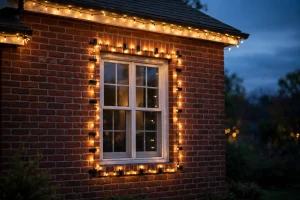

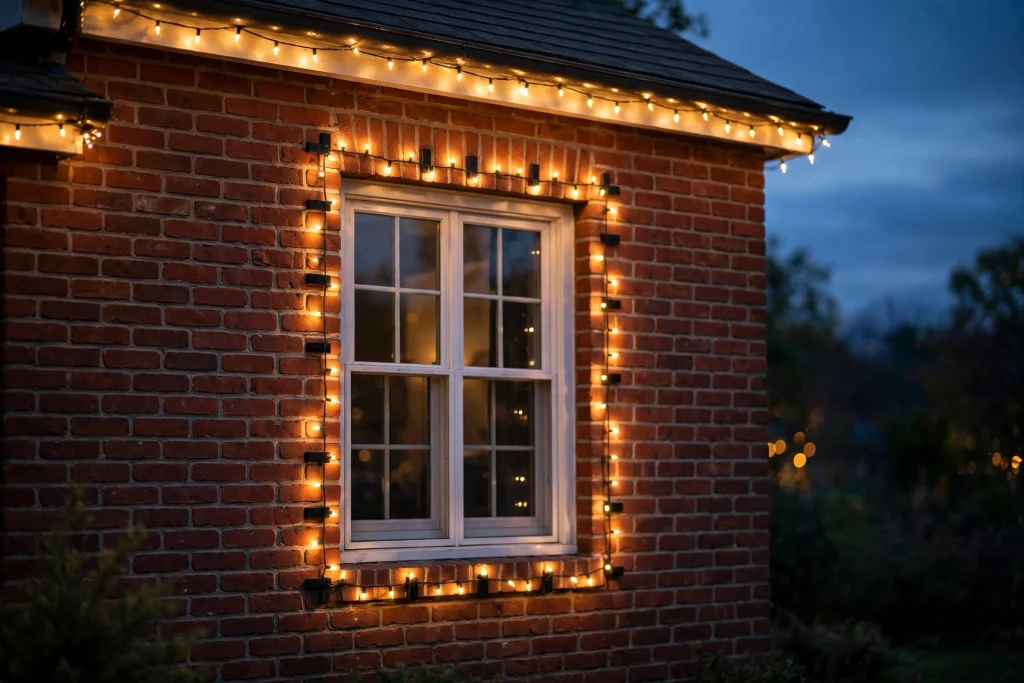
A brick house looks great with holiday lights along the roofline, around the windows, or across the front porch. The tricky part is getting them to stay put. Brick does not take a staple or a small nail the way wood trim does, so it is tempting to reach for a drill.
You rarely need one. Here is how to hang Christmas lights on brick without drilling, which options work best for different spots, and how to take everything down in January without leaving damage or residue behind.
Why You Should Avoid Drilling Into Brick or Mortar
Drilling holes for hooks or anchors can seem like the most secure option, but it leaves a permanent mark on a seasonal decoration.
- Holes are permanent. Drilling creates permanent penetrations in brick or mortar. If those penetrations are poorly located, left unsealed, or later deteriorate, they can create pathways for moisture and make future repairs more complicated.
- Brick can chip. Drilling near the edge of a brick, or into soft or older brick, can crack or chip the face.
- Mortar repairs are noticeable. Patching holes in mortar rarely matches the color and texture of the original joints, so the repair can be visible for years.
- Older brick is more fragile. Soft historic brick and lime-based mortar are easier to damage than modern materials. This post on pressure washing historic brick homes in Richmond explains why older masonry needs a gentler approach.
No-drill options work for many residential displays and are easier to remove at the end of the season.
No-Drill Ways to Hang Lights on Brick
| Option | Best for | Things to know |
|---|---|---|
| Brick clips | Brick walls, columns, and around windows | Grip the brick itself without nails or glue. Check the packaging, since many clips only fit certain brick sizes or need recessed mortar joints. |
| Outdoor adhesive hooks | Light strands and small decorations on smooth or lightly textured brick | Choose hooks rated for outdoor use and cold weather, and follow the weight limit and removal instructions. |
| Hot glue | Holding individual light clips or strand sections on unpainted brick | Some brick manufacturers suggest it for unpainted brick only. Keep the hot tip away from the light wiring and test a small area first. |
| Outdoor mounting tape | Very light decorations | Can weaken in wet or freezing weather and may leave residue, so it is better as a backup than a main method. |
| Gutter and shingle clips | Rooflines | Attach to gutters or shingle edges instead of the brick, which keeps the masonry untouched. |
Brick Clips
Brick clips are one of the simplest options for walls, columns, and window surrounds when the brick size and mortar profile match the clip manufacturer’s requirements. They hook over the top and bottom edges of a single brick and hold a light strand without touching the mortar. Measure the height of your brick before you buy, since clips are sized to fit specific brick dimensions.
Adhesive Hooks
Outdoor adhesive hooks work well for lighter strands and wreaths. Adhesive performance on porous or heavily textured brick can be inconsistent. Use only a product whose manufacturer specifically lists your surface and outdoor conditions, and do not exceed its stated load limit. Apply hooks to clean, dry brick in mild weather, and give the adhesive the curing time the package recommends before hanging anything.
Hot Glue
Some brick manufacturers have demonstrated hot glue on unpainted brick and recommend alcohol to help loosen residue during removal. Test first, because brick texture, coatings, and porosity vary. It is not a good choice for painted brick, stucco, or stone, and it can struggle under heavy ice. Never touch the hot glue gun tip to the light strand’s wiring.
Prepare the Brick Before You Hang Anything
Clips and adhesives grip better on clean, dry brick. Dirt, pollen, mildew, and loose residue can keep adhesive hooks from bonding and make clips slip.
- Brush off loose dirt and cobwebs where hooks or clips will go.
- Let the brick dry completely before applying any adhesive.
- If you see a white, chalky deposit, it may be efflorescence, which can interfere with adhesion. This guide on how to remove efflorescence from brick covers it.
- On painted brick, test adhesives in a hidden spot first, since removal can pull paint. If the paint is already worn, this guide on how to clean painted brick without peeling is a good place to start.
Electrical and Ladder Safety
A safe display matters as much as a damage-free one. The Electrical Safety Foundation recommends:
- Use outdoor-rated products. Use only lights, extension cords, and timers marked for outdoor use, and check that each light string’s power draw fits the cord’s rating.
- Plug into GFCI protection. Outdoor decorations should be plugged into circuits protected by ground fault circuit interrupters. A portable outdoor GFCI can be used where outlets lack it.
- Inspect before you hang. Check lights and cords for cracked insulation, broken sockets, or loose connections, and replace anything damaged.
- Do not pinch or puncture cords. Avoid nails, staples, or anything that could cut into the wire insulation.
- Keep cords out of water. Keep connections clear of snow and standing water.
- Use the right ladder. Choose a wooden or fiberglass ladder, which does not conduct electricity like metal, and check it for loose parts before climbing.
- Stay away from power lines. Keep yourself and your equipment at least 10 feet from overhead power lines.
- Turn lights off when you are away or asleep. Turn lights off before leaving home or going to sleep. Use a properly rated outdoor timer if you want an automatic shutoff.
How to Take Lights Down Without Damaging Brick
- Brick clips: Unhook the strand, then lift the clip off the brick. Most clips can be reused next year.
- Adhesive hooks: Follow the manufacturer’s removal instructions. Pulling straight off the wall can take adhesive or a thin layer of the brick face with it.
- Hot glue: Remove the lights first, then try loosening the glue with a cotton swab soaked in rubbing alcohol, which some brick manufacturers recommend. Test it on a small area first.
- Residue: For any leftover adhesive, use a gentle method and test it first. Avoid scraping with metal tools, which can scratch the brick.
Christmas Lights on Brick FAQs
What is the best way to hang Christmas lights on brick?
For walls, columns, and window surrounds, brick clips are often the simplest no-drill option when they fit your brick size and mortar profile. Outdoor adhesive hooks work for lighter strands. For rooflines, gutter and shingle clips keep the brick untouched.
Can you nail into mortar for Christmas lights?
It is better to avoid it. Nails and screws in mortar leave holes that let water in, can crack or loosen the joints, and are hard to patch invisibly. No-drill clips and hooks are a safer choice for a seasonal display.
Do brick clips work on all brick?
Not always. Brick clips are sized to fit specific brick dimensions, and some need recessed mortar joints to grip. Measure your brick and check the packaging before buying.
Will hot glue damage brick?
Some brick manufacturers have demonstrated hot glue on unpainted brick and recommend alcohol to help loosen residue during removal. Test first, because brick texture, coatings, and porosity vary. Avoid it on painted brick, stucco, and stone, where removal can pull the finish.
Do adhesive hooks work on brick in cold weather?
Results vary. Adhesive performance on porous or heavily textured brick can be inconsistent. Use only a product whose manufacturer lists your surface and outdoor conditions, apply it to clean, dry brick in mild weather, and let it cure for the time on the package before hanging lights.
Want Your Brick Looking Its Best for the Holidays?
Lights stand out more against clean brick, and adhesives and clips hold better on a clean surface. If your brick has picked up dirt, mildew, or stains over the year, our team provides professional brick cleaning across the Richmond area, with methods matched to the age and condition of the brick. Call (804) 754-5200 for a free quote.