
Painted brick needs a different cleaning approach than bare masonry. The brick and mortar still need protection, but the paint film adds another surface that can chalk, soften, blister, crack, or peel if it is scrubbed or pressure washed too aggressively.
The safest method is to inspect the paint first, remove loose debris, test a mild non abrasive cleaner, and rinse with controlled water pressure. If the coating is already failing, cleaning should not be used to force loose paint off the wall unless the surface is intentionally being prepared for repainting.
Why Painted Brick Needs Extra Care
Exterior paint protects and changes the appearance of brick, but it also becomes the first surface exposed to sun, rain, temperature changes, dirt, algae, and cleaning.
A sound coating can usually tolerate gentle maintenance cleaning. A weak coating is different. If paint has lost adhesion, water pressure can lift the edges and turn a small peeling area into a much larger one.
Check the Paint Before You Start Cleaning
Look for Peeling or Flaking
Inspect corners, mortar joints, window surrounds, ledges, and lower wall sections for lifted edges or flakes. If paint is already separating from the brick, do not aim pressurized water directly at those edges.
Check for Chalking
Older exterior paint may leave a powdery residue when rubbed. Heavy chalking can indicate weathering of the paint film, and aggressive scrubbing can remove more coating than intended.
Look for Blisters or Moisture Problems
Bubbles, blisters, recurring peeling, or damp areas may indicate moisture behind the coating. Cleaning the exterior will not fix a leak, drainage problem, or trapped moisture inside the masonry.
Check the Mortar and Brick Condition
Paint can hide cracks, soft mortar, spalling, or previous masonry repairs. If the substrate is deteriorating beneath the coating, high pressure can damage both the paint and the masonry.
How to Clean Painted Brick Safely
Step 1. Remove Loose Debris First
Use a soft brush, broom, or low impact method to remove cobwebs, dust, leaves, and loose dirt before wet cleaning.
Step 2. Start With Mild Soapy Water
For routine dirt, begin with mild soapy water or a non abrasive cleaner that is compatible with exterior painted surfaces. Paint manufacturers commonly recommend gentle cleaning for maintenance rather than harsh abrasive products.
Avoid using a strong cleaner just because the brick texture holds dirt. The cleaner must be safe for the paint film as well as the masonry underneath.
Step 3. Test a Small Hidden Area
Apply the cleaner to an inconspicuous section and gently rinse it. After the test area dries, check for color change, loss of sheen, softening, chalking, or paint lifting.
If the test changes the paint, stop and choose a gentler method.
Step 4. Use a Soft Bristle Brush if Needed
For textured areas, use a natural or soft synthetic bristle brush. Scrub lightly and let the cleaner loosen the dirt rather than trying to grind contamination off the paint.
Avoid wire brushes, abrasive pads, and scraping tools during routine cleaning.
Step 5. Rinse Gently
Rinse from the top down with low impact water flow so loosened dirt moves off the wall instead of drying in streaks.
Do not direct a concentrated stream into mortar joints, behind trim, under siding transitions, or at peeling paint edges.
Step 6. Let the Wall Dry Before Judging the Result
Wet paint can appear darker and can temporarily hide uneven sheen or weak areas. Allow the wall to dry before deciding whether another cleaning pass is necessary.
Can You Pressure Wash Painted Brick
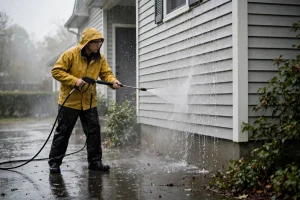
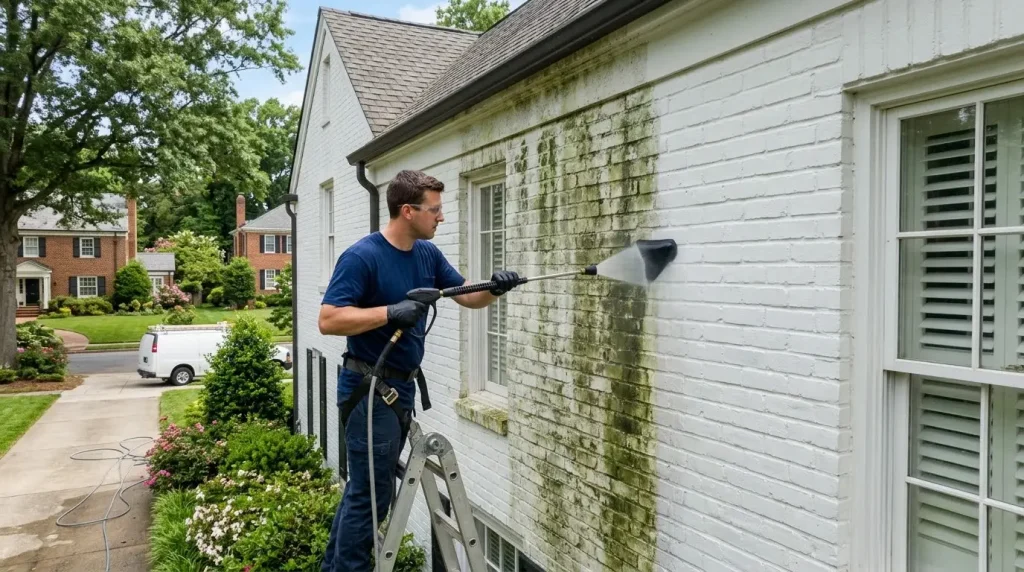
Painted brick can sometimes be rinsed with carefully controlled pressure when the paint is well bonded and the masonry is sound. Pressure washing should not be the starting point for a wall with peeling, cracking, blistering, or chalking paint.
There is no single PSI that is safe for every painted brick wall. Paint type, coating age, brick condition, mortar condition, nozzle pattern, working distance, water temperature, and operator technique all affect the result.
If powered equipment is used, choose a broad spray pattern, keep the nozzle moving, maintain distance, and test first. Do not use a zero degree nozzle or a turbo nozzle for routine painted brick cleaning.
What Can Make Paint Peel During Cleaning
Existing Adhesion Failure
Cleaning often reveals a problem that already existed. If the paint was poorly bonded, applied over contamination, or applied to an unsuitable surface, water can get under loose edges and expose the failure.
Too Much Water Pressure
A concentrated spray can cut the paint film or lift weak edges from textured brick and mortar.
Harsh or Incompatible Cleaners
Strong solvents, highly alkaline cleaners, acids, and abrasive products can damage some coatings. Use products that are approved for the type of painted surface and always test first.
Moisture Behind the Paint
Moisture moving through brick from leaks, gutters, flashing, interior humidity, or rising damp can weaken paint adhesion. If the source remains, fresh paint may peel again even after careful cleaning and repainting.
Can You Use Bleach on Painted Brick
Do not assume bleach is safe for every painted brick surface. Some diluted cleaning systems containing sodium hypochlorite may be used for organic growth, but compatibility depends on the paint, concentration, dwell time, surrounding materials, and manufacturer guidance.
For light mildew or algae, start with a cleaner approved for painted exterior surfaces and test it in a hidden area. Protect plants, metals, windows, and other nearby materials according to the product instructions.
Can You Use Vinegar or Acid on Painted Brick
Acidic cleaners should not be used as a general purpose solution on painted brick. They can affect the coating, mortar, nearby metals, and masonry, depending on concentration and contact time.
If the wall has a mineral deposit such as efflorescence, first determine whether the deposit is on top of the paint or coming through a failing coating. Recurring mineral deposits often point to moisture movement that cleaning alone will not solve.
For more on white salt deposits and moisture, read what is efflorescence on brick and how do you remove it safely.
What If the Paint Is Already Peeling
If paint is peeling, routine maintenance cleaning and repaint preparation become two different jobs.
For maintenance cleaning, avoid blasting the loose edges. If the wall is being prepared for repainting, failed paint normally needs to be removed back to a sound edge using methods appropriate for the coating and masonry.
Paint manufacturers generally recommend removing loose or checked paint before recoating and making sure the remaining surface is clean, dry, and well bonded.
Painted Historic Brick Needs Even More Caution
Historic brick may be softer than modern masonry, and older mortar may be lime rich and more vulnerable to aggressive cleaning.
Paint on an older building may also be historically significant or may have been applied to protect unusually soft brick. National Park Service guidance recommends understanding why masonry was painted before deciding to remove paint, and using the gentlest effective cleaning method.
If the home has older or historic masonry, read can you pressure wash historic brick homes in Richmond, VA before using powered cleaning equipment.
What Not to Do When Cleaning Painted Brick
Do not use a zero degree pressure washer nozzle.
Do not use a turbo nozzle for routine cleaning.
Do not aim pressure directly at peeling paint edges.
Do not use wire brushes or aggressive abrasive pads.
Do not use strong acid as a general purpose cleaner.
Do not assume bleach is compatible with every exterior paint.
Do not repeatedly saturate a wall that has moisture related peeling.
Do not repaint until the wall is clean, dry, and the cause of recurring failure has been addressed.
How Often Should Painted Brick Be Cleaned
There is no universal schedule. Shade, tree cover, traffic pollution, pollen, irrigation, roof runoff, paint type, and local weather all affect how quickly a painted brick wall becomes dirty.
Gentle maintenance when buildup first appears is usually safer than waiting until the wall requires aggressive cleaning.
Frequently Asked Questions
Can pressure washing peel paint off brick
Yes. High or concentrated pressure can lift weak paint, especially around cracks, mortar joints, trim, and already peeling edges. Test first and use the least aggressive method that cleans the surface.
What is the safest cleaner for painted brick
For ordinary dirt, mild soapy water or a non abrasive cleaner approved for painted exterior surfaces is a good starting point. Follow the paint and cleaner manufacturer instructions.
Can I scrub painted brick
Yes, but use a soft natural or synthetic bristle brush and light pressure. Avoid wire brushes and abrasive pads that can scratch or wear through the coating.
Why is paint peeling off my brick after washing
Washing may expose existing adhesion problems, or excessive pressure may lift weak edges. Moisture behind the paint, poor surface preparation, incompatible coatings, and aging can also contribute.
Can I clean painted brick before repainting
Yes. The surface should be clean before repainting, but loose or failing paint also needs proper preparation. Cleaning alone does not make peeling paint sound enough to recoat.
Should I seal painted brick after cleaning
Not automatically. Paint already acts as a coating system. Adding another sealer can create compatibility and moisture problems, so any additional treatment should be evaluated for the specific paint and masonry.
Final Takeaway
The safest way to clean painted brick is to protect the paint film instead of treating the wall like bare masonry.
Inspect for peeling and moisture problems first, start with a mild non abrasive cleaner, use a soft brush when needed, test a small area, and rinse gently. If the paint is already failing, solve the adhesion or moisture problem rather than using more pressure.