
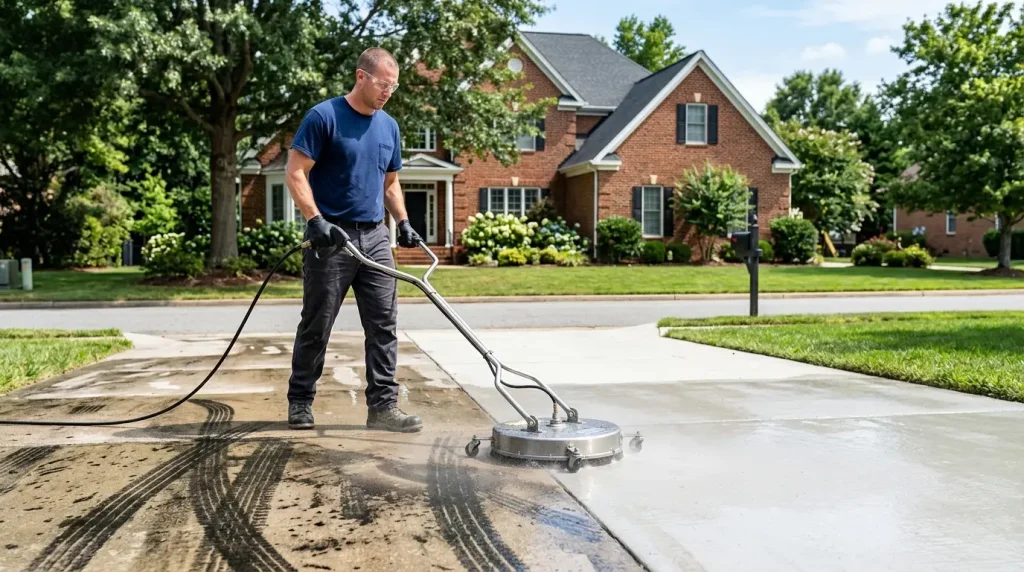
Black tire marks across a concrete driveway or garage apron can make an otherwise clean surface look worn. They may appear after repeated parking, sharp turns, braking, tire spin, or regular vehicle traffic in the same area.
Pressure washing can help remove tire marks from concrete, but water pressure alone is not always enough. Tire marks can include rubber residue, road grime, oils, and tire compounds that cling to the textured and porous surface of concrete.
For stubborn marks, the safest approach is usually to loosen the residue with a concrete compatible cleaner or degreaser first, then rinse it away with controlled pressure. This reduces the temptation to use excessive pressure that can leave permanent marks on the slab.
Why Tire Marks Stick to Concrete
Modern tires contain rubber compounds, oils, fillers, and additives that help the tire remain flexible and perform under heat and load. As tires warm during driving and repeatedly contact the same parking or turning area, small amounts of residue can transfer to the concrete.
On porous or textured concrete, that residue can settle into small surface voids. Fresh marks may remain close to the surface, while repeated vehicle traffic can create darker buildup that is harder to remove.
Tire Marks, Skid Marks, and Hot Tire Transfer
Not every black mark is exactly the same. A light parking mark can be easier to clean than a skid mark created by braking or a heavy turning mark created while the tires are under friction.
Hot tire transfer also matters on sealed or coated concrete. In those cases, the discoloration may be affecting the sealer or coating rather than the bare concrete underneath. That is why identifying the surface before cleaning is important.
Why Pressure Alone Often Fails
Pressure washing is effective for loose dirt and general surface buildup, but it does not automatically break down rubber and oily residue. If the mark remains after rinsing, moving the nozzle closer or switching to a more aggressive tip can damage the slab before the stain disappears.
The Risk of Concrete Etching
Using a narrow nozzle or holding the wand too close can remove part of the surface paste and create lighter lines, rough areas, or exposed aggregate. These marks can become more noticeable after the concrete dries.
Pressure should support the cleaning process, not replace the correct cleaner.
How to Remove Tire Marks From Concrete Safely
Step 1. Sweep and Inspect the Area
Sweep or blow away loose dirt, gravel, leaves, and surface debris. Look at the entire parking or turning area rather than focusing only on the darkest mark. If several marks are close together, cleaning the surrounding section can produce a more even final appearance.
Step 2. Identify the Concrete Surface
Determine whether the surface is plain concrete, stamped concrete, exposed aggregate, sealed concrete, painted concrete, epoxy, or another coating.
A cleaner that works well on bare concrete may dull, soften, discolor, or strip some topical coatings. If the surface type is uncertain, test a small hidden area first.
Step 3. Choose a Concrete Compatible Cleaner or Degreaser
Because tire marks can contain rubber residue and oily material, a concrete compatible cleaner or degreaser is often more useful than ordinary water alone.
Choose a product labeled for concrete and suitable for tire marks, grease, oil, or rubber residue. Follow the manufacturer instructions for dilution, application, protective equipment, dwell time, and rinsing.
Some specialty tire mark removers use solvents or surfactants to loosen stubborn residue. Product compatibility matters, especially on sealed or decorative concrete.
Step 4. Apply the Cleaner and Follow the Label Dwell Time
Apply the cleaner evenly across the affected area. Do not rely on a universal ten or twenty minute dwell time because different products work at different concentrations and speeds.
Use the dwell time stated on the label and do not allow the product to dry on the surface unless the manufacturer specifically allows it. On a hot driveway, work in smaller sections so the cleaner remains manageable.
Step 5. Agitate Stubborn Marks
If the product instructions allow it, use a stiff synthetic bristle brush to work the cleaner into the concrete texture. The goal is to loosen the residue, not to grind the surface.
Avoid steel or wire brushes. They can scratch finished concrete and may leave behind small metal fragments that later rust.
Step 6. Rinse With Controlled Pressure
Rinse the loosened residue and cleaner thoroughly with fresh water. If a pressure washer is used, choose a controlled spray pattern, keep the nozzle moving, and follow the equipment and surface recommendations.
Avoid fixed pressure assumptions for every driveway. Safe pressure depends on the age, condition, finish, and strength of the concrete as well as the equipment and nozzle being used.
Step 7. Let the Concrete Dry Before Repeating
Concrete looks darker when wet, so remaining tire marks can be difficult to judge immediately after rinsing. Let the area dry fully before deciding whether a second treatment is needed.
For older marks, a second controlled cleaning cycle is safer than one highly aggressive pass.
Does Hot Water Help Remove Tire Marks
Heated water can improve cleaning performance on some oily and greasy residues when it is used with appropriate equipment and cleaning chemistry. However, hot water is not a guarantee that every tire mark will disappear, and it should not replace proper product selection or surface testing.
For homeowners using cold water equipment, a compatible degreaser, proper dwell time, gentle agitation, and thorough rinsing can still be effective on many tire marks.
What Not to Use on Tire Marks
Do not use a zero degree nozzle on a concrete driveway.
Do not hold the pressure washer wand extremely close to the slab.
Do not assume every solvent or degreaser is safe for sealed concrete.
Do not use wire brushes that can scratch the finish or leave metal behind.
Do not mix cleaning chemicals.
Do not use strong acids simply because the stain is dark. Tire residue is not the same as a mineral stain.
Do not judge the final result until the concrete is dry.
Can Dish Soap Remove Tire Marks
A basic detergent may help with a very fresh, light mark, but stubborn tire residue usually needs a cleaner designed for concrete, grease, oil, or rubber type buildup.
Using a stronger product is not always better. The best choice is one that is compatible with the concrete finish and strong enough for the specific stain.
Can WD 40 Remove Tire Marks From Concrete
Petroleum based products may soften some rubber residue, but applying an oily product to porous concrete can create a second stain or leave residue that attracts dirt.
A water rinsable cleaner or degreaser specifically labeled for concrete is a more controlled choice.
Will Vinegar Remove Tire Marks
Vinegar is a mild acid and is not the best match for rubber and oily tire residue. Acidic products can also change some concrete finishes or coatings if they are used incorrectly.
For tire marks, use a product intended for rubber, grease, oil, or concrete cleaning rather than relying on an acid based household remedy.
Tire Marks on Sealed or Coated Concrete Need Extra Care
Topical sealers, acrylic coatings, epoxy systems, paint, and other finishes behave differently from bare concrete. A tire mark may be sitting on or interacting with the coating rather than the concrete itself.
Aggressive solvents, scrubbing, or pressure can dull or damage a coating. Always confirm the surface type and use a cleaner approved for that finish.
How Tire Marks Differ From Other Concrete Stains
Tire residue is different from mineral stains such as rust and red clay. Matching the cleaning method to the stain source helps avoid ineffective treatments and unnecessary surface damage.
If the orange or reddish discoloration comes from metal, fertilizer, or iron rich water, read how to remove rust stains from concrete without damaging the surface.
If the discoloration comes from muddy soil runoff, see how to remove red clay stains from concrete in Virginia.
How to Prevent Tire Marks on Concrete
Clean fresh tire marks before repeated parking creates heavier buildup.
Avoid sharp steering movements while the vehicle is stationary when practical.
Use suitable parking mats in garages where tires rest in the same place every day.
Keep sand, road grime, and oily residue from building up on the driveway.
Follow the coating manufacturer maintenance guidance if the concrete is sealed, painted, or coated.
Address repeated tire marking as routine maintenance rather than expecting any sealer to prevent every mark.
Can Sealing Concrete Prevent Tire Marks
A suitable penetrating sealer can reduce the absorption of water and some contaminants, which may make future cleaning easier. It does not guarantee that tires will never leave marks.
Topical sealers and coatings require more caution because tire residue and heat can interact with the coating itself. Choose a sealer based on the concrete, traffic, appearance goals, and manufacturer guidance rather than only on tire mark prevention.
If you are considering sealing after cleaning, read should I seal my concrete driveway after pressure washing.
When Professional Concrete Cleaning Makes Sense
DIY cleaning can be reasonable for a few fresh marks on plain, sound concrete. Professional cleaning makes more sense when the marks cover a large driveway, are mixed with grease and road film, appear on decorative or sealed concrete, or remain after repeated cleaning attempts.
A professional can also evaluate the entire slab and clean the surrounding area so one treated spot does not stand out as a noticeably brighter patch.
Jacobson’s Power Washing provides driveway and concrete cleaning in Richmond, Virginia for driveways, walkways, and other exterior concrete surfaces with embedded dirt and staining.
Frequently Asked Questions
Can cold water pressure washing remove tire marks from concrete
Cold water pressure washing can help rinse loose residue, especially after a concrete compatible cleaner or degreaser has had time to work. Water pressure alone may not remove older or heavier marks.
Does bleach remove tire marks from concrete
Bleach is not the preferred cleaner for rubber and oily tire residue. It is more commonly used for organic growth such as algae and mildew. Never mix bleach with other cleaning chemicals.
Can WD 40 remove tire marks from a concrete driveway
It may soften some rubber residue, but it can also leave oily material in porous concrete. A water rinsable concrete cleaner or degreaser is a more controlled option.
Will vinegar remove tire marks from concrete
Vinegar is not well matched to oily or rubber residue and can affect some concrete finishes. A product intended for concrete and tire type staining is generally a better choice.
Are tire marks permanent on concrete
Many tire marks can be reduced or removed, but the result depends on stain age, concrete porosity, repeated buildup, and whether the mark is affecting a sealer or coating.
Can pressure washing damage a concrete driveway
Yes. Excessive pressure, a narrow nozzle, or holding the wand too close can leave etched lines or exposed aggregate. Controlled pressure and the correct cleaner are safer than brute force.
Final Takeaway
Can pressure washing remove tire marks from concrete? Yes, it can be an important part of the process, but stubborn marks usually respond better when the residue is loosened with the right concrete compatible cleaner first.
Treat tire marks as a rubber and oily residue problem rather than ordinary dirt. Use appropriate chemistry, controlled agitation, and careful rinsing instead of trying to erase the mark with extreme pressure.
Need Help Removing Tire Marks From Concrete in Richmond
If tire marks, road film, and embedded buildup are making your driveway or concrete parking area look worn, Jacobson’s Power Washing can inspect the surface and choose a cleaning approach that matches the condition of the concrete.
Contact Jacobson’s Power Washing to request an estimate for professional driveway and concrete cleaning in the Richmond area.