
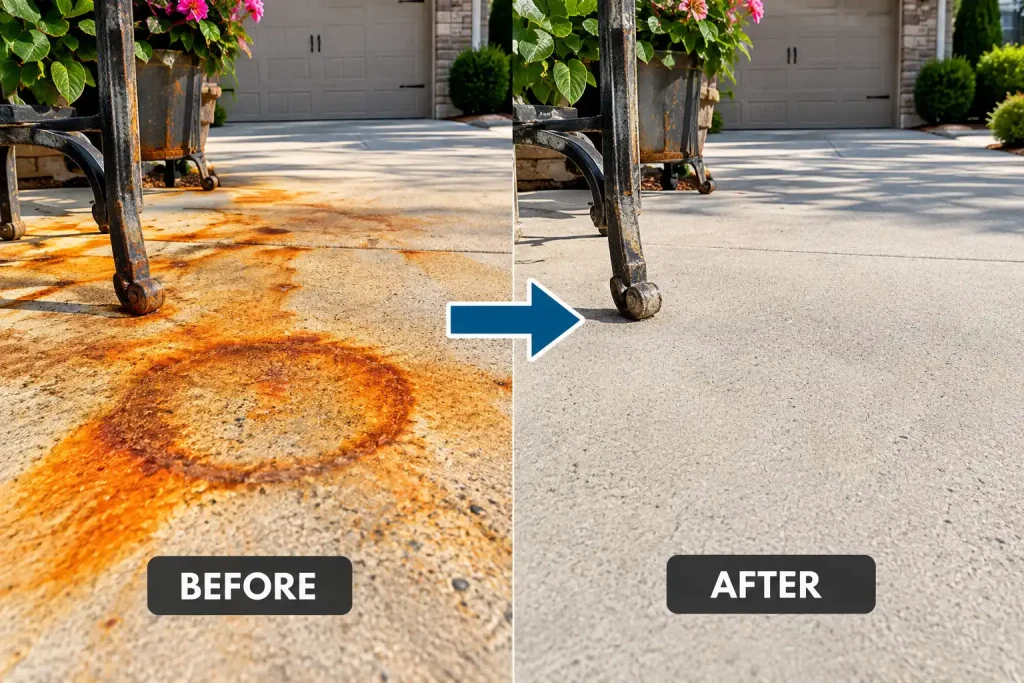
Rust stains on concrete can be frustrating because ordinary washing often removes the surrounding dirt while leaving the orange or reddish brown mark behind. Common sources include metal patio furniture, tools, fertilizer granules, iron rich sprinkler water, exposed steel, and other metal items that stay wet against the slab.
Concrete is porous, so iron contaminated moisture can move into small surface pores. As the iron oxidizes, the discoloration can become embedded below the visible surface. That is why high pressure alone is often ineffective and why overly aggressive cleaning can damage the concrete before it removes the stain.
The safest approach is to identify the source, choose a concrete compatible rust remover, test a small area, allow the product to work according to its label, and rinse thoroughly without relying on excessive pressure.
Why Rust Stains Form on Concrete
Rust forms when iron or steel is exposed to moisture and oxygen. On concrete, the source may be sitting directly on the slab or may arrive through runoff, irrigation, fertilizer, or deteriorating metal components.
Because untreated or weathered concrete can absorb moisture, iron bearing water can enter the pores and leave orange, yellow, or reddish brown discoloration as oxidation develops. The longer the source remains active, the more difficult the stain may become to remove.
Common Sources of Rust Stains
Metal patio furniture, grills, plant stands, and decorative iron fixtures
Steel tools, fasteners, or equipment left on wet concrete
Fertilizer granules or lawn products that contain iron
Sprinkler overspray or well water with dissolved iron
Rusting downspout hardware, railings, brackets, or exterior fixtures
Exposed reinforcing steel or other metal inside deteriorating concrete
If the staining appears to come from inside cracked or deteriorating concrete rather than from something on the surface, cleaning alone may not solve the problem. Recurring rust in the same crack or spalled area can indicate corrosion of embedded steel and may require concrete repair.
Why Aggressive Cleaning Can Damage Concrete
Too Much Pressure Can Etch the Surface
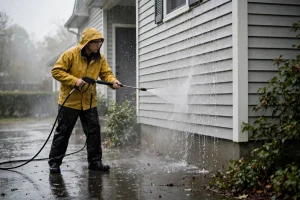
Pressure washing is useful for removing dirt and rinsing treated concrete, but it does not chemically dissolve iron oxide. Holding a narrow nozzle too close to the slab can strip the surface paste, expose aggregate, or leave permanent wand marks.
Raw Muriatic Acid Can Change the Concrete Finish
Strong unbuffered acids can react with cement paste and etch the surface. They may lighten a stain while also changing the texture, color, or profile of the concrete. For spot rust removal, a product specifically formulated and labeled for concrete is a safer starting point than raw muriatic acid.
Bleach Is Not a Rust Remover
Bleach is commonly used for organic contaminants such as algae and mildew. Rust is an iron oxide mineral stain, so sodium hypochlorite is not the appropriate first choice for dissolving it. Do not mix bleach with acidic rust removers or other cleaning chemicals.
How to Remove Rust Stains From Concrete Safely
Step 1. Identify the Source Before Cleaning
Look directly above, beside, and around the stain. Check furniture feet, irrigation patterns, fertilizer spread, tools, railings, metal fixtures, and cracks in the slab. Removing the stain without correcting the source often means the orange mark will return.
Step 2. Sweep and Inspect the Surface
Remove dirt, grit, leaves, fertilizer granules, and loose debris before applying a cleaner. If fertilizer caused the staining, make sure no granules remain before wetting the area because additional moisture can create more spots.
Determine whether the surface is plain concrete, stamped concrete, exposed aggregate, colored concrete, sealed concrete, or a coated slab. Decorative and sealed surfaces may require a different product or a milder process.
Step 3. Test a Concrete Compatible Rust Remover
Choose a rust or mineral stain remover that the manufacturer specifically lists as suitable for concrete. Test it first in a small inconspicuous area and check for any change in color, sheen, or texture after the surface dries.
Some concrete rust removers use ingredients such as oxalic acid or other acids and chelating agents. These products can be effective, but no acid should be assumed harmless to every concrete finish. Product concentration, concrete condition, dwell time, previous sealers, and rinsing all affect the result.
Step 4. Protect Plants, Metal, and Adjacent Materials
Protect nearby grass, shrubs, painted surfaces, metal trim, doors, and other materials from overspray or runoff. Follow the product label for pre wetting, protective equipment, dilution, application tools, and runoff control.
Step 5. Apply the Cleaner and Follow the Label Dwell Time
Apply the rust remover evenly to the stained area. Do not use a universal five or ten minute rule because products vary. Use the dwell time stated by the manufacturer and do not allow the cleaner to dry on the surface unless the label specifically allows it.
Avoid working on an extremely hot slab or in conditions that cause the product to evaporate before it has time to work.
Step 6. Agitate Only If the Product Calls for It
For textured or stubborn areas, a synthetic bristle brush can help distribute the cleaner and loosen residue. Avoid wire or steel brushes because they can scratch the surface and leave tiny metal particles behind that may later rust.
Step 7. Rinse Thoroughly With Controlled Pressure
Rinse away the dissolved stain and cleaner with plenty of clean water. Low to moderate pressure and a wider spray pattern are usually easier to control than a concentrated jet.
Some rust removers require a specific neutralizing or post rinse step and others do not. Follow the product instructions rather than assuming every acidic cleaner should be treated the same way.
Step 8. Let the Concrete Dry Before Judging the Result
Wet concrete appears darker and can hide remaining discoloration. Allow the surface to dry fully before deciding whether another treatment is necessary. For older stains, a second controlled application is usually safer than one overly aggressive treatment.
Fresh Rust Stains Versus Deep Rust Stains
Small fresh marks from a chair leg or tool are usually easier to address than broad stains caused by years of sprinkler overspray or recurring fertilizer exposure. Stain age, depth, concrete porosity, sealer condition, and the source of the iron all affect how quickly the discoloration responds.
If a stain is deep, widespread, or located on decorative concrete, the goal should be controlled improvement without changing the finish. Trying to force a perfect result in one application can create a brighter etched spot that is more noticeable than the original stain.
Can Vinegar or Lemon Juice Remove Rust From Concrete
Mild acids such as vinegar or lemon juice may lighten very small, fresh rust spots on some plain concrete surfaces, but results are inconsistent. They can also affect certain concrete finishes, sealers, or surrounding materials.
For predictable results, use a product labeled for rust removal on the specific type of concrete and test it first. Do not assume a household acid is automatically safe simply because it is weaker than a commercial product.
Rust Stains Versus Red Clay Stains
Rust and red clay can both leave orange or reddish brown discoloration because iron is involved, but the source is different. Rust usually comes from metal, fertilizer, or iron rich water. Red clay is carried onto the surface by soil and muddy runoff.
If the discoloration is coming from Virginia soil or muddy runoff, read how to remove red clay stains from concrete in Virginia for a more targeted approach.
How to Prevent Rust Stains From Returning
Use plastic, rubber, or non staining pads under metal furniture feet.
Remove fertilizer granules from driveways and sidewalks before watering or rain.
Adjust irrigation heads so iron rich water does not repeatedly spray concrete.
Store metal tools, tanks, and equipment off bare concrete.
Repair or replace rusting exterior hardware that drains onto the slab.
Investigate recurring rust that appears from cracks or spalled concrete because embedded steel corrosion may require repair.
Should You Seal Concrete After Rust Removal
A compatible concrete sealer can reduce water and contaminant absorption, but sealing is not automatically necessary after every small rust treatment. The right decision depends on the concrete finish, condition, exposure, and whether a sealer is already present.
Never seal over remaining rust residue or a surface that has not been properly rinsed, neutralized when required, and allowed to dry according to the sealer manufacturer instructions.
For more detail on sealing after cleaning, read should I seal my concrete driveway after pressure washing.
When Professional Rust Removal Makes Sense
DIY treatment may be reasonable for one or two small stains on plain, sound concrete. Professional cleaning becomes more useful when the staining is widespread, the source keeps returning, the concrete is decorative or sealed, or previous attempts have already changed the surface.
Professional treatment can also help when sprinkler rust covers a large driveway, fertilizer spotting is scattered across multiple areas, or a uniform finish matters after stain removal.
Jacobson’s Power Washing provides driveway and concrete cleaning in Richmond, Virginia for homeowners dealing with embedded stains, surface buildup, and uneven concrete appearance.
Frequently Asked Questions
Will pressure washing alone remove rust stains from concrete
Usually not. Pressure washing can remove loose dirt and help rinse a treated surface, but rust is a mineral stain. Excessive pressure can damage the concrete before the discoloration is removed.
Does bleach remove rust stains from concrete
Bleach is not the appropriate cleaner for iron oxide staining. It is mainly used for organic contaminants such as algae and mildew. Never mix bleach with acidic rust removers.
What is the safest cleaner for rust stains on concrete
There is no single safest product for every slab. Choose a rust or mineral stain remover specifically labeled for your type of concrete, follow the product directions, and test a small area before treating the full stain.
Can old rust stains be removed from concrete
Many older rust stains can be significantly reduced, but results depend on stain depth, concrete porosity, previous damage, and the source of the iron. Deep stains may need more than one controlled treatment.
Why do rust stains keep coming back on my driveway
Recurring rust usually means the iron source is still present. Common causes include sprinkler water, fertilizer, metal furniture, rusting fixtures, or corrosion inside damaged concrete.
Can rust removal damage sealed or stamped concrete
Yes, an incompatible cleaner can dull, discolor, or strip some sealers and decorative finishes. Always verify product compatibility and test a hidden area first.
Final Takeaway
Learning how to remove rust stains from concrete without damaging the surface is mainly about using the right chemistry with controlled cleaning. Identify the source, choose a concrete compatible rust remover, test the surface, follow the product dwell and rinse instructions, and avoid trying to blast the stain away with excessive pressure.
If the stain is widespread, recurring, or sitting on decorative, sealed, or previously damaged concrete, professional treatment can reduce the risk of replacing an orange rust mark with permanent etching or an uneven finish.
Need Help With Rust Stains on Concrete in Richmond
If rust stains are affecting a driveway, walkway, patio, or other concrete surface in the Richmond area, Jacobson’s Power Washing can evaluate the stain source and the condition of the concrete before selecting a cleaning method.
Contact Jacobson’s Power Washing to request an estimate for professional driveway and concrete cleaning.