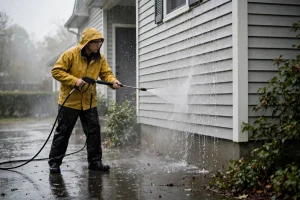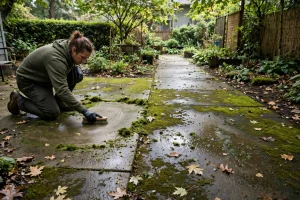

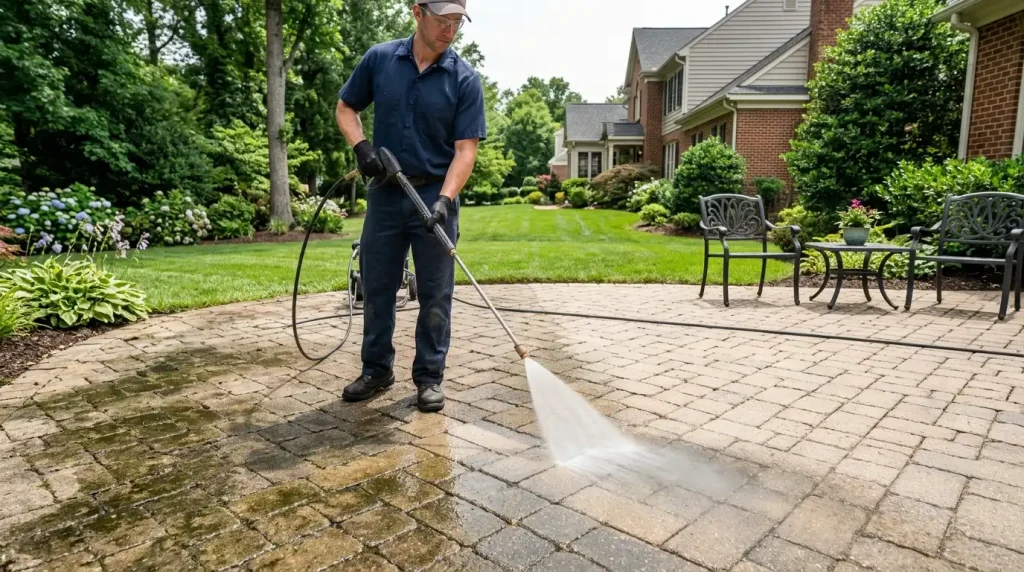
Yes, a paver patio can be pressure washed without intentionally removing all of the joint sand, but some sand loss is still possible if the cleaning is too aggressive or the joints are already weak.
The key is to clean the paver faces instead of blasting directly into the joints. Use a broad spray pattern, keep the nozzle moving, work at an angle, and avoid concentrating pressure along the joint lines.
If the existing sand is loose, shallow, eroded, or damaged, even careful cleaning may expose areas that need to be topped up or replaced afterward.
Why Joint Sand Matters
Joint sand fills the spaces between individual pavers and helps support the paving system. It limits movement, reduces the amount of debris that settles into the joints, and helps discourage weed seeds from establishing.
Unilock notes that eroded joints should be resanded because keeping joint material at the correct level helps maintain the integrity of the installation and reduces future washout.
Regular Joint Sand vs Polymeric Sand
Regular Joint Sand
Traditional jointing sand remains relatively loose compared with polymeric products. It can be more easily displaced by water, wind, sweeping, insects, or a pressure washer directed into the joints.
Polymeric Sand
Polymeric sand contains binders that activate with water and help the joint material resist erosion once it has been installed and cured correctly.
It is more resistant to normal washout than loose sand, but it is not indestructible. A concentrated pressure stream can break weak or aged polymeric joints, especially if they are already cracked, shallow, or poorly bonded.
How Pressure Washing Removes Joint Sand
Spraying Straight Down Into the Joint
A pressure washer has much more impact when the stream is aimed directly into the gap between pavers. That can lift loose sand and can break weakened polymeric material.
Using a Narrow or Aggressive Nozzle
A narrow spray concentrates force into a small area. This increases the chance of removing joint material and may also mark or etch some paver surfaces.
Holding the Nozzle Too Close
Working too close increases the impact at the surface. Even a fan tip can become aggressive when it is held close to a joint for too long.
Repeated Passes Over Weak Joints
If the sand is already low, cracked, mossy, or deteriorated, repeated pressure washing can remove more material with every pass.
How to Pressure Wash a Paver Patio Without Washing Out the Sand
Step 1. Inspect the Joints Before Cleaning
Walk the patio before using water. Look for low joints, missing sand, weeds, moss, cracked polymeric sand, loose pavers, and areas where water has already caused erosion.
If the joint material is badly deteriorated, plan for repair or resanding instead of trying to preserve material that is already failing.
Step 2. Sweep or Blow Away Loose Debris
Remove leaves, soil, loose sand, mulch, and surface grit first. Dry debris can turn into muddy residue that settles deeper into the joints once water is introduced.
Step 3. Apply a Compatible Paver Cleaner
Use a cleaner that matches the type of dirt or staining and is suitable for the paver material. A proper cleaner can loosen contamination so the pressure washer only needs to rinse instead of doing all the work mechanically.
Test the product in a small area first, especially on colored, textured, sealed, or natural stone pavers.
Step 4. Let the Cleaner Work
Follow the product directions for dilution, dwell time, agitation, and rinsing. Do not allow a cleaner to dry on the pavers unless the label specifically allows it.
Step 5. Use a Broad Spray Pattern
Use a fan pattern rather than a concentrated stream. Unilock advises using a fanned nozzle setting, keeping the spray angled rather than straight down, and maintaining distance from the surface.
The exact safe setup depends on the paver material, joint condition, nozzle, machine, and working distance. There is no single PSI that protects every patio.
Step 6. Spray Across the Pavers, Not Into the Joints
Keep the wand moving and direct the spray across the surface at an angle. Avoid tracing every joint line with the nozzle.
If sand begins lifting out, increase your working distance, reduce aggressiveness, and change the spray angle.
Step 7. Work in Small Sections
Cleaning one manageable area at a time makes it easier to notice joint loss before it becomes widespread.
Step 8. Let the Patio Dry and Inspect the Joints
After cleaning, allow the patio to dry enough to clearly see the joint levels. Look for empty sections, channels, cracking, or sand that has dropped well below the paver edges.
Can You Use a Surface Cleaner on Pavers
A rotary surface cleaner can help distribute pressure more evenly across larger areas, but it does not eliminate the risk of joint sand loss.
If the equipment is aggressive, passes directly over weak joints, or is used repeatedly in one area, sand can still be displaced. Test a small section first and inspect the joints before continuing.
What If Some Joint Sand Comes Out
A small amount of sand loss does not automatically mean the patio is damaged. Unilock specifically notes that if jointing sand washes out during cleaning, new sand may need to be swept into the joints.
The important question is how much material remains and whether the joints still have adequate depth and support.
When Simple Top Up May Be Enough
If ordinary loose joint sand is only slightly low and the installation is otherwise stable, topping up with the correct compatible jointing material may be appropriate.
When Old Joint Material Should Be Removed First
Do not add a thin layer of new polymeric sand over badly contaminated, shallow, or failing old material.
Polymeric sand manufacturers often require failed material to be removed to a specified depth before replacement so the new product has enough joint depth to perform correctly. Follow the instructions for the specific sand being installed.
Should You Pressure Wash Polymeric Sand
Fully cured polymeric sand can tolerate normal weather and maintenance better than loose sand, but direct pressure can still damage it.
Alliance Gator notes that pressure washing may remove damaged polymeric sand where moss or mildew has already weakened the joint. If material comes out readily, the affected joint may need to dry and be refilled rather than repeatedly pressure washed.
Do Not Pressure Wash Freshly Installed Polymeric Sand
Fresh polymeric sand needs time to activate and cure according to the product instructions. Do not pressure wash a newly sanded patio simply because the surface feels dry.
Cure and wait times vary by product, weather, temperature, humidity, drainage, and installation method. Follow the manufacturer instructions for the exact jointing material used.
How to Resand Pavers After Cleaning
Step 1. Make Sure the Pavers and Joints Are Ready
Before adding polymeric sand, the installation typically needs to be dry and the joints prepared to the depth required by the product manufacturer.
Step 2. Use the Correct Jointing Material
Match the jointing product to the paver type, joint width, traffic level, drainage conditions, and installation base.
Step 3. Fill to the Required Level
Polymeric sand is commonly kept slightly below the top or chamfer of the paver rather than mounded over the surface. The exact level depends on the product and paver profile.
Step 4. Remove Surface Residue Before Activation
Loose polymeric sand and fine dust should be removed from the paver faces before wetting. Otherwise polymers can activate on the surface and create a difficult haze.
Step 5. Activate the Sand Exactly as Directed
Use the watering pattern, volume, section size, and cure time specified by the manufacturer. Too little water may not activate the joint properly, while uncontrolled flooding can move the sand or create runoff.
Should You Seal Pavers After Pressure Washing
Sealing is not automatically required after every cleaning. The decision depends on the paver type, existing sealer, jointing system, stain exposure, appearance goals, and manufacturer guidance.
If the patio is being resanded with polymeric sand, allow the jointing material to cure for the period required by its manufacturer before applying a compatible sealer.
For more detail on the next step after cleaning, read paver sealing and how to protect a patio or walkway after cleaning.
What Not to Do
Do not aim a zero degree nozzle into paver joints.
Do not trace joint lines with a concentrated pressure stream.
Do not hold the nozzle close to one spot to remove a stubborn stain.
Do not assume polymeric sand cannot be washed out.
Do not add a thin layer of polymeric sand over badly failed or contaminated joints.
Do not activate new polymeric sand without removing surface residue first.
Do not seal fresh jointing material before it has cured according to the manufacturer instructions.
Frequently Asked Questions
Will pressure washing remove sand between pavers
It can. Direct, concentrated, or close range pressure can remove loose joint sand and can damage weak polymeric sand. Cleaning across the pavers at an angle reduces the risk.
Can polymeric sand be pressure washed
Fully cured polymeric sand can tolerate normal maintenance, but concentrated pressure can still break or remove it. Damaged or aged joints are more vulnerable.
Do I need to resand pavers after pressure washing
Only if the joint material is low, missing, damaged, or no longer providing adequate joint fill. Inspect the patio after it dries rather than assuming every cleaning requires complete resanding.
Can I put new polymeric sand on top of old sand
Not if the existing material is shallow, contaminated, or failing. Polymeric sand products typically require adequate joint depth, so failed material may need to be removed before replacement.
Can a surface cleaner remove joint sand
Yes. A surface cleaner may distribute pressure more evenly, but it can still displace sand from weak or shallow joints. Test a small section and inspect the joints.
How do I know if my paver joints need repair
Look for missing sand, deep low spots, cracked polymeric sand, weed growth, loose pavers, recurring washout, or joint material that comes out easily during gentle cleaning.
Final Takeaway
You can pressure wash a paver patio without intentionally removing the joint sand, but the cleaning method matters.
Inspect the joints first, let a compatible cleaner loosen the dirt, use a broad spray pattern, work at an angle, and avoid blasting directly into the gaps. If joint material is already weak or some sand washes out, repair or resand those areas instead of increasing the pressure.