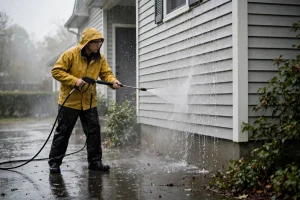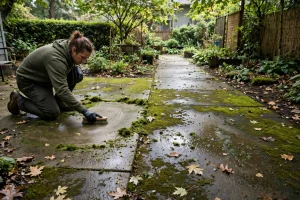

Concrete driveways, patios, walkways, and slabs often include joints that allow sections of concrete to move without pushing directly against each other. These joints can collect dirt, leaves, sand, weeds, algae, and standing water, but cleaning them too aggressively can damage flexible sealant or expose the material beneath it.
The safest approach is to identify what is inside the joint before cleaning. Some joints are open, while others contain flexible sealant, backer rod, filler board, or a combination of materials. Once you know what you are dealing with, you can remove debris without cutting, lifting, or washing out the joint system.
First, Know What Kind of Joint You Are Cleaning
Homeowners often use the term expansion joint for every line in a concrete slab, but not every joint serves the same purpose.
Expansion or Isolation Joints
These joints separate sections of concrete so the slab can move independently from another slab, wall, column, or structure. They may contain compressible filler, backer rod, and flexible sealant.
Control Joints
Control joints are intentionally placed grooves or saw cuts that encourage shrinkage cracking to occur in a planned location. Some are left open, while others may be filled or sealed depending on the application.
Why the Difference Matters
A cleaning method that is harmless on an open saw cut can damage a flexible sealed joint. Before using a pressure washer, determine whether the joint contains sealant, foam backer rod, fiber filler, or loose material.
What Can Be Damaged During Cleaning
Flexible Joint Sealant
Polyurethane, silicone, hybrid, and other joint sealants are designed to remain flexible as the concrete moves. A concentrated pressure stream can cut into aged sealant, lift an edge, or force water beneath a section that has already lost adhesion.
Backer Rod
Backer rod is commonly used beneath sealant to control sealant depth and prevent unwanted bonding at the bottom of the joint. If sealant is missing or damaged, direct pressure can expose, puncture, or dislodge the backer rod.
Joint Edges
The concrete shoulders on both sides of a joint can chip or spall, especially if the slab is old, cracked, or already deteriorated. Cleaning should not concentrate pressure directly on weak joint edges.
How to Clean Concrete Expansion Joints Safely
Step 1. Inspect the Joint Before Adding Water
Look for loose sealant, open gaps, exposed backer rod, weeds, cracked joint edges, missing filler, or sections where the sealant has separated from the concrete.
If the sealant is peeling or detached, aggressive washing can make the failure worse. Clean gently and plan to repair the joint rather than trying to force debris out with pressure.
Step 2. Remove Loose Debris Dry
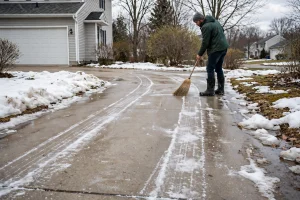
Use a broom, leaf blower, soft brush, or shop vacuum to remove loose dirt, leaves, pine needles, gravel, and other debris before wet cleaning.
Dry removal is especially useful because it avoids turning packed debris into muddy material that is harder to remove from a narrow joint.
Step 3. Pull Weeds Carefully
If weeds are growing from an open joint, remove them carefully rather than using a pressure washer to blast the roots out. A concentrated stream can enlarge weak areas or damage adjacent sealant.
If vegetation repeatedly returns, inspect whether soil and organic material are building up inside an open joint.
Step 4. Use a Mild, Compatible Cleaner
For ordinary dirt and organic buildup, start with water and a mild cleaner that is compatible with the concrete and any existing sealant.
Avoid strong solvents, acids, or aggressive chemicals unless the joint sealant manufacturer confirms compatibility. Different sealants react differently to chemicals, so a product that is safe for bare concrete may not be safe for the joint material.
Step 5. Brush the Joint Gently
Use a nylon or synthetic bristle brush to loosen dirt along the joint edges and sealant surface. Avoid metal tools that can cut flexible sealant or gouge the concrete shoulders.
Step 6. Rinse Across the Joint, Not Into It
When rinsing, direct water across the joint rather than aiming a concentrated stream straight down into it. This helps carry loosened debris away without forcing water beneath sealant or into exposed joint materials.
Step 7. Use Pressure Washing Only When the Joint Is Sound
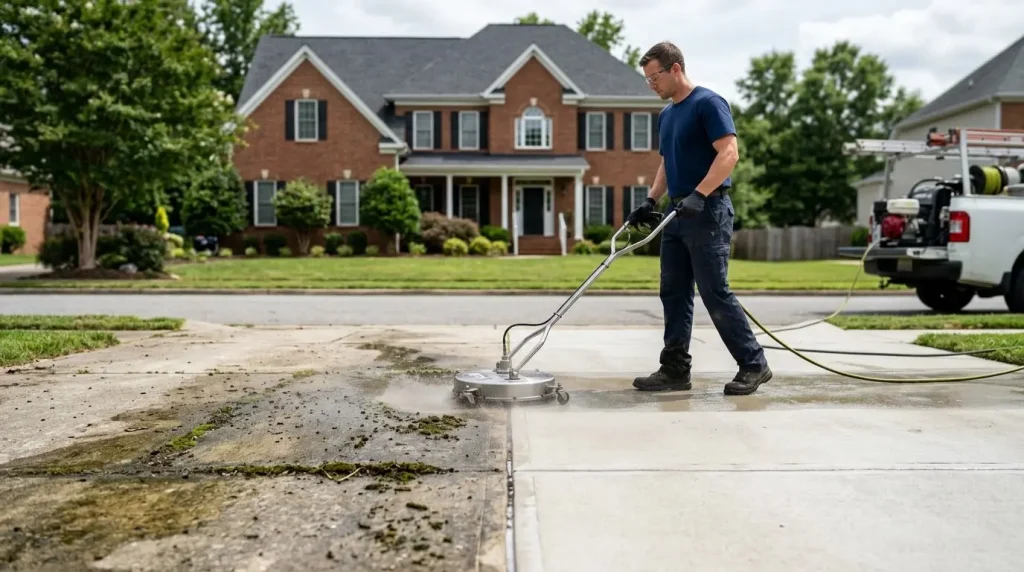
Pressure washing can be used around expansion joints when the concrete and sealant are in good condition, but the joint should not be treated like the center of an open concrete slab.
Use a broad spray pattern, keep the nozzle moving, and avoid holding the stream directly over the sealant line. There is no universal PSI that is safe for every joint because sealant age, joint design, concrete condition, nozzle, working distance, and equipment all affect the result.
Step 8. Let the Joint Dry and Inspect It Again
After cleaning, allow the joint to dry and look for lifted edges, cracks in the sealant, missing material, or areas where water appears to have entered beneath the joint.
If repair or resealing is needed, the joint surfaces must be prepared according to the sealant manufacturer instructions. Sealant manufacturers commonly require joint surfaces to be clean, dry, sound, and free of dirt, grease, old residue, and other contaminants before new material is installed.
What Not to Do Around Concrete Expansion Joints
Do not aim a zero degree nozzle directly into a joint.
Do not use a turbo nozzle over flexible joint sealant.
Do not use a pressure washer to remove failing sealant unless the joint is intentionally being prepared for repair.
Do not puncture or pull exposed backer rod during routine cleaning.
Do not use harsh solvents or acids without confirming sealant compatibility.
Do not force water beneath lifted sealant edges.
Do not seal over dirt, moisture, old loose material, or cleaning residue.
Can You Pressure Wash Over Joint Sealant
You can rinse across sound, fully cured joint sealant with controlled pressure, but avoid concentrating the spray directly on the sealant bead.
Older sealant that is cracked, brittle, peeling, or separated from the concrete is more vulnerable. In that condition, pressure washing may expose or accelerate an existing failure.
What If Backer Rod Is Visible
Visible backer rod usually means the sealant is missing, too shallow, or has failed in that section. Backer rod is not intended to serve as the exposed walking or weathering surface.
Do not pressure wash directly into exposed foam. Clean loose debris carefully and repair the joint using a compatible system. Manufacturers such as Sika use backer rod to control joint depth and help prevent three sided adhesion beneath the sealant.
Should You Remove Old Sealant Before Cleaning
Not during routine cleaning. If the existing sealant is intact and well bonded, leave it in place and clean around it.
If the sealant has failed and the joint is being repaired, old loose material may need to be removed as part of surface preparation. That is a repair process, not ordinary pressure washing.
Cleaning Before Resealing an Expansion Joint
A joint being resealed needs more thorough preparation than a joint receiving routine maintenance. Sealant manufacturers commonly require the joint walls to be sound, clean, dry, and free of oil, grease, loose particles, old sealant residue, and other contaminants.
Backer rod or bond breaker tape may also be required to control sealant depth and prevent the sealant from bonding to the bottom of the joint. Follow the specific sealant product instructions because joint dimensions, primers, cure times, and backing requirements vary.
What About Newly Installed Concrete and Fresh Joint Sealant
New concrete and fresh sealant both need adequate curing before aggressive cleaning. Do not assume that a joint is ready for pressure washing simply because the surrounding slab looks hard.
If the slab itself is newly installed, read pressure washing new concrete and how long to wait after installation before using powered cleaning equipment.
How to Keep Expansion Joints Cleaner Longer
Blow or sweep leaves and grit away before they pack into joints.
Keep soil and mulch from washing across the joint during rain.
Remove weeds before roots become established in open joints.
Address standing water and drainage problems around the slab.
Inspect flexible sealant periodically for separation, cracking, or missing sections.
Repair failed sealant before pressure washing exposes the joint system further.
Frequently Asked Questions
Can pressure washing damage concrete expansion joints
Yes. A concentrated stream can cut or lift flexible sealant, expose backer rod, erode weak joint edges, or force water beneath failed sections. Use controlled pressure and avoid spraying directly into the joint.
Can I pressure wash over polyurethane joint sealant
Only when the sealant is fully cured, well bonded, and in good condition. Use a broad spray pattern and avoid concentrating pressure on the sealant bead. Follow the sealant manufacturer maintenance guidance.
What should I do if the joint sealant is peeling
Do not try to clean it back into place. Peeling usually indicates loss of adhesion or aging. Clean the area gently and evaluate the joint for repair or replacement.
Can weeds be pressure washed out of expansion joints
It is better to remove weeds carefully rather than blasting the joint with concentrated pressure. Pressure washing can enlarge weak gaps and damage sealant or concrete edges.
Should expansion joints be completely empty before resealing
The joint walls need to be properly prepared, but many sealant systems use backer rod or bond breaker tape beneath the sealant. Follow the specific product instructions rather than leaving an uncontrolled deep void.
Can I use acid to clean a concrete joint before resealing
Do not use acid by default. Sealant manufacturers require clean, sound surfaces, but the approved preparation method depends on the product and joint condition. Follow the sealant technical data and remove any cleaning residue before application.
Final Takeaway
Cleaning concrete with expansion joints safely is less about using more pressure and more about protecting the materials inside the joint.
Inspect the joint first, remove loose debris dry, use a compatible cleaner, brush gently, and rinse across the joint instead of blasting directly into it. If sealant or backer rod is exposed or failing, treat the problem as a repair issue rather than a routine pressure washing job.