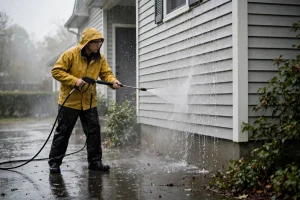

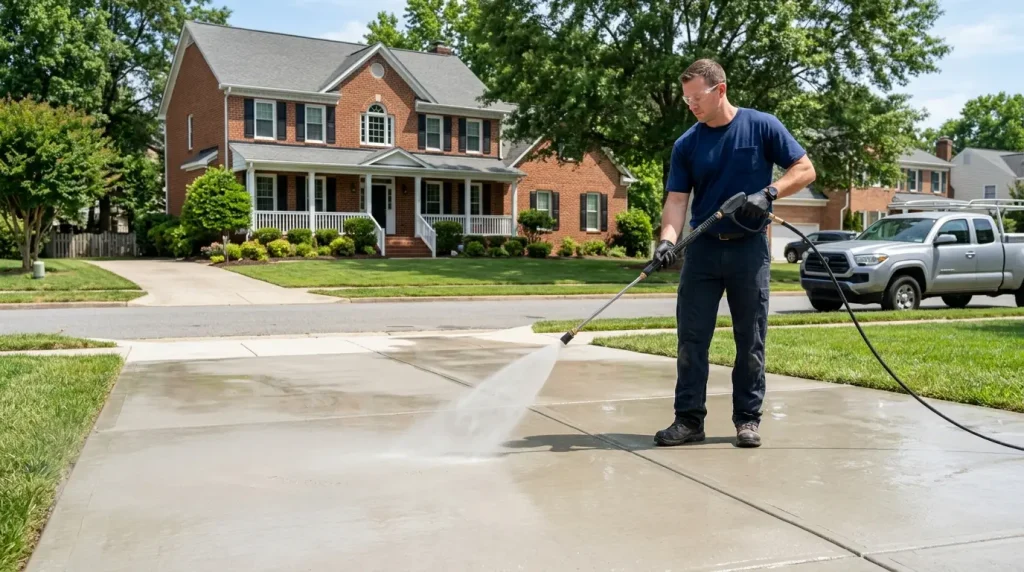
New concrete may look hard within a day or two, but it is still gaining strength beneath the surface. Pressure washing too soon can mark the finish, erode weak surface paste, expose aggregate, or leave permanent lines that become obvious after the slab dries.
For many conventional concrete mixes, 28 days is the standard age used to measure compressive strength. That does not mean every slab is identical or that pressure washing automatically becomes safe on day 28. Mix design, weather, curing method, concrete thickness, finishing technique, surface condition, and the contractor recommendations all matter.
The safest rule is to avoid aggressive pressure washing during the early curing period and confirm the slab is adequately cured before using powered cleaning equipment.
Why New Concrete Needs Time Before Pressure Washing
Concrete hardens through hydration, a chemical reaction between cement and water. The slab becomes usable before the curing process is complete, but it continues gaining strength over time.
The American Concrete Institute (ACI) notes that most concrete strength develops during the first few weeks and that 28-day compressive strength is a standard measurement point. Decorative concrete guidance also commonly uses a curing period before later treatments such as sealing.
Why Day 28 Is a Benchmark, Not a Universal Permission Date
The 28-day mark is useful because it is a common testing and specification benchmark, but concrete does not suddenly change from fragile to fully protected on one specific day.
Some mixes gain strength faster, while others continue developing strength more slowly. Cold weather, high humidity, supplementary cementitious materials, curing practices, and project specifications can all affect the timeline.
If the installer or concrete contractor gives a longer waiting period, follow that project-specific guidance.
What Can Happen If You Pressure Wash New Concrete Too Soon
Surface Paste Can Be Eroded
A concentrated water stream can remove or roughen the weaker top surface before the concrete has developed enough resistance. This may leave lighter lines, rough spots, or permanent texture changes.
Aggregate Can Become More Visible
If surface paste is removed, sand or coarse aggregate beneath it can become exposed. This can create an uneven appearance that normal cleaning will not reverse.
Decorative Finishes Can Be Damaged
Stamped, colored, broom finished, exposed aggregate, and other decorative surfaces can be especially sensitive during early age cleaning. Aggressive washing can change texture, color contrast, or surface detail.
Early Pressure Marks Can Become Permanent
Concrete often looks darker when wet, so damage may not be obvious during washing. Once the surface dries, wand lines or lighter etched areas can become much more visible.
How Long Should You Wait Before Pressure Washing New Concrete?
For a newly installed residential driveway, patio, or walkway, a conservative approach is to avoid pressure washing during the initial curing period and wait until the concrete has developed adequate strength.
The 28-day age is commonly used as a concrete strength benchmark, but the correct waiting period for a specific slab should come from the installer, mix specifications, and surface condition.
If the concrete is less than a month old and only has dust, footprints, mud, or light construction residue, use the gentlest cleaning method available rather than reaching immediately for a pressure washer.
Can You Clean New Concrete Before It Is Ready for Pressure Washing?
Yes. Light maintenance can often be handled without aggressive equipment:
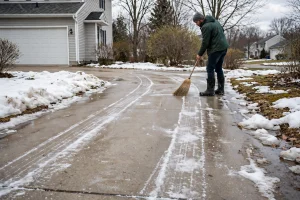
Sweep loose dust, sand, and debris with a soft or medium broom.
Use a garden hose with normal water flow for light soil when the installer allows it.
Blot fresh spills instead of scrubbing them aggressively into the surface.
Avoid strong acids, harsh solvents, metal brushes, and concentrated high pressure.
Ask the installer before using chemical cleaners on very new or decorative concrete.
How to Pressure Wash Newer Concrete Safely After the Curing Period
Step 1: Confirm the Slab Is Ready
Before using a pressure washer, confirm the concrete has had adequate curing time and that the installer has not provided a longer restriction. Inspect the slab for scaling, soft areas, surface dusting, cracks, unfinished repairs, or decorative coatings that may require special handling.
Step 2: Sweep Before Adding Water
Remove loose sand, soil, leaves, and construction debris first. This keeps abrasive grit from being pushed across the new surface during washing.
Step 3: Start With the Least Aggressive Cleaning Method
Use water and a mild, concrete-compatible cleaner when needed. The cleaning product should loosen dirt so the pressure washer only needs to rinse the surface.
Step 4: Test an Inconspicuous Area
Test the cleaning method in a low-visibility section and allow it to dry. Check for lightening, texture change, exposed sand, or other signs that the surface is being altered.
Step 5: Use Controlled Pressure
Use a broad spray pattern (25° or 40° fan tip), keep the nozzle moving, and maintain a safe working distance. There is no single PSI that is appropriate for every new slab because equipment, concrete strength, finish, nozzle, and distance all change the impact at the surface. Avoid zero-degree tips and concentrated spraying in one location.
Step 6: Clean Evenly Across the Slab
Do not chase one spot with repeated passes. Uneven cleaning can create visible light and dark patches, especially on newer concrete that has not weathered uniformly.
Step 7: Let the Concrete Dry Before Evaluating It
Wet concrete can hide surface changes. Allow the area to dry fully before deciding whether additional cleaning is necessary.
Does Weather Change the Waiting Time?
Yes. Temperature, wind, humidity, and curing method affect how concrete develops strength and retains moisture.
Cold conditions can slow strength development significantly. Hot, dry, or windy conditions can also create curing challenges if moisture is lost too quickly. Because of these variables, the calendar alone should not replace project-specific guidance.
What About Stamped or Exposed Aggregate Concrete?
Decorative concrete deserves extra caution because pressure washing can affect more than basic surface cleanliness:
If the surface is stamped, see Can You Pressure Wash Stamped Concrete? for guidance on protecting decorative color and sealer.
If the surface is exposed aggregate, read How to Clean Exposed Aggregate Concrete Without Damaging It before using powered cleaning equipment.
What If New Concrete Has a Stain Before It Is Fully Cured?
Fresh oil, mud, rust, tire residue, or construction material can be frustrating on a new slab, but aggressive cleaning may create a larger permanent defect.
Remove the source quickly and use the least aggressive compatible method. For significant stains, contact the installer or a concrete cleaning professional before applying acids, solvents, or high pressure to young concrete.
Pressure Washing New Concrete Versus Sealing Concrete
Waiting to pressure wash new concrete and waiting to seal concrete are related but different questions.
New concrete needs adequate curing before aggressive cleaning or many sealer applications. After an existing slab is pressure washed, it also needs enough drying time before a sealer is applied so moisture is not trapped beneath the product.
For dedicated sealing guidance, read Should I Seal My Concrete Driveway After Pressure Washing?.
How Soon Can New Concrete Be Sealed?
Sealer timing depends on the type of sealer, the curing method, and the manufacturer instructions. Many conventional sealers are applied only after new concrete has cured, often around the 28-day mark, but cure-and-seal products and specialized systems may have different requirements. Always follow the specific product and installer guidance rather than assuming every sealer uses the same waiting period.
Signs You Should NOT Pressure Wash the Slab Yet
The concrete is still within the early curing period and the installer has not approved pressure washing.
The surface powders, flakes, or marks easily when lightly rubbed.
The finish has soft or weak-looking areas.
Decorative color or sealer has not completed its specified cure.
Repairs, joints, coatings, or surface treatments are still curing.
You are unsure of the concrete age or mix and aggressive cleaning is not necessary.
Frequently Asked Questions
Can you pressure wash concrete after one week?
One week is still too early for many conventional concrete installations. Although some strength has developed, aggressive pressure washing can damage the surface. Follow the installer guidance and use gentle cleaning methods unless powered washing has been specifically approved.
Is 28 days always enough before pressure washing new concrete?
No. Twenty-eight days is a common strength testing benchmark, not a universal guarantee for every slab. Mix design, weather, curing, finish, and project specifications can require a different timeline.
Can a garden hose be used on new concrete?
Light rinsing may be acceptable in many situations, but the installer should be consulted during the early curing period, especially for decorative or specially finished concrete.
Can pressure washing damage new concrete?
Yes. Excessive pressure can roughen the surface, expose aggregate, leave wand marks, or change decorative finishes if the slab is too young or the equipment is used aggressively.
How long after pressure washing should concrete dry before sealing?
Drying time depends on the slab, sealer, weather, humidity, shade, and product instructions. Do not seal simply because the surface feels dry. Follow the sealer manufacturer requirements.
Can I seal new concrete after 28 days?
Many conventional sealers are used after a curing period around 28 days, but not every product is the same. Cure-and-seal systems and specialized sealers can have different application windows, so follow the manufacturer and installer guidance.
Final Takeaway
Pressure washing new concrete is not something to rush. Concrete may look hard early, but it continues to gain strength, and aggressive cleaning during the curing period can permanently change the surface.
Use the 28-day mark as a common strength benchmark, not an automatic permission date. Follow the installer guidance, inspect the surface, start with gentle cleaning, and use controlled pressure only after the slab is ready.