
There’s a quiet correlation in retail businesses that owners discover the hard way: storefront cleanliness drives both foot traffic and online reviews. A storefront with gum-stained sidewalks, dingy awnings, and a smudged entryway converts walk-by traffic into customers at a measurably lower rate than a clean storefront and the customers who do walk in are statistically more likely to mention the dirty exterior in their Yelp or Google reviews. The math is real. The cleaning is cheap. Most retail businesses still under-invest. This guide is for retail owners and small-business property managers across Richmond looking to fix that gap. For the broader commercial cleaning service breakdown, see our Richmond commercial pressure washing page.
The short version: retail storefront cleaning should be on a monthly or quarterly recurring schedule, performed after-hours to avoid customer disruption, and covers a specific surface mix (sidewalk, storefront facade, awnings, signage, entryway). Done right, it’s a few hundred dollars per visit for a meaningful return in customer perception and competitive positioning.
Why Storefront Cleanliness Matters More Than Owners Think
The data on storefront appearance and customer behavior is more compelling than most retailers realize. A few patterns that consistently show up in retail analytics:
- Walk-by conversion rate. Customers passing a storefront make a sub-second judgment about whether to enter. Dirty sidewalks, stained awnings, and dingy entryways measurably lower the walk-in rate. The effect is largest in destination retail (where customers are choosing among multiple options) and smallest in necessity retail (where customers are coming anyway).
- Review correlation. Customer reviews mentioning exterior cleanliness — both positive and negative — are statistically tied to overall rating. A storefront that gets one or two “dirty entrance” mentions per quarter tends to sit half a star below the cleaner competitor across the street.
- Tenant retention for property managers. Retail tenants pay attention to common-area cleanliness when renewal time comes around. A property that’s visibly maintained gets higher renewal rates and supports higher lease rates than one that isn’t.
- Operational health signaling. Customers (and inspectors) read storefront condition as a proxy for operational discipline overall. A restaurant with a clean entryway gets more benefit-of-the-doubt on minor issues than one with a dirty entryway.
The Specific Surfaces That Matter
Retail storefront cleaning isn’t one job it’s a coordinated mix of several different cleaning tasks across surface types that each need their own approach:
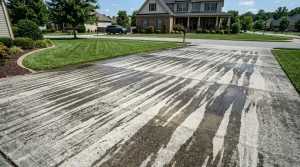
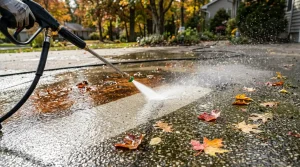
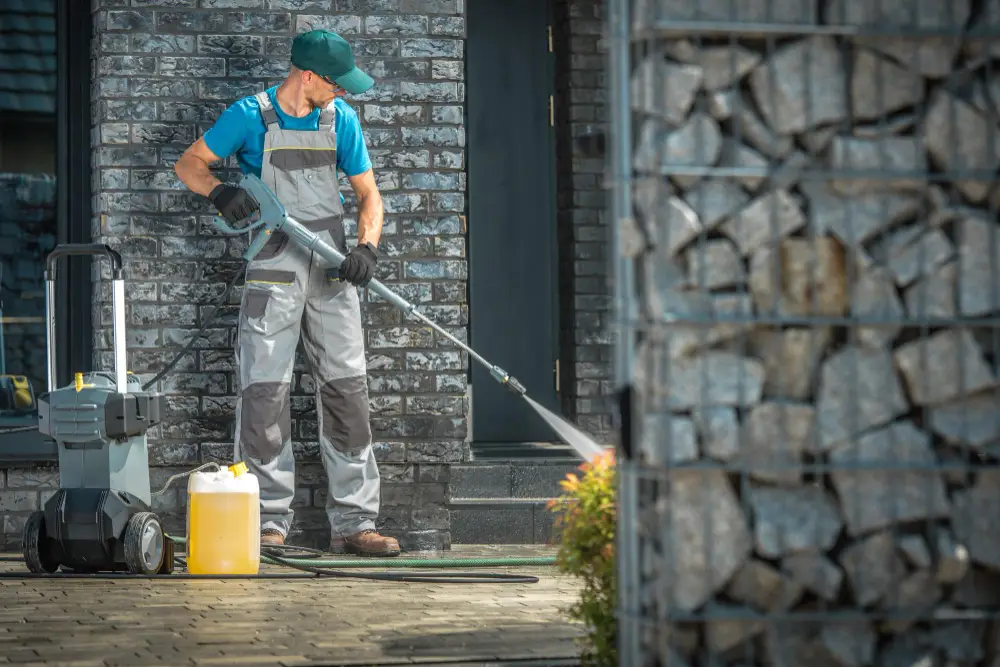
- Sidewalk and concrete in front of the store. The single highest-visibility surface. Gum, food spills, coffee stains, cigarette burns, accumulated grime, and oxidation all build up here. Pressure washing at 2,500–3,500 PSI is the standard method. Sidewalk surface cleaners (rotating attachments that maintain consistent height and even coverage) produce dramatically better results than handheld pressure washing.
- Storefront facade. Brick, painted siding, EIFS, or composite materials depending on the property. Pressure washing is wrong for most of these soft washing is the appropriate method for most facade types.
- Fabric or vinyl awnings collect mildew quickly in Richmond’s humidity. Pressure washing can damage or shrink awnings; soft washing with a calibrated solution is the only safe method.
- Signage backing and channel letters. Brand-critical visibility. Channel letter signs collect dirt in the LED housings and around the mounting hardware. Backing panels show streaking from rain and pollen.
- Entryway thresholds and door surrounds. High-traffic, high-touch surfaces. Door handles, kick plates, threshold concrete, and surrounding glass all need different cleaning approaches but should be addressed together in each visit.
- Drive-through lanes (where applicable). Restaurants and coffee shops with drive-throughs have a specific high-traffic concrete area with oil staining, gum, and food residue. Pressure washing with degreasing solution is the standard approach.
Frequency: Chains vs Small Shops
Cleaning frequency for retail depends on traffic volume, surface mix, and brand standards. Here’s the typical breakdown:
| Retail Type | Typical Frequency | Surfaces Per Visit |
| High-volume restaurant or coffee shop | Monthly | All exterior surfaces |
| Mid-volume retail / specialty | Quarterly | Sidewalk, facade, awnings |
| Boutique / low-volume specialty | Quarterly to semi-annual | Sidewalk + facade |
| Multi-tenant retail strip | Quarterly common areas | Shared sidewalk, common facade |
| Drive-through restaurant | Monthly (lane + facade) | Lane, drive-through, all exterior |
Most national chains have brand standards that prescribe specific cleaning frequencies — typically monthly for high-traffic locations, quarterly for lower-traffic. Small independent shops have more flexibility but tend to under-invest. The right cadence for most independent retail is quarterly, with monthly attention if the property is on a high-traffic corner or in a destination shopping area.
After-Hours Scheduling: The Practical Reality
Retail cleaning during business hours is operationally disastrous. Customers can’t enter without walking through wet cleaning solution or active pressure-wash zones. Sidewalk seating is unusable. Noise and water spray interfere with the in-store experience. The only practical retail cleaning schedule is after-hours: early morning before opening or evening after closing.
Typical retail cleaning windows in Richmond:
- Early morning (6:00–9:00 AM). Most common for retail and coffee shops. Cleaning crew arrives at 6 AM, work is complete by store opening at 9 AM, sidewalks dry and ready for customers.
- Late evening (9:00 PM–midnight). Common for restaurants and shops with later closing hours. Cleaning happens after final customer departure, sidewalks dry by morning.
- Sunday morning or scheduled closed day. For retail that’s closed Sundays or Mondays, scheduling the cleaning during the closed window eliminates any operational disruption entirely.
The practical scheduling discipline matters. A vendor who can’t reliably show up at 6:00 AM for the agreed cleaning window is a vendor that will eventually create operational problems for the business. Same-day reliability matters more in retail than in many other commercial segments.
Gum, Food Spills, and Sidewalk Stains
Sidewalk contamination from foot traffic is the single biggest cleaning challenge in retail. The accumulated layer includes gum (the most persistent), food and drink spills (sticky, fast-staining), cigarette burns and tobacco stains, oil and grease tracks from nearby parking, and ground-in dirt that pressure water lifts dramatically once the surface is treated.
Gum specifically needs special attention. Cold pressure washing alone won’t lift dried gum from concrete — the gum has to be either softened with heat or treated with a degumming solution before it’ll release. Hot-water pressure washing equipment is significantly better for gum removal than cold water. Most commercial cleaning crews that do retail work routinely use hot-water units for sidewalk work.
Cigarette burns embed permanently into porous concrete and don’t fully lift even with aggressive cleaning. The right expectation: cleaning improves the appearance dramatically but won’t restore concrete to as-new. For older properties with decades of cigarette staining, the realistic outcome is significantly cleaner-looking sidewalks, not pristine.
Awnings: The Special Case
Retail awnings are the single most commonly cleaning-damaged surface in commercial cleaning. Pressure washing fabric or vinyl awnings even at relatively low pressure — can shrink the material, lift seams, fade colors, and force water through the awning into the building cavity below.
The correct method for awnings is soft washing: low-pressure application of a calibrated cleaning solution that kills the mildew at the cellular level, dwell time of 10–20 minutes, then low-pressure rinse. The chemistry kills the organism without any mechanical stress on the material. This is the same approach used for residential siding see our full soft washing services page.
If your awnings have been pressure-washed in the past, the damage is usually visible: faded coloring, slight shrinkage at edges, sometimes visible water staining inside the awning structure. Switching to soft washing prevents further damage but won’t reverse what’s already happened.
Windows vs Pressure Washing: Different Services
Storefront window cleaning is typically a separate service from storefront pressure washing. Window cleaning uses different equipment (squeegees, ladders or water-fed poles for high windows, specialized cleaning solutions) and produces different results than pressure water. Most commercial cleaning vendors specialize in one or the other; some offer both as separate services billed separately.
Pressure washing the area around windows (sills, frames, brick or facade) is part of the storefront cleaning scope. The actual glass cleaning is a separate service. Confusing these two is one of the most common scope-misunderstandings between vendor and retail tenant be specific about what you’re booking when you request a quote.
Frequently Asked Questions
How much does retail storefront pressure washing cost?
Typical Richmond storefront cleaning runs $200–$600 per visit for a single small retail business, depending on sidewalk size, awning count, and surface complexity. Multi-tenant retail strips run higher — usually $800–$2,500 per visit for the full common-area scope. Monthly programs typically secure better per-visit pricing than ad-hoc calls.
Can pressure washing damage my storefront concrete or pavers?
Done correctly, no. Standard concrete is durable enough for the 2,500–3,500 PSI typical of sidewalk cleaning. Older or already-damaged concrete may need lower pressure or surface-cleaner attachments to avoid further deterioration. Pavers specifically may need re-sanding after cleaning, as some joint sand is displaced this is normal and part of paver maintenance.
How long does retail storefront cleaning take?
Most single-storefront retail cleaning runs 1.5–3 hours per visit, depending on the surface mix. The actual cleaning is faster than the setup, equipment positioning, and rinse-down. After-hours scheduling means the crew typically arrives an hour before the work starts and finishes well before opening.
What if I notice damage or an issue after the cleaning crew leaves?
Contact the vendor immediately — same-day if possible. A reputable cleaning service has liability insurance covering damage during work and responds quickly to resolve issues. The vendor should also do a post-visit walkthrough with you or your property manager when feasible, catching any issues before leaving the site.
Do you handle multi-tenant strip retail?
Yes — common-area cleaning for multi-tenant retail strips is a substantial portion of our commercial work. Pricing is typically structured as a single program for the property owner or property management company, billed monthly or quarterly, covering shared sidewalks, common facade, and shared signage. See our commercial pressure washing services for the full breakdown.
Does the schedule include emergency cleaning for spills or vandalism?
Standard commercial programs include emergency response within 24 hours for accounts on regular schedules. For spills, vandalism, or other unexpected cleaning needs, we typically respond same-day or next-day depending on the issue. This is one of the practical advantages of being on a recurring program rather than a one-off vendor existing clients get priority response.
Bottom Line
Retail storefront cleaning is one of the highest-ROI commercial cleaning categories there is. The cost is modest. The visible impact is dramatic. The correlation with customer behavior and review ratings is real. Most independent retail businesses under-invest in this category — and the ones that get it right operationally usually outperform competitors who don’t.
If your Richmond storefront, retail property, or multi-tenant strip needs a cleaning program, request a property walkthrough and quote or get in touch directly. For more reading: the case for quarterly commercial scheduling, how we approach HOA and community association work, and the parking lot and dumpster pad services that complement storefront cleaning.