
If you’ve looked up roof cleaning for your home in Richmond, you’ve probably seen two very different recommendations: pressure washing on one side, and soft washing on the other. They sound similar. They’re not. For asphalt shingle roofs — which means almost every residential roof in the Richmond metro — soft washing is the only method that actually works without doing damage. This guide explains why, what the process looks like, and what homeowners should expect when they book a professional roof cleaning.
The short version: asphalt shingles can’t tolerate high-pressure water. The protective granules embedded in the shingle surface are what give your roof its lifespan, fire rating, and weather resistance. Pressure washing strips those granules off. Soft washing, by contrast, uses a low-pressure application of a cleaning solution — closer to garden-hose pressure — that kills the bacteria, moss, and lichen growing on your roof at the cellular level. The dead organisms then rinse away. No granule loss. No warranty void.
Why High-Pressure Cleaning Damages Asphalt Shingles
Modern asphalt shingles are built in layers. The bottom is a fiberglass mat saturated with asphalt. The top is a coating of crushed mineral granules ceramic-coated rock that does the actual weather-resisting work. Those granules block UV light from breaking down the asphalt underneath, they provide the shingle’s color, and they’re what’s officially measured to determine the shingle’s remaining service life.
When a pressure washer hits a shingle, the granules come off. Walk around any home after a high-pressure roof clean and you’ll see them in the gutters, the driveway, the lawn. Each one represents a tiny patch of unprotected asphalt now exposed to Richmond’s UV and humidity.
The Asphalt Roofing Manufacturers Association (ARMA) the industry body whose member companies make essentially every shingle sold in North America has been explicit about this for years. Their official technical bulletin on roof cleaning recommends low-pressure cleaning methods only. Many manufacturers go further and treat pressure-washed roofs as having a voided warranty.
How Soft Washing Works
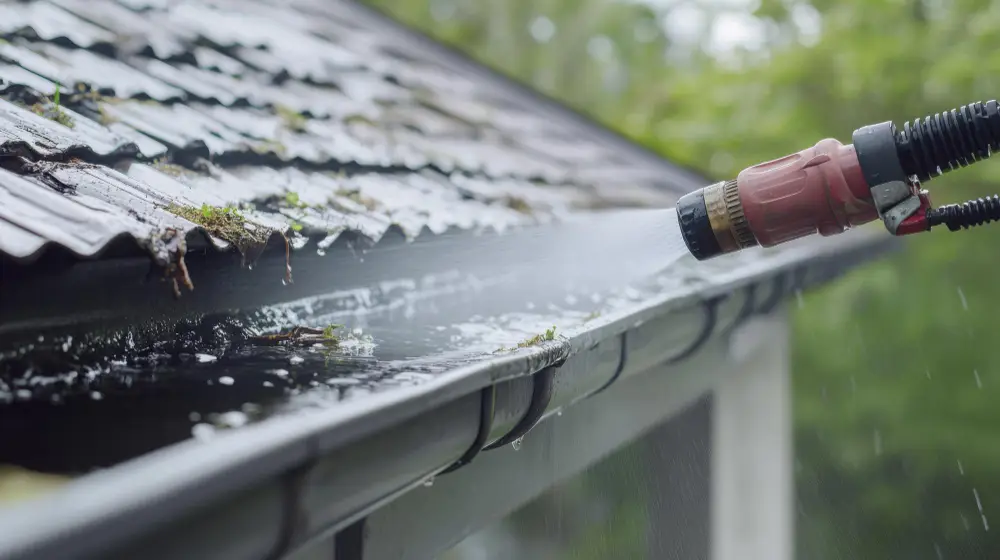
Soft washing is a chemistry-first approach to cleaning, not a force-first one. Instead of relying on water velocity to blast contamination off a surface, soft washing relies on a cleaning solution to kill the organisms growing on the surface. Those organisms — bacteria, moss spores, lichen, algae are then rinsed off at low pressure or simply weathered away by the next few rainfalls.
The application is done at less than 100 PSI. For reference, a typical garden hose runs at 40–60 PSI. A residential pressure washer runs at 1,500–3,000 PSI. The difference matters: at soft-wash pressures, there is no mechanical force on the shingle surface capable of dislodging granules.
The cleaning solution itself is the active part of the process. It penetrates the porous shingle surface and the moss/lichen tissue, killing the organisms outright. Within minutes of application, the visible black streaks of gloeocapsa magma begin to fade. Moss colonies turn brown as they die. Lichen colonies break their chemical bond with the shingle granules and lift free.
The Cleaning Solution: A Sodium Hypochlorite Mix
The active ingredient in soft-wash solution is sodium hypochlorite the same chemical family as household bleach, applied at a carefully calibrated concentration with surfactants and other additives that make it cling to vertical surfaces long enough to do its work.
Concentration matters. Too weak, and the solution doesn’t fully kill the gloeocapsa magma at the root, which means the streaks come back within a season. Too strong, and overspray risks damaging surrounding plants. Professional soft washers calibrate the mix based on the type of growth being treated, the shingle condition, and the surroundings of the property. Read more about the sodium hypochlorite chemistry behind soft washing.
A common homeowner concern: is the solution dangerous around landscaping, pets, and kids? When applied correctly with pre-wetting of plants, full rinse-down after cleaning, and proper dilution — the answer is no. We address this in detail in our safety guide, but the short version: by the time the solution reaches the ground, dilution from rinse water has reduced it to levels comparable to a swimming pool.
ARMA Why Manufacturers Endorse Soft Washing
The Asphalt Roofing Manufacturers Association includes essentially every major shingle manufacturer GAF, Owens Corning, CertainTeed, Atlas, Tamko, and the rest. When they jointly publish technical guidance recommending one cleaning method over another, that recommendation carries practical weight: it’s the position the people who actually make your shingles take.
ARMA’s technical bulletin on cleaning is straightforward. They recommend low-pressure application of an appropriate cleaning solution. They explicitly warn against high-pressure water. They identify the specific solution chemistry that works (sodium hypochlorite based) and the precautions that should be taken (landscape protection, controlled rinse). The soft-wash method is exactly what they describe.
What to Expect During a Soft Wash Roof Cleaning Service
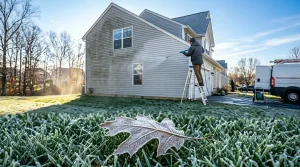
A typical roof cleaning visit in Richmond runs about 2–4 hours for a residential property. Here’s what the process looks like:
- Pre-inspection. The technician walks the property, assesses pitch, identifies access points, and notes any sensitive landscaping, painted surfaces, or fixtures that need extra protection.
- Landscape preparation. All plants, mulch beds, and grass within the spray-fall zone are thoroughly pre-wet with plain water. Some delicate plantings get tarped.
- Solution application. The soft-wash solution is applied to the roof surface at low pressure, working systematically from the ridge down. Coverage is even, with extra dwell time on heavy-growth areas.
- Dwell time. The solution sits on the roof for typically 10–20 minutes, doing the active killing work. Black streaks visibly fade during this window.
- Low-pressure rinse from the ridge down, including a full landscape rinse-down to dilute any solution that reached the ground.
- Walk-around. Final inspection with the homeowner. Any area that needs a second pass gets one before the crew leaves.
Soft Washing vs Pressure Washing on Roofs: Side-by-Side
The differences between the two approaches are easy to summarize in a comparison:
| Factor | Soft Washing | Pressure Washing |
| Pressure on shingle | Under 100 PSI | 1,500–3,000+ PSI |
| Granule loss | None | Substantial |
| Warranty impact | Preserves warranty | Voids most warranties |
| ARMA recommendation | Endorsed method | Explicitly warned against |
| Kills bacteria at root | Yes — chemical kill | No — physical removal only |
| How long results last | 4–6 years typical | 6–18 months before regrowth |
| Risk to plants | Low with proper rinse | Low (no chemicals) |
| Suitable for asphalt shingles | Yes | No |
How Long Does Soft Wash Last?
This is where the real advantage of soft washing shows up. Because the method kills the organisms at the cellular level rather than just rinsing them off the surface, regrowth is dramatically slower. Most Richmond soft-wash roof cleanings stay clean for 4–6 years before another treatment becomes worthwhile.
Pressure-washed roofs, by contrast, often show visible regrowth within 6–12 months. The reason is simple: pressure washing removes the visible top layer of growth but leaves the spore bed intact in the shingle’s pores and granular bed. The organisms regrow from the roots. Soft washing results last 4 to 6 times longer than pressure washing — that gap is measured and well-documented across the industry.
Frequently Asked Questions
Is soft washing safe for all roof types?
For asphalt shingle, tile, slate, and cedar shake roofs yes. For metal roofs, the same low-pressure principles apply but a different solution mix is typically used. The one roof type that requires special consideration is older cedar shake, where the wood itself may have already deteriorated; in those cases we evaluate roof-by-roof before recommending the service.
Will I see immediate results from soft washing?
Yes. Black streaks visibly begin to fade within 10–20 minutes of solution application. Moss colonies turn brown as they die and detach over the following 1–4 weeks (faster with light rinse, slower if left to weather off naturally). Lichen colonies typically need slightly more time or a second application. By the day after cleaning, the dramatic improvement is obvious.
How is soft washing different from chemical roof treatments I can buy at Home Depot?
The chemistry is similar (sodium hypochlorite or related compounds), but professional soft-wash solutions are calibrated at much higher concentrations than retail products allow, and the application equipment delivers consistent, even coverage that hand-pump sprayers can’t match. The bigger issue with DIY: getting onto the roof safely. Roof falls are a leading cause of home-maintenance injuries, and the consequences are severe.
Does soft washing work in cold weather?
Optimal application temperatures are above 50°F. Richmond’s climate gives us a long usable season — roof cleaning is generally workable from late February through mid-November, with peak conditions in spring and early fall.
Will soft washing remove rust stains or other discoloration?
Organic growth (gloeocapsa, moss, lichen, algae) is what soft washing is designed to remove. Inorganic stains — rust runs from nails or flashing, mineral deposits from runoff require different treatments. We assess those during the pre-inspection and let homeowners know what’s realistic to expect before quoting.
Bottom Line: Why Soft Washing Is the Standard
If your asphalt-shingle roof needs cleaning, soft washing is the right method — full stop. It’s what the shingle manufacturers endorse, what preserves your warranty, what actually kills the organisms causing the streaks and moss, and what produces results that last years instead of months.
Jacobson’s Power Washing has been soft washing Richmond residential roofs for years, and the method is the foundation of how we clean. If you’ve got black streaks, moss, lichen, or just a tired-looking roof — get a free roof cleaning quote or contact us directly. For deeper reading: our complete soft washing services, a homeowner guide to what soft washing actually is, the gloeocapsa magma bacteria behind black streaks, the cost of professional roof cleaning in Richmond, and safely removing moss and lichen from asphalt shingles.