
A beautiful wood deck adds warmth, value, and outdoor living space to any home. However, dirt, mildew, algae, and weather exposure can quickly leave it looking worn and slippery. Many homeowners assume pressure washing is the fastest solution, but high-pressure cleaning can actually damage wood fibers, strip protective coatings, and shorten the life of your deck.
The good news is that you can restore your deck safely using gentle cleaning methods and common household tools. If you’re wondering how to clean wood deck without pressure washer equipment, this guide covers everything you need, from homemade deck cleaners to step-by-step cleaning methods, stain removal tips, and long-term deck maintenance strategies.
Quick Answer — How to Clean Wood Deck Without Pressure Washer?
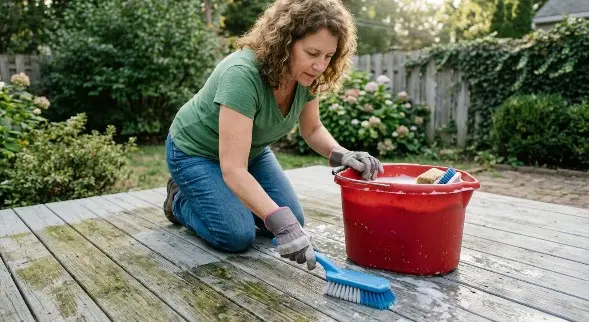
The safest and most effective way to clean a wood deck without a pressure washer is to use a soft-bristle brush, warm water, and a wood-safe cleaning solution such as oxygen bleach or mild dish soap. Scrub the deck gently along the grain of the wood, rinse thoroughly with a garden hose, and allow the deck to dry completely before applying any sealant.
For most decks, the process takes between 2–5 hours depending on deck size and stain severity. Homeowners often avoid pressure washers because they can splinter wood, create uneven surfaces, and force moisture deep into the boards.
Why You Should Avoid Using a Pressure Washer on a Wood Deck
Pressure washers may seem convenient, but they can cause expensive damage if used incorrectly.
Common Damage Caused by Pressure Washers
High-pressure water can lift and splinter wood fibers, leaving the surface rough and unsafe for bare feet. It can also create visible etching marks and grooves that permanently affect the appearance of the deck.
Another major issue is sealant removal. Pressure washing can strip away protective stains and sealers, exposing wood to UV rays, moisture, and mold growth. Excessive water pressure may also push moisture deep into the wood, increasing the risk of rot and warping over time.
When a Pressure Washer Is Safe to Use
Pressure washers can sometimes be used safely on hardwood or composite decks when operated at low PSI settings by professionals. Soft washing techniques are much safer than aggressive high-pressure cleaning.
However, for older decks, cedar decks, or pressure-treated wood, manual cleaning is often the safest long-term solution.
Best Methods to Clean a Wood Deck Without a Pressure Washer
Different cleaning methods work better for different types of dirt and stains.
Cleaning With Warm Water and Dish Soap
Warm water mixed with mild dish soap is ideal for light dust, pollen, and everyday grime. Use a non-abrasive soap that does not contain ammonia or harsh degreasers.
This method works best for decks that receive regular maintenance and do not have heavy mildew buildup.
Using Oxygen Bleach for Deep Cleaning
Oxygen bleach is one of the best deck cleaning solutions because it removes mold, mildew, algae, and deep stains without damaging wood fibers.
Unlike chlorine bleach, oxygen bleach will not discolor wood or weaken the structure. Mix the cleaner according to product instructions, usually with warm water, and apply evenly across the deck surface.
Allow the solution to sit for about 10–15 minutes before scrubbing.
Vinegar and Baking Soda Method
For eco-friendly deck cleaning, white vinegar and baking soda are effective natural alternatives. Vinegar helps break down mildew and grime, while baking soda provides mild abrasion for stain removal.
This method works especially well on small mildew spots and lightly stained decks.
Commercial Wood Deck Cleaners
Store-bought deck cleaners are useful for heavily stained or neglected decks. Look for products specifically designed for wood restoration and mold removal.
Avoid cleaners containing harsh chlorine bleach or strong acids, especially on cedar or redwood decks.
Tools You Need to Clean a Wood Deck Without a Pressure Washer
Using the right tools makes cleaning easier and prevents accidental damage.
Essential Cleaning Tools
- Soft-bristle scrub brush
- Deck broom
- Garden hose
- Large bucket
- Protective gloves
Optional Tools for Better Results
- Pump sprayer for even cleaner application
- Microfiber mop for large surfaces
- Leaf blower for debris removal
- Wet/dry vacuum for standing water
How to Clean Wood Deck Without Pressure Washer
Step 1: Remove Furniture and Debris
Clear all furniture, planters, rugs, and grills from the deck. Sweep thoroughly to remove leaves, dust, and dirt trapped between boards.
Pay extra attention to corners and railing edges where debris often accumulates.
Step 2: Pre-Rinse the Deck Surface
Use a standard garden hose to lightly rinse the surface. This loosens dirt and prepares the wood for cleaning.
Avoid soaking the deck excessively, especially if the wood is older.
Step 3: Apply the Cleaning Solution
Spread your chosen cleaning solution evenly across the deck using a pump sprayer, mop, or bucket.
Work in small sections to prevent the cleaner from drying too quickly.
Step 4: Scrub the Deck Correctly
Scrub along the direction of the wood grain using a soft-bristle brush. This helps remove grime without scratching the wood.
Focus on dark stains, algae spots, and high-traffic areas where buildup is heaviest.
Step 5: Rinse Thoroughly
Rinse the deck completely with clean water to remove all soap and cleaning residue. Leftover residue can leave streaks and attract dirt.
Step 6: Allow the Deck to Dry Properly
Let the deck dry for at least 24–48 hours before sealing or replacing furniture. Drying time may vary depending on humidity and weather conditions.
Best Ways to Clean a Wood Deck Without a Pressure Washer
| Cleaning Method | Best For | Difficulty | Safe for Wood | Mold Removal | Eco-Friendly |
|---|---|---|---|---|---|
| Dish Soap & Water | Light dirt | Easy | Yes | Limited | Yes |
| Oxygen Bleach | Deep cleaning | Moderate | Yes | Excellent | Moderate |
| Vinegar Solution | Mild mildew | Easy | Yes | Good | Excellent |
| Commercial Cleaner | Heavy stains | Moderate | Depends on product | Excellent | Varies |
How to Remove Specific Stains From a Wood Deck
Removing Mold and Mildew
Use oxygen bleach or vinegar solutions to kill mold spores safely. Scrub affected areas thoroughly and improve airflow around the deck to prevent future growth.
Cleaning Grease and Food Stains
For barbecue grease stains, sprinkle baking soda directly onto the stain before scrubbing with warm soapy water.
Quick treatment prevents permanent discoloration.
Removing Algae and Green Buildup
Algae commonly forms in shaded or damp areas. Oxygen bleach mixed with warm water is highly effective for removing slippery green buildup.
How to Treat Tannin and Water Stains
Tannin stains appear as dark discoloration caused by leaves, moisture, or wood extractives. Mild wood brighteners can help restore a more even appearance.
How Often Should You Clean a Wood Deck?
Most wood decks should be cleaned at least once or twice per year.
Seasonal Cleaning Recommendations
Spring is the best time for deep cleaning because winter moisture often leaves behind mildew and debris. Fall cleaning removes leaves and organic matter before colder weather arrives.
Signs Your Deck Needs Cleaning
- Slippery surface
- Green algae buildup
- Dark mildew spots
- Faded appearance
- Dirt accumulation between boards
Mistakes to Avoid When Cleaning a Wood Deck
Using Harsh Chemicals
Chlorine bleach can weaken wood fibers and discolor the surface. Always choose wood-safe cleaning products.
Scrubbing Too Aggressively
Using stiff wire brushes can scratch and splinter wood. Soft-bristle brushes are much safer.
Letting Cleaner Dry on the Surface
Cleaning products left to dry can leave visible residue and uneven coloring.
Ignoring Sealing and Maintenance
Cleaning alone is not enough. Proper sealing helps protect wood from moisture, UV rays, and future staining.
How to Protect Your Wood Deck After Cleaning
Applying a Wood Sealer
Once the deck is completely dry, apply a high-quality wood sealer or deck stain. This creates a protective barrier against water and sun damage.
Preventing Future Mold and Dirt Buildup
Trim nearby plants to improve airflow and reduce moisture retention. Sweep regularly to prevent debris buildup.
Routine Deck Maintenance Checklist
Weekly:
- Sweep debris
- Check for standing water
Monthly:
- Inspect for mold and stains
- Clean problem areas
Annually:
- Deep clean the entire deck
- Reapply sealer if needed
Natural vs Commercial Deck Cleaners — Which Is Better?
Pros and Cons of Natural Cleaning Solutions
Natural cleaners like vinegar and baking soda are affordable, environmentally friendly, and safe for pets and plants. However, they may not remove severe stains or heavy mildew effectively.
Pros and Cons of Commercial Deck Cleaners
Commercial products are stronger and faster for deep cleaning, but some contain chemicals that may irritate skin or damage sensitive wood types if overused.
Can You Clean Different Deck Types Without a Pressure Washer?
Cedar Deck Cleaning Tips
Cedar is soft and prone to splintering, making gentle hand cleaning the safest method.
Redwood Deck Cleaning Tips
Use mild cleaners and avoid harsh chemicals that may discolor the wood’s natural reddish tones.
Pressure-Treated Wood Deck Cleaning
Pressure-treated wood responds well to oxygen bleach cleaning and routine sealing.
Composite Deck Cleaning Considerations
Composite decking should still be cleaned gently to avoid scratching the surface finish.
FAQs About How to Clean Wood Deck Without Pressure Washer
What is the best homemade deck cleaner for wood?
A mixture of warm water, white vinegar, and baking soda is one of the safest homemade wood deck cleaners.
Can vinegar damage a wood deck?
Vinegar is generally safe when diluted properly, but excessive use on unfinished wood may cause slight discoloration.
How do you clean a wood deck naturally?
Use natural ingredients like vinegar, baking soda, and mild dish soap along with gentle scrubbing.
Is oxygen bleach safe for wood decks?
Yes, oxygen bleach is considered one of the safest and most effective cleaners for wood decks.
How long should a deck dry after cleaning?
Most decks need at least 24–48 hours of drying time before sealing or heavy use.
Can I use Dawn dish soap to clean my deck?
Yes, mild dish soaps like Dawn can help remove light dirt and grime safely.
What is the easiest way to clean a deck without a pressure washer?
Using oxygen bleach with a soft-bristle brush is often the easiest and most effective method.
How do you remove green algae from a wood deck?
Apply oxygen bleach or vinegar solution, scrub gently, and rinse thoroughly.
Should I seal my deck after cleaning?
Yes, sealing helps extend the lifespan of the wood and prevents moisture damage.
What should you not use on a wood deck?
Avoid chlorine bleach, wire brushes, and extremely harsh chemical cleaners.
Conclusion
Learning how to clean wood deck without pressure washer equipment is one of the best ways to protect your deck from unnecessary damage while keeping it looking fresh and attractive. Gentle cleaning methods using oxygen bleach, dish soap, or vinegar solutions can safely remove dirt, mildew, algae, and stains without harming wood fibers.
Regular maintenance, proper sealing, and seasonal cleaning will help extend the life of your deck and preserve its natural beauty for years. By avoiding aggressive pressure washing and using safer manual cleaning techniques, homeowners can maintain a cleaner, healthier, and longer-lasting outdoor space.