
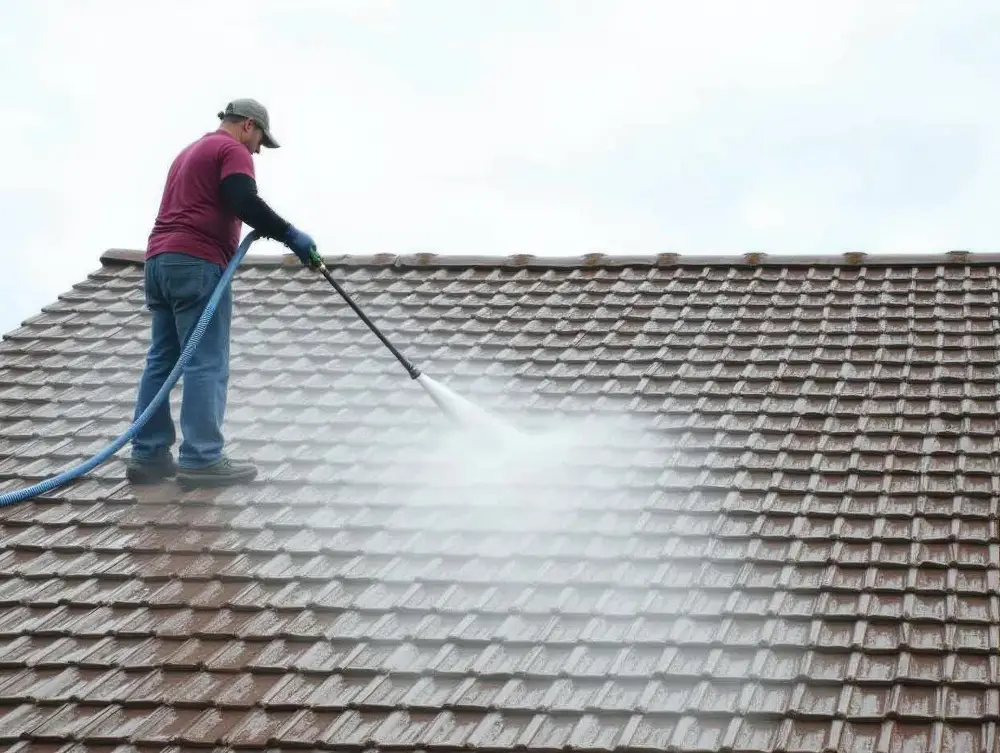
The math is one of the most one-sided in homeowner maintenance: $500 for a roof cleaning vs. $15,000 for a roof replacement. Yet every year, Richmond homeowners replace roofs that could have been kept in service for another 5–10 years with regular professional cleaning. This guide walks through the actual cost comparison, when cleaning is enough, and when replacement genuinely is the right call.
If you’re already convinced cleaning makes sense, get a free roof cleaning quote here. If you’re trying to figure out whether your specific roof is past the point where cleaning matters — keep reading.
The Big Number: $500 vs $15,000+
Let’s get the basic comparison clear:
| Decision | Typical Richmond Cost | Lifespan Effect |
| Soft-wash roof cleaning | $350–$900 | Adds 3–10 years to shingle life |
| Pressure washing (DAMAGING) | $300–$700 | Shortens shingle life — voids warranty |
| Full asphalt roof replacement | $10,000–$25,000+ | New 20–30 year roof |
| Premium architectural shingle replacement | $18,000–$35,000+ | New 30–50 year roof |
| Doing nothing (deferred) | $0 today | Replacement needed sooner |
The cost of professional cleaning is roughly 3–6% of the cost of replacement. The lifespan gain from cleaning — 3–10 additional years of useful service — pays for the cleaning many times over. There is no other single home maintenance investment with this ROI profile.
How Gloeocapsa Magma Shortens a Roof’s Life
Understanding why cleaning matters means understanding what gloeocapsa magma actually does. Gloeocapsa magma is a cyanobacteria — those are the black streaks you see running down asphalt shingles. It’s not dirt, it’s not weathering, it’s a living organism that feeds on the limestone filler in modern shingles.
The damage compounds three ways:
- Granule loss. The bacteria colonies physically displace granules from the shingle surface. Granules are what protect the asphalt from UV. Fewer granules = faster shingle aging.
- Moisture retention. The bacterial mats hold water against the shingle surface, accelerating freeze-thaw cycling and asphalt degradation.
- Heat absorption. Black-streaked roofs absorb more solar heat than clean ones. Higher attic temperatures mean accelerated shingle aging and higher cooling bills.
Untreated gloeocapsa magma typically shortens shingle life by 5–10 years on a 25-year shingle. That’s the math: every year of growth left untreated is taking life off your roof’s clock.
The Cost-Saving Math Year by Year
Let’s walk through a realistic 20-year Richmond home scenario for two homeowners with identical roofs:
Homeowner A: Cleans roof every 4 years
Initial roof installed Year 0. Cleanings in Year 4, Year 8, Year 12, Year 16, Year 20. Total cleaning spend over 20 years: $2,500–$4,000. Roof remains in good condition at Year 20. Likely good for another 5–10 years before replacement is needed.
Homeowner B: Never cleans the roof
Initial roof installed Year 0. By Year 8, visible heavy streaking. By Year 12, moss colonies established. By Year 15–17, granule loss is severe enough that replacement is needed. Year 17 roof replacement: $15,000. Then a new roof needs cleaning every 4 years to avoid the same problem.
The 20-year net comparison
Homeowner A: $3,000 in cleanings, roof still good. Homeowner B: $15,000 replacement plus ongoing cleaning costs. The cleaning homeowner is roughly $12,000 ahead at year 20 — and ahead more every year after that.
When Cleaning ISN’T Enough — When You Really Need Replacement
Cleaning works as long as the shingles themselves are still structurally sound. Once shingle damage progresses past certain thresholds, cleaning improves appearance but doesn’t extend life. Signs that you’re past the cleaning-can-save-it point:
- Significant granule accumulation in gutters (a cup or more after a heavy rain) — indicates substantial granule loss across the roof.
- Visible asphalt mat exposed on multiple shingles — the shingle has lost so many granules that the underlying asphalt is now sun-exposed.
- Curling or cupping shingles — the shingles have lost their flexibility and are physically deforming.
- Active leaks or visible water staining on interior ceilings — cleaning doesn’t address structural integrity issues.
- Damaged or missing shingles over multiple areas — beyond what spot-repair can address.
- Roof age past the warranty period (typically 25–30 years from installation) with visible aging — at that point, replacement is a question of when, not if.
Our quote process includes an honest assessment of whether your roof is a candidate for cleaning or whether you should be having the replacement conversation with a roofing contractor. We don’t recommend cleanings that won’t deliver value.
Insurance Implications
Homeowner’s insurance generally covers sudden damage (storms, fallen trees, hail) but not maintenance issues (algae growth, deferred care). However, your insurance carrier does periodically reassess roof condition during policy renewals — and a heavily streaked, moss-covered roof can affect both your policy renewal and your premium.
Some carriers in Virginia have begun requiring documentation of roof maintenance for older homes. A history of professional cleaning helps demonstrate the roof is well-maintained, which can keep your premium stable. Conversely, visible neglect can trigger requests for replacement before renewal.
Resale Value Considerations
If you’re planning to sell your Richmond home in the next 3–5 years, roof condition is one of the top three factors home inspectors note and one of the top deal-breakers for buyers. A visibly streaked, moss-covered roof signals deferred maintenance broadly, even if everything else about the property is well-cared-for.
The ROI on pre-sale roof cleaning is among the highest of any pre-listing investment. A $500–$700 cleaning often returns multiples in higher offer prices, faster sale times, and fewer inspection-driven price negotiations. We see this play out routinely with Richmond real estate agents who refer their listing clients to us before MLS photos are taken.
Frequently Asked Questions
Will cleaning make my old roof look like new?
Mostly, yes. Soft washing removes the black streaks, dead moss, and lichen colonies that account for nearly all visible roof staining. What it can’t do is restore lost granules — if your shingles have already weathered significantly, the underlying color will be lighter than original, even after cleaning. The roof will look dramatically better but won’t look brand new.
If I clean my roof, will I get warranty coverage back?
If your warranty was never voided (i.e., you used soft washing rather than pressure washing for the cleaning), then yes — proper soft-wash cleaning preserves your existing warranty. If your warranty was previously voided by pressure washing, cleaning doesn’t restore it. Most shingle manufacturers consider warranty void to be permanent once it occurs.
Can I clean my roof myself to save money?
Technically possible, practically risky. Roof falls are a leading cause of home-maintenance fatalities. DIY chemical solutions are weaker than professional concentrations and rarely fully kill the gloeocapsa at the root, leading to fast regrowth. The math typically favors professional cleaning when you account for time, equipment rental, materials, and risk. See our detailed pricing breakdown for the actual cost comparison.
How quickly does roof damage progress without cleaning?
In Richmond’s climate, visible black streaks become significant granule-loss damage within roughly 5–8 years of first appearance. Moss colonies cause shingle edge damage within 2–4 years. Lichen damages individual shingles within 3–5 years. The compounding effect across an entire roof typically shortens lifespan by 5–10 years over a full roof life cycle if cleaning is never done.
What’s the absolute minimum I should be doing for my roof?
If budget is tight: professional soft-wash cleaning every 5 years (the longest reasonable interval) plus annual ground-level visual inspection and clearing of overhanging tree branches. That alone delivers most of the lifespan extension benefits. Anything tighter than 5 years compounds the savings; anything longer than 7 years starts to lose the value.
Bottom Line: The Cleaning ROI Is Genuinely Exceptional
For homes where the roof is still structurally sound, regular professional cleaning is among the highest-ROI home maintenance investments available. The cost is small. The lifespan extension is significant. And the alternative — premature replacement — is one of the largest single expenses a Richmond homeowner is likely to face.
If your roof is showing streaks, moss, or general decline, request a free quote or contact us directly and we’ll give you an honest assessment of whether cleaning is going to help you or whether you should be in replacement conversations. For deeper reading: why soft washing is the only safe roof cleaning method, what gloeocapsa magma actually is and does, how to think about cleaning costs in Richmond specifically, and our complete soft washing services overview.