
For most Virginia homeowners — Richmond, the suburbs, and central Virginia generally — professional roof cleaning every 3–5 years is the right cadence. That’s the band where the math works: you’re cleaning often enough to prevent the gloeocapsa magma and moss from causing real shingle damage, but not so often that you’re spending unnecessarily. This guide explains where your specific roof falls in that range and what factors push the interval shorter or longer.
The shortest version: heavily shaded properties under tree cover with north-facing roof sections need cleaning closer to every 3 years. Sun-exposed properties with minimal tree shade can often go 5+ years. Most Richmond homes fall in the middle. If you’re scheduling a roof cleaning for the first time, knowing where your property sits on this spectrum matters.
Why Virginia Roofs Need Cleaning More Than Most
Virginia’s climate is essentially ideal for the organisms that grow on asphalt shingles. Summer humidity averages 70–80%. The growing season runs roughly March through November, with year-round moisture making spore germination possible most months. The state’s tree canopy in residential neighborhoods adds shaded north-facing roof sections that retain moisture well past sunrise on most mornings.
Combine those conditions with the limestone filler in modern shingles (which the gloeocapsa magma bacteria feeds on directly) and you get rapid colonization. A roof in a heavily-treed Richmond neighborhood can develop visible black streaks within 2–3 years of installation. The same shingle in a dry, sunny climate like Arizona or Nevada may not develop the same staining for 10+ years.
This is why Virginia roof cleaning frequencies are shorter than what national maintenance guides suggest. The national average — based largely on data from drier markets — runs longer. Richmond and central Virginia specifically need a tighter schedule.
The Short Answer: Every 3–5 Years for Most Richmond Homes
The right interval depends on five main factors:
| Property Condition | Recommended Interval |
| Sun-exposed, minimal tree cover, mostly south-facing | Every 5 years |
| Average Richmond suburban property | Every 4 years |
| Some tree shade, mixed roof orientations | Every 4 years |
| Heavy tree cover, shaded north-facing sections | Every 3 years |
| Lake or river adjacent, persistent humidity | Every 3 years |
| Already heavily streaked or moss-covered | Clean now, then every 3 years |
Factors That Shorten the Interval
Several conditions push the cleaning frequency toward the shorter end:
Tree cover and shaded roof sections
Shaded sections stay wet longer after rain and morning dew. Wet shingles are exactly the conditions gloeocapsa, moss, and lichen need. Properties with mature tree canopies — common across Richmond’s older neighborhoods like the Fan, Westover Hills, and Bon Air — typically need cleaning every 3 years rather than every 5.
North-facing roof sections
North-facing slopes get less direct sunlight, dry slower, and accumulate growth faster than south-facing slopes on the same house. It’s not unusual for north-facing roof sections to be visibly streaked while south-facing sections look mostly clean.
Proximity to water
Properties near the James River, the Swift Creek Reservoir, or any persistent water body have elevated ambient humidity even by Virginia standards. This extends the growing season for roof organisms.
Neighbor roof condition
Gloeocapsa magma spreads via airborne spores. If your neighbor’s roof has heavy streaks, your roof is being seeded with spores every time the wind blows. Properties in older neighborhoods with deferred-maintenance neighbors tend to need more frequent cleaning regardless of their own situation.
Roof age
Older shingles, even when well-maintained, are more porous and provide better attachment sites for organisms. A 15-year-old roof may need cleaning every 3 years even when newer roofs nearby need it every 5.
Signs Your Roof Needs Cleaning Now
Schedule-based maintenance is one approach. Condition-based maintenance is the other. If your roof shows any of these signs, the cleaning interval question is moot — it’s time to clean:
- Visible black streaks running down the shingle surface, particularly on north-facing slopes — this is gloeocapsa magma and it’s actively damaging your shingles.
- Green or grey clumps of moss visible on the roof surface, especially around chimney bases, valleys, or north-facing slopes. Moss lifts shingle edges over time and creates wind/water vulnerabilities.
- Circular grey-green patches of lichen on individual shingles. Lichen is the hardest growth to remove because of its chemical bond to the granules.
- Gutter face staining matching the streaks on the roof — usually means roof runoff has been carrying the bacteria for some time.
- Energy bills creeping up — darkened shingles absorb more heat, transferring it into the attic and raising cooling costs through summer.
- Approaching a home sale or refinance — visible roof staining drops appraisal values and turns off buyers. Cleaning before listing or inspection is one of the highest-ROI prep moves.
Maintenance Treatments Between Cleanings
A few practical measures extend the interval between professional cleanings:
Tree trimming
Branches overhanging the roof drop leaves and debris that hold moisture against shingles. Trimming overhanging branches back is the single most effective maintenance step to slow regrowth. Aim for at least 4–6 feet of clearance between branches and roof surface.
Gutter cleaning
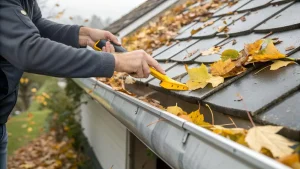
Clogged gutters back up onto the roof edge, creating saturated zones where moss and algae thrive. Annual or semi-annual gutter cleaning is good practice generally and helps slow roof regrowth.
Zinc or copper strips
Strips of zinc or copper installed along the roof ridge slowly release metal ions during rain, which suppress organic growth on the slopes below. These aren’t a substitute for cleaning but they do slow regrowth meaningfully. They can be retrofitted onto most asphalt shingle roofs.
Annual visual inspection
Walk the property once a year and look at the roof from the ground. Take photos of any new staining or moss colonies you spot. Comparing photos year-over-year tells you whether growth is accelerating or stable.
Frequency for Commercial Properties
Commercial buildings — office buildings, retail, HOA common buildings, multi-family — typically follow a different cadence. Most commercial roof cleaning fits into a broader exterior-maintenance schedule. We discuss this in detail in our commercial pressure washing quarterly schedule guide, but the short version: commercial roofs often get cleaned every 2–3 years as part of a broader exterior program, because curb appeal directly affects tenant and customer perception.
Frequently Asked Questions
My roof was just installed — when does it need its first cleaning?
Many new asphalt shingles have algae-resistant copper-infused granules built in, which delay the first visible staining by 3–5 years compared to non-treated shingles. If your roof was installed in the last 5 years and shows no visible streaking yet, you’re probably fine to wait. Once streaking appears, schedule a cleaning — it doesn’t stop growing on its own.
Can I clean my roof too often?
Yes, technically. Cleaning a roof that shows no visible staining is unnecessary spending. The 3–5 year cadence is built around when growth has become substantial enough to justify treatment. Cleaning annually isn’t harmful (when done with soft washing) but it’s not cost-effective.
What about over-the-counter spray-on roof cleaners?
Retail products use weaker concentrations of similar chemistry and rarely fully kill the gloeocapsa at the root. They can be a stopgap between professional cleanings but they don’t replace them. The same chemistry at professional concentrations produces results that last 4–6 years; retail versions typically need reapplication every 6–12 months.
Does the season matter for cleaning frequency?
Less than you’d think. Soft washing is workable any time temperatures are above 50°F — which in Richmond means roughly mid-February through late November. The exact month doesn’t affect how long the results last; the chemistry kills the organisms regardless of season. We do see slightly faster regrowth on cleanings done right before peak growing season (April–May) vs. cleanings done in early fall, but the difference is marginal.
How will I know when it’s time for the next cleaning?
Visible streaking is the main signal. After a professional soft wash, your roof should stay essentially clean for 3–4 years before any new staining is even noticeable. By year 4 or 5 you’ll see early-stage growth returning. That’s the signal it’s time to schedule the next service.
Bottom Line on Cleaning Frequency
For Richmond, plan on professional roof cleaning roughly every 3–5 years, with your exact interval determined by tree cover, roof orientation, and ambient humidity. Most homeowners find the math works out to roughly $100–$200 per year in equivalent maintenance investment — a fraction of the cost of replacing shingles damaged by deferred cleaning.
If you’re due for a cleaning, request a free Richmond roof cleaning quote or reach out via the contact form. For deeper reading: how much roof cleaning costs in Richmond, the gloeocapsa magma bacteria causing those black streaks, and removing moss and lichen from asphalt shingles.