
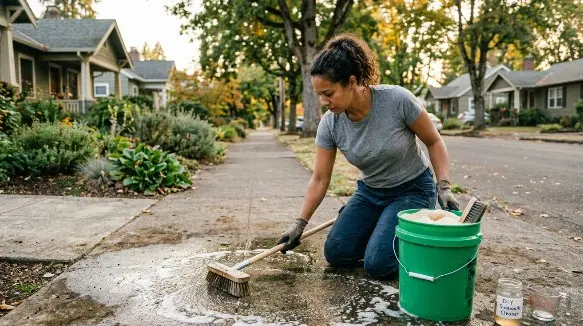
A clean sidewalk instantly improves the look of any home, business, or outdoor space. But not everyone owns a pressure washer and in many cases, you actually don’t need one. In fact, learning how to clean sidewalk without pressure washer methods can save money, protect your concrete surface, and still deliver professional-level results.
Whether you’re dealing with dirt, algae, oil stains, or general grime buildup, manual cleaning techniques are surprisingly effective when done correctly. This guide breaks down everything you need: safe cleaning solutions, tools, step-by-step methods, stain removal strategies, and long-term maintenance tips.
Quick Answer — How to Clean Sidewalk Without Pressure Washer?
The safest and most effective way to clean a sidewalk without a pressure washer is to use a combination of warm water, mild detergent (or oxygen bleach for deeper stains), and a stiff-bristle brush. Scrub the surface manually, then rinse thoroughly with a garden hose.
Best cleaning solutions include:
- Dish soap + warm water (light dirt)
- Vinegar + baking soda (mild stains)
- Oxygen bleach (deep cleaning, mold, algae)
- Commercial concrete cleaners (heavy stains or oil buildup)
Tools required:
- Stiff-bristle broom or scrub brush
- Bucket
- Garden hose
- Gloves
- Optional pump sprayer
Time required: 1–3 hours depending on sidewalk size and stain level.
Many homeowners avoid pressure washers because they can erode concrete surfaces, create streaking, and force water into cracks that worsen over time.
Why Clean a Sidewalk Without a Pressure Washer?
Understanding the risks of pressure washing helps explain why manual cleaning is often the safer choice.
Common Problems Caused by Pressure Washers
Pressure washers can:
- Erode the top layer of concrete, making it rough and uneven
- Damage older or cracked sidewalks
- Waste large amounts of water
- Leave patchy or streaked surfaces
Over time, high-pressure water can weaken concrete integrity, especially in older sidewalks.
Benefits of Cleaning Sidewalks Manually
Manual cleaning offers several advantages:
- Safer for delicate or aging concrete
- More eco-friendly with less water usage
- Better control over stain removal
- Much cheaper (no equipment needed)
This is why many professionals still rely on manual scrubbing for precision cleaning jobs.
Best Methods to Clean a Sidewalk Without a Pressure Washer
Cleaning With Dish Soap and Warm Water
This is the simplest method and works well for everyday dirt.
Best for:
- Dust buildup
- Light stains
- Regular maintenance
Use a mild dish soap (avoid harsh degreasers), mix with warm water, and scrub using a stiff brush.
Using Vinegar and Baking Soda
A popular eco-friendly cleaning method.
Best for:
- Mild grime
- Organic stains
- Light mildew spots
Apply baking soda first, spray vinegar over it, let it fizz, then scrub. This reaction helps lift dirt naturally without chemicals.
Oxygen Bleach for Deep Sidewalk Cleaning
Oxygen bleach is one of the most effective non-damaging cleaners for concrete.
Best for:
- Mold and mildew
- Algae growth
- Deep-set stains
Unlike chlorine bleach, it won’t weaken concrete or harm surrounding plants. Mix according to instructions, apply evenly, let sit 10–15 minutes, then scrub.
Commercial Concrete and Sidewalk Cleaners
These are useful for stubborn or long-term stains.
Best for:
- Oil stains
- Heavy traffic grime
- Industrial buildup
Pros:
- Strong cleaning power
- Fast results
Cons:
- Some contain harsh chemicals
- Can be expensive
- Not always eco-friendly
Always check labels for acid-based or ammonia-heavy formulas.
Tools You Need to Clean a Sidewalk Without a Pressure Washer
Essential Sidewalk Cleaning Tools
- Stiff-bristle broom or scrub brush
- Bucket for mixing solutions
- Garden hose for rinsing
- Protective gloves
- Sponge or mop
Optional Tools for Faster Cleaning
- Pump sprayer for even application
- Wet/dry vacuum for water removal
- Leaf blower for debris clearing
- Rotary scrub brush for larger areas
How to Clean Sidewalk Without Pressure Washer
Step 1: Remove Loose Dirt and Debris
Start by sweeping the sidewalk thoroughly. Remove leaves, dust, gravel, and debris from edges and cracks. This prevents dirt from turning into mud during cleaning.
Step 2: Pre-Rinse the Sidewalk
Lightly rinse the surface using a garden hose. This loosens surface grime and helps cleaning solutions spread evenly.
Avoid soaking the concrete completely at this stage.
Step 3: Apply the Cleaning Solution
Choose your cleaner (soap, vinegar mix, or oxygen bleach). Apply evenly across the sidewalk using a mop, sprayer, or bucket.
Let it sit for 5–15 minutes depending on stain severity but don’t let it dry completely.
Step 4: Scrub the Sidewalk Thoroughly
Scrub using a stiff-bristle brush in circular motions.
Focus on:
- Dark stains
- High-traffic zones
- Corners and edges
Always scrub gently to avoid damaging concrete texture.
Step 5: Rinse Away Residue
Rinse thoroughly using a hose. Ensure all soap or chemical residue is removed to prevent streaking or surface film.
Step 6: Allow the Sidewalk to Dry
Let the sidewalk air dry completely for several hours.
Ideal drying conditions:
- Warm weather
- Low humidity
- No rain forecast
Best Ways to Clean a Sidewalk Without a Pressure Washer
| Cleaning Method | Best For | Difficulty | Removes Mold & Algae | Eco-Friendly | Safe for Concrete |
|---|---|---|---|---|---|
| Dish Soap & Water | Light dirt | Easy | Low | Yes | Yes |
| Vinegar & Baking Soda | Mild stains | Easy | Moderate | Excellent | Yes |
| Oxygen Bleach | Deep cleaning | Moderate | Excellent | Moderate | Yes |
| Commercial Cleaners | Heavy stains/oil | Moderate | Excellent | Varies | Depends |
How to Remove Common Sidewalk Stains
Removing Mold and Mildew From Sidewalks
Use oxygen bleach or vinegar solutions. Scrub thoroughly and improve sunlight exposure to prevent regrowth.
Cleaning Oil and Grease Stains
Apply baking soda or degreaser, let it absorb oil, then scrub. Repeat if necessary.
Removing Rust Stains From Concrete
Use specialized rust removers or oxalic acid-based cleaners for best results.
How to Remove Algae and Green Buildup
Oxygen bleach is the most effective solution. It kills spores and removes slippery residue.
Removing Dirt, Mud, and Leaf Stains
Regular soap and water combined with scrubbing is usually enough.
How Often Should You Clean Your Sidewalk?
Seasonal Recommendations
- Spring: deep clean after winter buildup
- Fall: remove leaves and organic debris
Signs Your Sidewalk Needs Cleaning
- Dark patches or discoloration
- Slippery green areas
- Visible algae growth
- Embedded dirt in texture
Mistakes to Avoid When Cleaning Sidewalks
Using Harsh Chemicals
Acidic cleaners can weaken concrete over time.
Scrubbing Too Aggressively
Can damage surface texture and cause micro-cracks.
Letting Cleaning Solution Dry
Leads to residue marks and uneven cleaning.
Ignoring Cracks and Drainage Issues
Water pooling can worsen stains and algae growth.
How to Protect Your Sidewalk After Cleaning
Applying a Concrete Sealer
Sealing protects against stains, moisture, and UV damage.
Preventing Future Dirt and Algae Buildup
Improve drainage and trim nearby vegetation to reduce moisture.
Routine Maintenance Checklist
- Weekly sweeping
- Monthly inspection
- Annual deep cleaning
Natural vs Commercial Sidewalk Cleaners — Which Is Better?
Natural solutions are safer, cheaper, and eco-friendly but may require more scrubbing. Commercial cleaners are stronger and faster but can be harsher on the environment.
Can Different Sidewalk Materials Be Cleaned Without a Pressure Washer?
- Concrete: Works best with oxygen bleach and soap
- Brick: Requires gentler scrubbing to avoid erosion
- Pavers: Use low-moisture cleaning methods
- Stone: Avoid acidic cleaners to prevent damage
FAQs About How to Clean Sidewalk Without Pressure Washer
What is the best homemade sidewalk cleaner?
A mix of warm water, dish soap, and baking soda works well for most stains.
Can vinegar damage concrete sidewalks?
Not when diluted properly, but avoid frequent use on sealed concrete.
How do you clean a sidewalk naturally?
Use vinegar, baking soda, and warm water with scrubbing.
Is oxygen bleach safe for concrete?
Yes, it is one of the safest deep-cleaning options.
How long does a sidewalk take to dry after cleaning?
Typically 4–8 hours depending on weather.
What is the easiest way to clean sidewalk without pressure washer?
Soap and water with a stiff brush is the simplest method.
How do you remove green algae from sidewalks?
Oxygen bleach or vinegar solutions work best.
Can dish soap clean concrete sidewalks?
Yes, for light dirt and routine cleaning.
Should you seal a sidewalk after cleaning?
Yes, sealing helps prevent stains and moisture damage.
What chemicals should you avoid on concrete?
Avoid strong acids, ammonia, and undiluted bleach.
Conclusion
Learning how to clean sidewalk without pressure washer methods gives homeowners a safer, more controlled, and cost-effective way to maintain outdoor surfaces. From simple soap-and-water cleaning to deep oxygen bleach treatments, there are multiple effective approaches depending on the level of dirt and staining.
With consistent maintenance, proper tools, and gentle cleaning techniques, you can keep your sidewalk looking clean, safe, and long-lasting without ever needing high-pressure equipment.